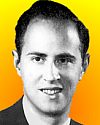
Born 2 Apr 1934. quotes
American mathematician who received the Fields Medal (1966) for his fundamental work on the foundations of set theory. Cohen invented a technique called "forcing" to prove the independence in set theory of the axiom of choice and of the generalised continuum hypothesis. The continuum hypothesis problem was the first of Hilbert's famous 23 problems delivered to the Second International Congress of Mathematicians in Paris in 1900. Hilbert's famous speech The Problems of Mathematics challenged (then and now) mathematicians to solve these fundamental questions and Cohen has the distinction of solving Problem 1. He also worked on differential equations and harmonic analysis.«
American mathematician who received the Fields Medal (1966) for his fundamental work on the foundations of set theory. Cohen invented a technique called "forcing" to prove the independence in set theory of the axiom of choice and of the generalised continuum hypothesis. The continuum hypothesis problem was the first of Hilbert's famous 23 problems delivered to the Second International Congress of Mathematicians in Paris in 1900. Hilbert's famous speech The Problems of Mathematics challenged (then and now) mathematicians to solve these fundamental questions and Cohen has the distinction of solving Problem 1. He also worked on differential equations and harmonic analysis.«
Set Theory and the Continuum Hypothesis, by Paul J. Cohen. - book suggestion.
1966
Born 2 Apr 1931.
French-Australian physician who, in 1962, demonstrated the importance of the thymus gland in organizing the immunity of animals. land is prominent in young animals, but withers away in adults. If the thymus gland is removed at a sufficiently early stage, a young animal is unable to develop antibody resistance to foreign moelcules. Thus, the thymus, located high in the chest, is essential for the immune response. This is because the thymus makes T lymphocytes or T cells (T = thymus) from the stem cells which migrate into the organ from bone marrow. The thymus could be regarded as the university of the immune system - it is here that the T cells learn to recognise foreign antigens and to ignore the myriad "self" antigens present in the body's own tissues.
French-Australian physician who, in 1962, demonstrated the importance of the thymus gland in organizing the immunity of animals. land is prominent in young animals, but withers away in adults. If the thymus gland is removed at a sufficiently early stage, a young animal is unable to develop antibody resistance to foreign moelcules. Thus, the thymus, located high in the chest, is essential for the immune response. This is because the thymus makes T lymphocytes or T cells (T = thymus) from the stem cells which migrate into the organ from bone marrow. The thymus could be regarded as the university of the immune system - it is here that the T cells learn to recognise foreign antigens and to ignore the myriad "self" antigens present in the body's own tissues.
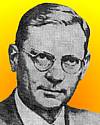
Born 2 Apr 1884; died 5 Sep 1949 at age 65.
American plant physiologist who was an authority on plant and soil interactions. He recognized early that the complex problems of soil and plant interrelations must be studied with rigid experimental control and the isolation of individual variables. Thus, he perfected the water-culture technique for growing plants without soil, which nutrient solution is still in plant physiology research. He collected much data on the influence of oxygen, temperature, light, and other factors on ion absorption by roots. In the late 1930's, he adopted radioactive isotopes as tracers. In his fieldwork on soil chemistry he studied zinc, potassium, and phosphate deficiencies of fruit trees in California. He influenced further intensive study of aspects of micronutrients (trace elements).
American plant physiologist who was an authority on plant and soil interactions. He recognized early that the complex problems of soil and plant interrelations must be studied with rigid experimental control and the isolation of individual variables. Thus, he perfected the water-culture technique for growing plants without soil, which nutrient solution is still in plant physiology research. He collected much data on the influence of oxygen, temperature, light, and other factors on ion absorption by roots. In the late 1930's, he adopted radioactive isotopes as tracers. In his fieldwork on soil chemistry he studied zinc, potassium, and phosphate deficiencies of fruit trees in California. He influenced further intensive study of aspects of micronutrients (trace elements).
Dennis Robert Hoagland, by D. I Arnon. - book suggestion.
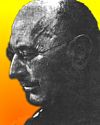
Born 2 Apr 1883; died 21 Feb 1959 at age 75.
American anthropologist who was influential in advancing a historical model of primitive society based on a synthesis of economic and social structure, religion, philosophy, and psychology. He pioneered in such important fields of anthropology as culture- personality studies and the use of autobiographical documents. An accomplished linguist, he described a number of North American languages and advanced a classification scheme emphasizing their unity. He was particularly interested in the individuals within cultures. He secured, translated, and edited the first American Indian autobiography, Crashing Thunder: The Autobiography of an American Indian (1926), which is considered a landmark in anthropology.
American anthropologist who was influential in advancing a historical model of primitive society based on a synthesis of economic and social structure, religion, philosophy, and psychology. He pioneered in such important fields of anthropology as culture- personality studies and the use of autobiographical documents. An accomplished linguist, he described a number of North American languages and advanced a classification scheme emphasizing their unity. He was particularly interested in the individuals within cultures. He secured, translated, and edited the first American Indian autobiography, Crashing Thunder: The Autobiography of an American Indian (1926), which is considered a landmark in anthropology.
Born 2 Apr 1878; died 7 Jan 1955 at age 76. quotes
American mathematician who introduced the word googol for a very large number (10 raised to the power 100, which is a 1 followed by 100 zeroes) with the name invented by his 9-yr-old nephew. It was introduced in the book non-technical mathematical book he co-wrote with James R. Newman, Mathematics and the Imagination (1940).
American mathematician who introduced the word googol for a very large number (10 raised to the power 100, which is a 1 followed by 100 zeroes) with the name invented by his 9-yr-old nephew. It was introduced in the book non-technical mathematical book he co-wrote with James R. Newman, Mathematics and the Imagination (1940).
Born 2 Apr 1877; died 1 Nov 1940 at age 63.
Carl Lucas Alsberg was an American agricultural chemist who was influential in his field, and an authority on the biochemistry of foods. He was a chemical biologist with the Bureau of Plant Industry in the U. S. Department of Agriculture (1908-12) then the second chief of the Bureau of Chemistry (1912-21). He then joined the faculty of Stanford University and directed the Food Institute until 1937. He did work on on seafood, poisonous plants and mold toxicology. He also did research on metabolism, protein and enzyme chemistry and studied commodity regulation, food supply and population . He was the first editor of the Journal of the Association of Official Agricultural Chemists. The Bureau of Chemistry in Jul 1927 became known as the Food, Drug, and Insecticide Administration, and from Jul 1927, the Food and Drug Administration.«
Carl Lucas Alsberg was an American agricultural chemist who was influential in his field, and an authority on the biochemistry of foods. He was a chemical biologist with the Bureau of Plant Industry in the U. S. Department of Agriculture (1908-12) then the second chief of the Bureau of Chemistry (1912-21). He then joined the faculty of Stanford University and directed the Food Institute until 1937. He did work on on seafood, poisonous plants and mold toxicology. He also did research on metabolism, protein and enzyme chemistry and studied commodity regulation, food supply and population . He was the first editor of the Journal of the Association of Official Agricultural Chemists. The Bureau of Chemistry in Jul 1927 became known as the Food, Drug, and Insecticide Administration, and from Jul 1927, the Food and Drug Administration.«
Carl Alsberg, Scientist at Large, by Joseph S. Davis. - book suggestion.
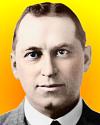
Born 2 Apr 1875; died 18 Aug 1940 at age 65. quotes
Walter Percy Chrysler was an American industrialist and inventor who founded his own company, Chrysler Motors. He began as a teenager in the railroad industry and rose to management positions. Then, in 1912, Charles W. Nash recruited him as works manager for the Buick division of General Motors. Chrysler reorganized production for efficiency, increasing output and profits, but resigned in 1920. He rescued Willys-Overland automobile company from bankruptcy and then turned Maxwell Motor Company into the Chrysler Corporation (1924) which produced Chrysler's first car in Jun 1925. The company grew to become the third of the present “Big Three” automobile manufacturers.«
Walter Percy Chrysler was an American industrialist and inventor who founded his own company, Chrysler Motors. He began as a teenager in the railroad industry and rose to management positions. Then, in 1912, Charles W. Nash recruited him as works manager for the Buick division of General Motors. Chrysler reorganized production for efficiency, increasing output and profits, but resigned in 1920. He rescued Willys-Overland automobile company from bankruptcy and then turned Maxwell Motor Company into the Chrysler Corporation (1924) which produced Chrysler's first car in Jun 1925. The company grew to become the third of the present “Big Three” automobile manufacturers.«
Chrysler, by Vincent Curcio. - book suggestion.
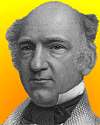
Born 2 Apr 1814; died 6 Dec 1879 at age 65. quotes
American industrialist, noted as the developer of the power loom for making lace and many types of carpet. At the age of 23 he invented his first loom for making coach lace (20 Apr 1837). Bigelow followed this with other power looms for weaving a variety of figured fabrics, tapestry carpeting, and ingrain carpeting. He obtained a patent for a power carpet loom on 26 May 1842. On 10 Apr 1845, he recieved the first U.S. patent for gingham manufacturing machinery. In 1861, he was a member of the committee that founded the Massachusetts Institute of Technology (MIT). more
American industrialist, noted as the developer of the power loom for making lace and many types of carpet. At the age of 23 he invented his first loom for making coach lace (20 Apr 1837). Bigelow followed this with other power looms for weaving a variety of figured fabrics, tapestry carpeting, and ingrain carpeting. He obtained a patent for a power carpet loom on 26 May 1842. On 10 Apr 1845, he recieved the first U.S. patent for gingham manufacturing machinery. In 1861, he was a member of the committee that founded the Massachusetts Institute of Technology (MIT). more
Broadlooms and Businessmen: A History of the Bigelow-Sanford Carpet Company, by John S. Ewing. - book suggestion.
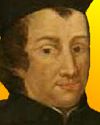
Born 2 Apr 1618; died 28 Dec 1663 at age 45. quotes
Italian physicist and mathematician who studied the diffraction of light. He observed the image on a screen in a darkened room of a tiny beam of sunlight after it passed pass through a fine screen (or a slit, edge of a screen, wire, hair, fabric or bird feather). The image had iridescent fringes, and deviated from a normal geometrical shadow. He coined the name diffraction for this change of trajectory of the light passing near opaque objects (though, more specifically, it may have been interferences with two close sources that he observed). This provided evidence for later physicists to support the wave theory of light. With Riccioli, he investigated the object in free fall (1640-50), and found that distance of fall was proportional to the square of the time taken.« more
Italian physicist and mathematician who studied the diffraction of light. He observed the image on a screen in a darkened room of a tiny beam of sunlight after it passed pass through a fine screen (or a slit, edge of a screen, wire, hair, fabric or bird feather). The image had iridescent fringes, and deviated from a normal geometrical shadow. He coined the name diffraction for this change of trajectory of the light passing near opaque objects (though, more specifically, it may have been interferences with two close sources that he observed). This provided evidence for later physicists to support the wave theory of light. With Riccioli, he investigated the object in free fall (1640-50), and found that distance of fall was proportional to the square of the time taken.« more
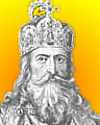
Born c. 2 Apr 742; died 28 Jan 814.
Frankish emperor who began educational reform. In 789, he started the establishment of schools teaching elements of mathematics, grammar, music and ecclesiastic subjects. Every monastery and abbey was expected to have a school for the education of the boys of the surrounding villages. Thus, he wished to replace the ignorance of the population in his realm with the ability to become more prosperous. The tradition of learning he initiated led to the expansion of medieval scholarship in the 12th-century Renaissance.«[a.k.a. Charles the Great, Carolus Magnus, Karolus Magnus, Karl der Grosse. The date and place of birth are uncertain and sources differ.]
Frankish emperor who began educational reform. In 789, he started the establishment of schools teaching elements of mathematics, grammar, music and ecclesiastic subjects. Every monastery and abbey was expected to have a school for the education of the boys of the surrounding villages. Thus, he wished to replace the ignorance of the population in his realm with the ability to become more prosperous. The tradition of learning he initiated led to the expansion of medieval scholarship in the 12th-century Renaissance.«[a.k.a. Charles the Great, Carolus Magnus, Karolus Magnus, Karl der Grosse. The date and place of birth are uncertain and sources differ.]

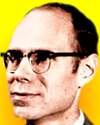
Died 2 Apr 2002 at age 92 (born 27 Mar 1910).
John Robinson Pierce was an American communications engineer who is regarded as the father of the communications satellite. Pierce was influential in the development of microwaves and radar during WW II, then began working on the theory of satellite communication in 1954. His writings, which detailed the use of satellites in beaming radio signals around the world, were largely ignored. However, he convinced NASA to convert the Echo balloon satellite into a radio wave reflector. His successful experiments with Echo in 1960 led to the development of Telstar, which initiated modern television and radio communications by amplifying signals from one station on Earth and beaming them to another.
John Robinson Pierce was an American communications engineer who is regarded as the father of the communications satellite. Pierce was influential in the development of microwaves and radar during WW II, then began working on the theory of satellite communication in 1954. His writings, which detailed the use of satellites in beaming radio signals around the world, were largely ignored. However, he convinced NASA to convert the Echo balloon satellite into a radio wave reflector. His successful experiments with Echo in 1960 led to the development of Telstar, which initiated modern television and radio communications by amplifying signals from one station on Earth and beaming them to another.
Signals: The Science of Telecommunications, by John Robinson Pierce and A. Michael Noll. - book suggestion.
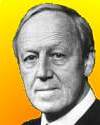
Died 2 Apr 1995 at age 86 (born 30 May 1908). quotes
Hannes Olof Gösta Alfvén was a Swedish astrophysicist who was one of the founders of the field of plasma physics (the study of ionized gases). He shared the 1970 Nobel Prize in Physics (with Frenchman Louis Néel). Alfvén was recognized “for fundamental work in magnetohydrodynamics with fruitful applications in different parts of plasma physics.” He conceived plasma cosmology as an alternative to the Big Bang theory of the origin of the universe. In the concept of plasma cosmology, the universe has no specific beginning nor has any forseeable end. Instead of a dominance by gravitational forces, the theory maintains that it is the electromagnetic forces of plasma throughout the universe that organizes the matter of the universe into its observed structure of stars.«
Hannes Olof Gösta Alfvén was a Swedish astrophysicist who was one of the founders of the field of plasma physics (the study of ionized gases). He shared the 1970 Nobel Prize in Physics (with Frenchman Louis Néel). Alfvén was recognized “for fundamental work in magnetohydrodynamics with fruitful applications in different parts of plasma physics.” He conceived plasma cosmology as an alternative to the Big Bang theory of the origin of the universe. In the concept of plasma cosmology, the universe has no specific beginning nor has any forseeable end. Instead of a dominance by gravitational forces, the theory maintains that it is the electromagnetic forces of plasma throughout the universe that organizes the matter of the universe into its observed structure of stars.«
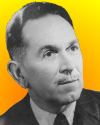
Died 2 Apr 1952 at age 55 (born 27 Feb 1897).
Bernard(-Ferdinand) Lyot was a French astronomer who invented the coronagraph (1930), an instrument which allows the observation of the solar corona when the Sun is not in eclipse. Earlier, using his expertise in optics, Lyot made a very sensitive polariscope to study polarization of light reflected from planets. Observing from the Pic du Midi Observatory, he determined that the lunar surface behaves like volcanic dust, that Mars has sandstorms, and other results on the atmospheres of the other planets. Modifications to his polarimeter created the coronagraph, with which he photographed the Sun's corona and its analyzed its spectrum. He found new spectral lines in the corona, and he made (1939) the first motion pictures of solar prominences.«
Bernard(-Ferdinand) Lyot was a French astronomer who invented the coronagraph (1930), an instrument which allows the observation of the solar corona when the Sun is not in eclipse. Earlier, using his expertise in optics, Lyot made a very sensitive polariscope to study polarization of light reflected from planets. Observing from the Pic du Midi Observatory, he determined that the lunar surface behaves like volcanic dust, that Mars has sandstorms, and other results on the atmospheres of the other planets. Modifications to his polarimeter created the coronagraph, with which he photographed the Sun's corona and its analyzed its spectrum. He found new spectral lines in the corona, and he made (1939) the first motion pictures of solar prominences.«
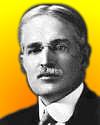
Died 2 Apr 1928 at age 60 (born 31 Jan 1868).
American analytical chemist who was awarded the 1914 Nobel Prize for Chemistry "in recognition of his accurate determinations of the atomic weight of a large number of chemical elements." His work meticulously refined the classical gravimetric methods of analysis to better reduce the sources of error. His work, and that of coworkers yielded accurate values for atomic weight for over 60 elements. In 1913, he found that the atomic weight of ordinary lead differed from lead produced from the radioactive decay of uranium and thus concurred with Soddy's prediction of isotopes. Richard's values were not improved until mass spectrometry became available after WW II. He also carried out work in thermochemistry and electrochemistry.«
American analytical chemist who was awarded the 1914 Nobel Prize for Chemistry "in recognition of his accurate determinations of the atomic weight of a large number of chemical elements." His work meticulously refined the classical gravimetric methods of analysis to better reduce the sources of error. His work, and that of coworkers yielded accurate values for atomic weight for over 60 elements. In 1913, he found that the atomic weight of ordinary lead differed from lead produced from the radioactive decay of uranium and thus concurred with Soddy's prediction of isotopes. Richard's values were not improved until mass spectrometry became available after WW II. He also carried out work in thermochemistry and electrochemistry.«
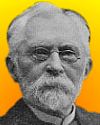
Died 2 Apr 1924 at age 82 (born 3 Nov 1841). quotes
Danish botanist whose is regarded as a founder of plant ecology for demonstrating how interactions between plants, animals and other organisms in a habitat form a community shaped by environmental conditions, such as a meadow ecosystem. Although the term ecology was previously coined by Haeckel in 1866, Warming provided a theoretical basis for research in this new discipline within botany. Warming studied what he called environmental factors, including soil, light, temperature and rainfall. His expedition to Brazil (1863-66) yielded a thorough study of the tropical flora. His other travels included Greenland (1884), Norway (1885), the West Indies and Venezuela (1890-92) to study the full range from artic to temperate to tropical habitats.«
Danish botanist whose is regarded as a founder of plant ecology for demonstrating how interactions between plants, animals and other organisms in a habitat form a community shaped by environmental conditions, such as a meadow ecosystem. Although the term ecology was previously coined by Haeckel in 1866, Warming provided a theoretical basis for research in this new discipline within botany. Warming studied what he called environmental factors, including soil, light, temperature and rainfall. His expedition to Brazil (1863-66) yielded a thorough study of the tropical flora. His other travels included Greenland (1884), Norway (1885), the West Indies and Venezuela (1890-92) to study the full range from artic to temperate to tropical habitats.«
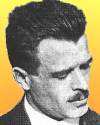

Swiss psychiatrist who devised the inkblot test that bears his name and that is widely used clinically for diagnosing psychopathology. His secondary-school nickname was Kleck, meaning “inkblot,” because of his interest in sketching. In 1917, he learned of Szyman Hens, who had studied the fantasies of his subjects using inkblot cards. Rorschach began in 1918 using 15 accidental inkblots, asking patients, “What might this be?” He knew the human tendency to project interpretations and feelings onto ambiguous stimuli. The subjective responses of his subjects enabled him to distinguish among them on the basis of their perceptive abilities, intelligence, and emotional characteristics. His published results (1921) drew little interest until after his death.
Psychodiagnostics, by Hermann Rorschach. - book suggestion.
Died 2 Apr 1880 at age 75 (born 5 Apr 1804). quotes
French crystallographer and chemist who contributed to the early chemistry of photography. He introduced potassium cyanide as a fixing agent. It reacted with the silver salts on the light-sensitive plate surface to form soluble silver cyanide, which could be washed away water. He published his method in La Lumière on 23 Apr 1853. The following year, in the same journal he published what are regarded as the first experiments with collodion dry plates on 22 Apr and 27 May 1854. In 1873, he grew the first synthetic ruby crystal.
French crystallographer and chemist who contributed to the early chemistry of photography. He introduced potassium cyanide as a fixing agent. It reacted with the silver salts on the light-sensitive plate surface to form soluble silver cyanide, which could be washed away water. He published his method in La Lumière on 23 Apr 1853. The following year, in the same journal he published what are regarded as the first experiments with collodion dry plates on 22 Apr and 27 May 1854. In 1873, he grew the first synthetic ruby crystal.
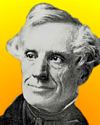
Died 2 Apr 1872 at age 80 (born 27 Apr 1791). quotes
Samuel Finley Breese Morse was an American artist and inventor who is famous for developing the Morse Code (1838) and independently perfecting an electric telegraph (1832-35). He spent the first part of his life as a portrait artist, and did not turn to science until 1832, when he was past his 40th birthday. He was returning to America from a tour of Europe, when he met Charles T. Jackson on the boat, who inspired him about newly discovered electromagnets. From that point, Morse worked to develop apparatus for electrical communications. Backed by Congress, he erected a line spanning 40 miles between Baltimore, Maryland and Washington D.C. which had its first trial on 23 May 1843. It was ready for public use on 1 Apr 1845.« more
Samuel Finley Breese Morse was an American artist and inventor who is famous for developing the Morse Code (1838) and independently perfecting an electric telegraph (1832-35). He spent the first part of his life as a portrait artist, and did not turn to science until 1832, when he was past his 40th birthday. He was returning to America from a tour of Europe, when he met Charles T. Jackson on the boat, who inspired him about newly discovered electromagnets. From that point, Morse worked to develop apparatus for electrical communications. Backed by Congress, he erected a line spanning 40 miles between Baltimore, Maryland and Washington D.C. which had its first trial on 23 May 1843. It was ready for public use on 1 Apr 1845.« more
Lightning Man: The Accursed Life of Samuel F. B. Morse, by Kenneth Silverman. - book suggestion.
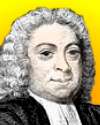
Died 2 Apr 1747 (born 1687).
German-born English botanist who wrote several descriptive works on plants, with a primary interest in crytogams. In 1721, having been offered work as a botanist with William Sherard, he moved to England, and eventually became Sherardian professor of botany at Oxford University. He described and illustrated plants in the Eltham garden of James Sherard in Kent. A new classification of lower plants he introduced (Historia muscorum, 1741) is still partially in use today.«
German-born English botanist who wrote several descriptive works on plants, with a primary interest in crytogams. In 1721, having been offered work as a botanist with William Sherard, he moved to England, and eventually became Sherardian professor of botany at Oxford University. He described and illustrated plants in the Eltham garden of James Sherard in Kent. A new classification of lower plants he introduced (Historia muscorum, 1741) is still partially in use today.«
Died 2 Apr 1742 (born 1675).
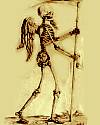
Scottish physician who was a distinguished obstetrician. Several medical terms still in current use resulted from his associated anatomical investigations, including Douglas' pouch, abscess, cul-de-sac, fold, line and Douglasitis. He advertised public lectures in which he gave demonstrations dissecting human cadavers and dead animals. Douglas was a Fellow of the Royal Society (1706) and Physician Extraordinary to Queen Caroline. In 1726, he assisted Sir Richard Manningham in exposing the fraud of Mary Toft who claimed to give birth to rabbits. In 1740, Douglas met William Hunter (1718–1783), made him an assistant and mentored him in his household. Hunter subsequently also became a distinguished anatomist and surgeon.«[Image: example of a skeletal study from the collection of James Douglas papers]
Scottish physician who was a distinguished obstetrician. Several medical terms still in current use resulted from his associated anatomical investigations, including Douglas' pouch, abscess, cul-de-sac, fold, line and Douglasitis. He advertised public lectures in which he gave demonstrations dissecting human cadavers and dead animals. Douglas was a Fellow of the Royal Society (1706) and Physician Extraordinary to Queen Caroline. In 1726, he assisted Sir Richard Manningham in exposing the fraud of Mary Toft who claimed to give birth to rabbits. In 1740, Douglas met William Hunter (1718–1783), made him an assistant and mentored him in his household. Hunter subsequently also became a distinguished anatomist and surgeon.«[Image: example of a skeletal study from the collection of James Douglas papers]
James Douglas of the pouch and his pupil William Hunter, by K. Bryn Thomas. - book suggestion.
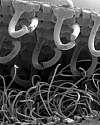
In 1978, Velcro, the hook-and-loop fastener patent expired, releasing the design to manufacture of imitations. It was developed by Swiss engineer Georges de Mestral, who noticed how thistle burrs clung to his clothing during a hike in the mountains. Using a microscope, he discovered their natural hook-like shape. From 1948, he worked with a local weaver from a textile plant to design a “locking tape.” The important discovery was accidental - that nylon, when sewn under ultraviolet light, formed industructable hooks. Velcro uses two tapes, one with stiff “hooks” like the burrs which clings to the second tape with soft “loops” like the fabric of his pants. The trademarked name Velcro comes from “vel” or velvet and “cro” from the French word crochet which means hook.«
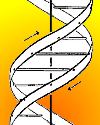
In 1953, the journal Nature published a paper with this date from Francis Crick and James Watson, titled Molecular Structure of Nucleic Acids: A Structure for Deoxyribose Nucleic Acid, in which they described a double helix structure for DNA. The diagram published with the paper was captioned, “The figure is purely diagrammatic. The two ribbons symbolize the phosphate-sugar chains, and the horizontal rods the pairs of bases holding the chains together. The vertical line marks the fibre axis.”[Image: diagram as published in Nature paper.]

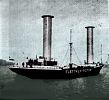
In 1926, Baden-Baden, a rotor ship invented by Anton Flettner left Hamburg, Germany, to make a transatlantic crossing. It arrived in New York on 29 May 1926 using a unique propulsion. Instead of sails, Flettner used two 9-ft diameter, 50-ft high cylinders, mounted vertically on the deck at the bow and the stern. Driven by 45-hp electric motors, they applied the aerodynamic power of the Magnus Effect, which builds air pressure behind a rotating cylinder. Although a theoretical success, it was not sufficiently effective for commercial application.
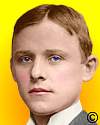
In 1889, Charles M. Hall patented an inexpensive electrolytic process to extract aluminium from its ore (No. 400,655) which he had invented on 23 Feb 1886. Although aluminum is the most abundant metal in the earth’s crust, it is not found naturally in pure form, because the metal bonds so tightly with oxygen and thus it must be separated from its oxide in bauxite ore.
more
(USPTO)
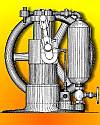
In 1872, George B. Brayton of Boston, Mass. (3 Oct 1830 - 17 Dec 1892) received a U.S. patent for a gas-powered engine (No. 125,166). He did pioneering work inventing this first American commercial internal combustion engine, which he manufactured and sold. Its principle of continuous ignition later became the basis for the turbine engine. A pressurized air-fuel mixture from a reservoir was ignited upon entering a water-cooled cylinder. The Brayton engine was tried in watercraft, one of John Holland's submarines and one for a few months installed in a carriage (1872-3). He held British patent Jul 1890, No. 11,062.«
more
Internal Fire: The Internal-Combustion Engine 1673-1900, by C. Lyle Cummins, Jr. - book suggestion.
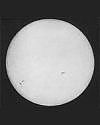
In 1845, the first surviving daguerrotype photograph showing details of the sun was taken by French physicists Armand Fizeau and Léon Foucault. The 5-inch (12 cm) image had an exposure of 1/60 second, and showed the umbra/penumbra structure of several sunspots, as well as limb darkening. The photographic process was new: Daguerre perfected the daguerrotype only a few years earlier, in 1838. Fizeau and Foucault had been collaborating with their own experiments on the process since 1839. Fizeau had much improved the durability of a daguerrotype image with a treatment, published in Aug 1840, using a solution of chloride of gold mixed with hypo-sulphite of soda, then heated over a spirit-lamp.«
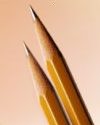
In 1827, lead pencils were first manufactured by Joseph Dixon, who built his factory in Salem, Mass. Dixon was responsible for the development of the graphite industry in the U.S. In 1859 he patented graphite crucibles. When he died, the Joseph Dixon Crucible Company was the largest manufacturer of graphite products in the world. The first* pencil factory in the U.S. however, was started earlier by William Monroe of Concord, Mass., in Jun 1812. His first 30 pencils were bought by Benjamin Adams, a hardware dealer in Boston, Mass. The first pencils made in Great Britain* (1584) used graphite from Borrowdale, Cumberland.
more
The Pencil: A History of Design and Circumstance, by Henry Petroski. - book suggestion.