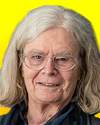
Born 24 Aug 1942. quotes
Karen Keskulla Uhlenbeck is an American mathematician who has been called the founder of geometric analysis. In 2019, she became the first woman to receive the prestigious Abel Prize, worth six million Norwegian kroner ($704,000). The Norwegian Academy of Science and Letters, awarded the prize for her “fundamental work in geometric analysis and gauge theory which has dramatically changed the mathematical landscape.” The Abel Prize, first awarded in 2003, is regarded as having the status of a Nobel Prize (which has no medal to recognize work in Mathematics). One of her achievements, which she says she is most proud of, is a solution to a problem related to how soap bubbles arrange themselves into shapes that minimize their energy.«
Karen Keskulla Uhlenbeck is an American mathematician who has been called the founder of geometric analysis. In 2019, she became the first woman to receive the prestigious Abel Prize, worth six million Norwegian kroner ($704,000). The Norwegian Academy of Science and Letters, awarded the prize for her “fundamental work in geometric analysis and gauge theory which has dramatically changed the mathematical landscape.” The Abel Prize, first awarded in 2003, is regarded as having the status of a Nobel Prize (which has no medal to recognize work in Mathematics). One of her achievements, which she says she is most proud of, is a solution to a problem related to how soap bubbles arrange themselves into shapes that minimize their energy.«
Born 24 Aug 1918; died 2 Feb 1996 at age 77.
U.S. chemical engineer who inadvertently created what became known as Styrofoam while working for the Dow Chemical Co., where he was attempting to develop a rubberlike polymer to be used as a flexible insulator.
U.S. chemical engineer who inadvertently created what became known as Styrofoam while working for the Dow Chemical Co., where he was attempting to develop a rubberlike polymer to be used as a flexible insulator.
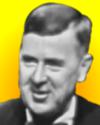
Born 24 Aug 1917; died 7 Sep 2004 at age 87. quotes
Ralph Eugene Lapp was an American nuclear physicist and author who began his career in high-energy physics research with Arthur H. Compton. Lapp then worked at Chicago on the Manhattan Project. With 69 others, he signed Leo Szilard’s 17 Jul 1945 petition to President Truman, the month before the attack on Hiroshima. They urged that Japan should have an opportunity to surrender before use of the atom bomb. (Nevertheless, the actual attack was by surprise.) After the war, he researched the results in Japan. Lapp lectured across the U.S. He wrote 22 books on nuclear safety, including the dangers of nuclear fallout in The Voyage of the Lucky Dragon (1958). A Post book reviewer in 1956 called him “a one-man atomic truth squad and nuclear lie detector.”«
Ralph Eugene Lapp was an American nuclear physicist and author who began his career in high-energy physics research with Arthur H. Compton. Lapp then worked at Chicago on the Manhattan Project. With 69 others, he signed Leo Szilard’s 17 Jul 1945 petition to President Truman, the month before the attack on Hiroshima. They urged that Japan should have an opportunity to surrender before use of the atom bomb. (Nevertheless, the actual attack was by surprise.) After the war, he researched the results in Japan. Lapp lectured across the U.S. He wrote 22 books on nuclear safety, including the dangers of nuclear fallout in The Voyage of the Lucky Dragon (1958). A Post book reviewer in 1956 called him “a one-man atomic truth squad and nuclear lie detector.”«
The Voyage of the Lucky Dragon, by Ralph Lapp. - book suggestion.
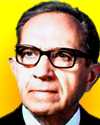
Born 24 Aug 1898; died 22 May 1983 at age 84. quotes
Belgian-American cytologist who was awarded the 1974 Nobel Prize for Physiology or Medicine for discoveries concerning the structural and functional organization of the cell (shared with Christian de Duve and George E. Palade). With cell fractionization methods he developed using a high-powered centrifuge, Claude was able to separate various organelles in the nucleus of the living cell. He was able to show that mitochondria are the respiration centres of the cell. From 1942, he applied electron microscopy to further elucidate the structure of cells. Modern cell biology is partly based on his work.«
Belgian-American cytologist who was awarded the 1974 Nobel Prize for Physiology or Medicine for discoveries concerning the structural and functional organization of the cell (shared with Christian de Duve and George E. Palade). With cell fractionization methods he developed using a high-powered centrifuge, Claude was able to separate various organelles in the nucleus of the living cell. He was able to show that mitochondria are the respiration centres of the cell. From 1942, he applied electron microscopy to further elucidate the structure of cells. Modern cell biology is partly based on his work.«
Born 24 Aug 1894; died 22 Jan 1981 at age 86.
German meteorologist who was one of the founders of microclimatology (the study of the climatic conditions within a few metres of the ground surface). His observations, made above grassy fields or areas of crops and below forest canopies, elucidated the complex and subtle interactions between vegetation and the heat, radiation, and water balances of the air and soil.
German meteorologist who was one of the founders of microclimatology (the study of the climatic conditions within a few metres of the ground surface). His observations, made above grassy fields or areas of crops and below forest canopies, elucidated the complex and subtle interactions between vegetation and the heat, radiation, and water balances of the air and soil.
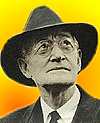
Born 24 Aug 1886; died 6 Sep 1967 at age 81.
American naval architect, one of the most renowned in his time, having designed over 6,000 ships from a fireboat, to freighters, ocean liners and warships. Early in his life, he began building self-taught skills by studying blueprints and existing vessels. In 1915, Gibbs and his brother Frederic H., joined the International Mercantile Marine Company, but had their own firm by 1922 which converted an ex-German liner into the American luxury liner SS Leviathan. The Gibbs firm oversaw the design of 74% of all naval vessels built during WW II, making Gibbs an outstanding contributor to the American war effort. Postwar, he realized his lifelong dream: the 1,000 foot superliner, the SS United States, the fastest ship to cross the Atlantic.«
American naval architect, one of the most renowned in his time, having designed over 6,000 ships from a fireboat, to freighters, ocean liners and warships. Early in his life, he began building self-taught skills by studying blueprints and existing vessels. In 1915, Gibbs and his brother Frederic H., joined the International Mercantile Marine Company, but had their own firm by 1922 which converted an ex-German liner into the American luxury liner SS Leviathan. The Gibbs firm oversaw the design of 74% of all naval vessels built during WW II, making Gibbs an outstanding contributor to the American war effort. Postwar, he realized his lifelong dream: the 1,000 foot superliner, the SS United States, the fastest ship to cross the Atlantic.«
Born 24 Aug 1835; died 5 Oct 1883 at age 48.
American inventor who devised a sewing machine for sewing the soles of shoes to the uppers.
American inventor who devised a sewing machine for sewing the soles of shoes to the uppers.
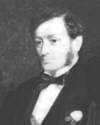
Born 24 Aug 1816; died 15 Oct 1889 at age 73.
English, laid the first successful transatlantic cables. Sir Daniel Gooch was an English railway pioneer and inventor who was trained in George Stephenson & Edward Pease's works at Newcastle upon Tyne. He was locomotive superintendent of Great Western Railway for 27 years, where as Brunel's right-hand man, he designed the best broad-gauge engines and invented “the suspended link motion with the shifting radius link” (1843). Gooch also experimented with a dynamometer carriage. In 1864 he resigned to concentrate on developing telegraphic communication. Sir Daniel Gooch and his son Charles, were the engineers who laid the first Atlantic Cable from the steamship The Great Eastern. Daniel became member of Parliment.
English, laid the first successful transatlantic cables. Sir Daniel Gooch was an English railway pioneer and inventor who was trained in George Stephenson & Edward Pease's works at Newcastle upon Tyne. He was locomotive superintendent of Great Western Railway for 27 years, where as Brunel's right-hand man, he designed the best broad-gauge engines and invented “the suspended link motion with the shifting radius link” (1843). Gooch also experimented with a dynamometer carriage. In 1864 he resigned to concentrate on developing telegraphic communication. Sir Daniel Gooch and his son Charles, were the engineers who laid the first Atlantic Cable from the steamship The Great Eastern. Daniel became member of Parliment.
Born 24 Aug 1772; died 21 May 1826 at age 53.
German maker of astronomical instruments who introduced the meridian, or transit, circle, a specially designed telescope for measuring both the time when a celestial body is directly over the meridian (the longitude of the instrument) and the angle of the body at meridian passage. By 1796 he was engaged in the construction of a dividing engine, a machine used to mark off equal intervals accurately, usually on precision instruments.
German maker of astronomical instruments who introduced the meridian, or transit, circle, a specially designed telescope for measuring both the time when a celestial body is directly over the meridian (the longitude of the instrument) and the angle of the body at meridian passage. By 1796 he was engaged in the construction of a dividing engine, a machine used to mark off equal intervals accurately, usually on precision instruments.
Born 24 Aug 1767; died 9 Mar 1823 at age 55.
Swiss scientist and politician who was president of the Great Council of the Helvetic Republic (1798-1799) and who was an outspoken opponent of federalism. He directed the canalization of the Linth River.
Swiss scientist and politician who was president of the Great Council of the Helvetic Republic (1798-1799) and who was an outspoken opponent of federalism. He directed the canalization of the Linth River.

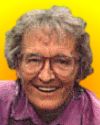
Died 24 Aug 2004 at age 78 (born 8 Jul 1926).
Swiss-American psychiatrist who was a leading authority on the psychology of dying. She is best-known for twelve books, beginning with On Death and Dying (1969), in which she proposed that the terminally ill go through five stages in their attitude. These are denial, anger, bargaining, depression and, perhaps, acceptance. The book offers strategies for caregivers. The work grew from a seminar she founded at the Billings Hospital of the University of Chicago where dying patients talked about their thoughts upon the approach of death. The best-selling success of the book led her into a career of clinical practice to the treatment of dying patients of all ages. Her lectures changed institutional attitudes towards the terminally ill.«
Swiss-American psychiatrist who was a leading authority on the psychology of dying. She is best-known for twelve books, beginning with On Death and Dying (1969), in which she proposed that the terminally ill go through five stages in their attitude. These are denial, anger, bargaining, depression and, perhaps, acceptance. The book offers strategies for caregivers. The work grew from a seminar she founded at the Billings Hospital of the University of Chicago where dying patients talked about their thoughts upon the approach of death. The best-selling success of the book led her into a career of clinical practice to the treatment of dying patients of all ages. Her lectures changed institutional attitudes towards the terminally ill.«
On Death and Dying, by Elisabeth Kubler-Ross. - book suggestion.
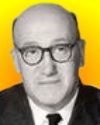
Died 24 Aug 1997 at age 88 (born 6 Sep 1908). quotes
English physicist who invented the quartz crystal ring clock and the first practical atomic clock. These devices were capable of measuring time more accurately than any previous clocks. He built a cesium-beam atomic clock, a device that ultimately changed the way time is measured. Each chemical element and compound absorbs and emits electromagnetic radiation at its own characteristic frequencies. These resonances are inherently stable over time and space. The cesium atom's natural frequency was formally recognized as the new international unit of time in 1967: the second was defined as exactly 9,192,631,770 oscillations or cycles of the cesium atom's resonant frequency, replacing the old second defined in terms of the Earth's motion.
English physicist who invented the quartz crystal ring clock and the first practical atomic clock. These devices were capable of measuring time more accurately than any previous clocks. He built a cesium-beam atomic clock, a device that ultimately changed the way time is measured. Each chemical element and compound absorbs and emits electromagnetic radiation at its own characteristic frequencies. These resonances are inherently stable over time and space. The cesium atom's natural frequency was formally recognized as the new international unit of time in 1967: the second was defined as exactly 9,192,631,770 oscillations or cycles of the cesium atom's resonant frequency, replacing the old second defined in terms of the Earth's motion.
Splitting the Second: the Story of Atomic Time, by Tony Jones. - book suggestion.
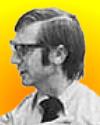
Died 24 Aug 1990 at age 66 (born 23 Dec 1923).
American geologist and senior scientist at the U.S. Geological Survey's astrogeology branch supporting space exploration. Starting in the mid 1960s, he helped analyze the photographs from the Ranger, Lunar Orbiter, and Surveyor lunar missions. In mapping the moon, suitable landing spots were being sought for the unmanned Surveyor 5 spacecraft (1967) and the manned Apollo landings (1969-72). Masursky headed the group that interpreted television transmissions from Martian satellite Mariner 9 (1971), producing maps to plan the landing of unmanned Viking spacecraft on Mars (1976). He analyzed data on the geological origins and evolution of the planets. He collaborated in foreign projects such as the Soviet Venus probes.«
American geologist and senior scientist at the U.S. Geological Survey's astrogeology branch supporting space exploration. Starting in the mid 1960s, he helped analyze the photographs from the Ranger, Lunar Orbiter, and Surveyor lunar missions. In mapping the moon, suitable landing spots were being sought for the unmanned Surveyor 5 spacecraft (1967) and the manned Apollo landings (1969-72). Masursky headed the group that interpreted television transmissions from Martian satellite Mariner 9 (1971), producing maps to plan the landing of unmanned Viking spacecraft on Mars (1976). He analyzed data on the geological origins and evolution of the planets. He collaborated in foreign projects such as the Soviet Venus probes.«
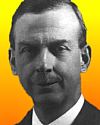
Died 24 Aug 1982 at age 99 (born 5 Oct 1882).
Italian astronomer known for his studies of the sun at the University of Padua where was director at the Arcetri Observatory (1921-52), taking over from his father who also held the post (1894-1921). In 1913, Giorgio Abetti took part, as a geodetic and geophysical astronomer, in the De Filippi expedition in Karakorum, Himalaya and Turkestan. He went on expeditions to observe eclipses of the sun, including one to Siberia to observe the total eclipse on 19 Jun 1936 and in 1952 to Sudan. With the advice of George Hale, he built a solar tower at the observatory (opened 1925). He wrote a popular text on the sun, a handbook of astrophysics (1936) and a popular history of astronomy (1963).
Italian astronomer known for his studies of the sun at the University of Padua where was director at the Arcetri Observatory (1921-52), taking over from his father who also held the post (1894-1921). In 1913, Giorgio Abetti took part, as a geodetic and geophysical astronomer, in the De Filippi expedition in Karakorum, Himalaya and Turkestan. He went on expeditions to observe eclipses of the sun, including one to Siberia to observe the total eclipse on 19 Jun 1936 and in 1952 to Sudan. With the advice of George Hale, he built a solar tower at the observatory (opened 1925). He wrote a popular text on the sun, a handbook of astrophysics (1936) and a popular history of astronomy (1963).
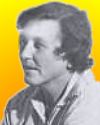
Died 24 Aug 1978 at age 72 (born 5 Jan 1906).
[Dame Kathleen Mary Kenyon was an English archaeologist whose work at Jericho identified it as the oldest known continuously occupied human settlement by excavating to its Stone Age foundation. This evidence pushed back the era of occupation of the mound at Jericho from the Bronze Age and Neolithic to the Natufian culture at the end of the Ice Age (10,000 – 9,000 BC). She established that the city itself spanned more than 3,800 years. Over 100 tombs were discovered at Jericho during excavations (1952-58). Kenyon helped pioneer stratigraphic excavations as a more scientific approach to archaeological digs, a technique she learned while working with Sir Mortimer Wheeler at his major excavation of the Romano-British city of Verulamium (north of London).
[Dame Kathleen Mary Kenyon was an English archaeologist whose work at Jericho identified it as the oldest known continuously occupied human settlement by excavating to its Stone Age foundation. This evidence pushed back the era of occupation of the mound at Jericho from the Bronze Age and Neolithic to the Natufian culture at the end of the Ice Age (10,000 – 9,000 BC). She established that the city itself spanned more than 3,800 years. Over 100 tombs were discovered at Jericho during excavations (1952-58). Kenyon helped pioneer stratigraphic excavations as a more scientific approach to archaeological digs, a technique she learned while working with Sir Mortimer Wheeler at his major excavation of the Romano-British city of Verulamium (north of London).
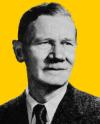
Died 24 Aug 1971 at age 84 (born 27 Jan 1887).
Carl William Blegen was an American archaeologist who unearthed evidence that supported and dated the sack of Troy recorded in Homer's Iliad. Storage jars, skeletons and ash piles (which he interpreted as evidence of the city's fiery destruction) reinforced his conviction. He also discovered, in 1939, clay tablets dating from about 1250 BC. At the fabled palace of King Nestor, a major figure in the Trojan War, nearly 1,100 clay tablet records of palace transactions were found there over 15 years. These were inscribed with the earliest known examples of European writing, enabling cryptographers to find the key by which the ancient tablets could be decoded, proving the existence of a Greek civilization where none was formerly thought to exist.«
Carl William Blegen was an American archaeologist who unearthed evidence that supported and dated the sack of Troy recorded in Homer's Iliad. Storage jars, skeletons and ash piles (which he interpreted as evidence of the city's fiery destruction) reinforced his conviction. He also discovered, in 1939, clay tablets dating from about 1250 BC. At the fabled palace of King Nestor, a major figure in the Trojan War, nearly 1,100 clay tablet records of palace transactions were found there over 15 years. These were inscribed with the earliest known examples of European writing, enabling cryptographers to find the key by which the ancient tablets could be decoded, proving the existence of a Greek civilization where none was formerly thought to exist.«
Troy and The Trojans, by Carl W Blegen. - book suggestion.
Died 24 Aug 1940 at age 80 (born 22 Aug 1860).
German engineer who discovered television's scanning principle, in which the light intensities of small portions of an image are successively analyzed and transmitted. Nipkow's invented (1884) a rotating disk (Nipkow disk) with one or more spirals of apertures that passed successively across the picture to make a mechanically scanned television system.
German engineer who discovered television's scanning principle, in which the light intensities of small portions of an image are successively analyzed and transmitted. Nipkow's invented (1884) a rotating disk (Nipkow disk) with one or more spirals of apertures that passed successively across the picture to make a mechanically scanned television system.
Died 24 Aug 1930 at age 75 (born 1 Sep 1854).
American illustrator, writer and educator remembered for her work in nature study.Née Anna Botsford.
American illustrator, writer and educator remembered for her work in nature study.Née Anna Botsford.
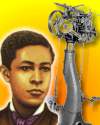
Matzeliger & machine
Died 24 Aug 1889 at age 36 (born 15 Sep 1852).
Dutch Guianian-American inventor who is best known for his shoe-lasting machine that revolutionished the shoe industry by replacing the hand work of attaching the sole to the upper of a shoe. He left his homeland of Dutch Guiana and sailed for America at age 19. He settled in Lynn, Massachussetts, by about age 25, where he became a shoe stitching machine operator. There he saw the tedious and slow process of finishing the shoe by hand, and resolved to develop a machine able to do that job more efficiently. Despite being so poor that obtaining materials was difficult, he made a wooden model. He obtained a patent for his invention, issued on 20 Mar 1883. With improvements, by 1885, he had a production model ready, able to produce shoes far more rapidly than hand workers. He died of tuberculosis at the early age of not yet 37.«
Dutch Guianian-American inventor who is best known for his shoe-lasting machine that revolutionished the shoe industry by replacing the hand work of attaching the sole to the upper of a shoe. He left his homeland of Dutch Guiana and sailed for America at age 19. He settled in Lynn, Massachussetts, by about age 25, where he became a shoe stitching machine operator. There he saw the tedious and slow process of finishing the shoe by hand, and resolved to develop a machine able to do that job more efficiently. Despite being so poor that obtaining materials was difficult, he made a wooden model. He obtained a patent for his invention, issued on 20 Mar 1883. With improvements, by 1885, he had a production model ready, able to produce shoes far more rapidly than hand workers. He died of tuberculosis at the early age of not yet 37.«
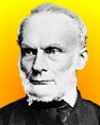
Died 24 Aug 1888 at age 66 (born 2 Jan 1822). quotes
who was one of the founders of thermodynamics. In 1850, he stated the second law of thermodynamics. As a theoretical physicist, he also researched in molecular physics and electricity. In his published work in thermodynamics (1865) he gave the First and Second laws of thermodynamics in the following form: (1) The energy of the universe is constant. (2) The entropy of the universe tends to a maximum. In all Clausius wrote eight important papers on the topic. He restated Sadi Carnot's principle of the efficiency of heat engines. The Clausius-Clapeyron equation expresses the relation between the pressure and temperature at which two phases of a substance are in equilibrium.
who was one of the founders of thermodynamics. In 1850, he stated the second law of thermodynamics. As a theoretical physicist, he also researched in molecular physics and electricity. In his published work in thermodynamics (1865) he gave the First and Second laws of thermodynamics in the following form: (1) The energy of the universe is constant. (2) The entropy of the universe tends to a maximum. In all Clausius wrote eight important papers on the topic. He restated Sadi Carnot's principle of the efficiency of heat engines. The Clausius-Clapeyron equation expresses the relation between the pressure and temperature at which two phases of a substance are in equilibrium.
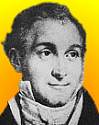
Died 24 Aug 1861 at age 79 (born 3 Jul 1782).
French mineralogist and mining engineer who discovered bauxite (aluminium ore) on 23 Mar 1821 near the village Les Baux de Provence in southern France. On 24 May 1806, he joined the central laboratory at the Board of Mines. From 1816, he was chief of the laboratory at the École des Mines, and professor of assaying. Berthier analyzed kaolin along with dozens of other minerals and ores. He sought out phosphate deposits valuable for agriculture. He published a treatise (1834) of practical analytical procedures that were widely used by other mineralogists. In another field, Berthier noticed - before Mitscherlich - that isomorphism occurred whereby chemically different substances can have the same crystalline form and even co-crystallise.« more
French mineralogist and mining engineer who discovered bauxite (aluminium ore) on 23 Mar 1821 near the village Les Baux de Provence in southern France. On 24 May 1806, he joined the central laboratory at the Board of Mines. From 1816, he was chief of the laboratory at the École des Mines, and professor of assaying. Berthier analyzed kaolin along with dozens of other minerals and ores. He sought out phosphate deposits valuable for agriculture. He published a treatise (1834) of practical analytical procedures that were widely used by other mineralogists. In another field, Berthier noticed - before Mitscherlich - that isomorphism occurred whereby chemically different substances can have the same crystalline form and even co-crystallise.« more
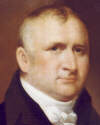
Died 24 Aug 1842 at age 71 (born 10 Oct 1770).
American engineer who directed the construction of the Erie Canal. A one-time judge, he helped survey the Erie Canal route. When the Erie Canal was finally funded in 1817, Wright was selected as one of the three engineers to design and build it, then named chief engineer. Wright made the Erie Canal project a school of engineering. Until mid-century, almost every civil engineer in the U.S. had trained with, or been trained by someone who had worked under, Wright on the Erie Canal. Because he trained so many engineers on that project, Wright has been called the “father of American civil engineering.” He also engaged in the design and construction at the outset of the first railroads. He was the first Chief Engineer of the Erie Railroad.
American engineer who directed the construction of the Erie Canal. A one-time judge, he helped survey the Erie Canal route. When the Erie Canal was finally funded in 1817, Wright was selected as one of the three engineers to design and build it, then named chief engineer. Wright made the Erie Canal project a school of engineering. Until mid-century, almost every civil engineer in the U.S. had trained with, or been trained by someone who had worked under, Wright on the Erie Canal. Because he trained so many engineers on that project, Wright has been called the “father of American civil engineering.” He also engaged in the design and construction at the outset of the first railroads. He was the first Chief Engineer of the Erie Railroad.
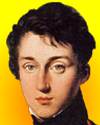
Age 17
Died 24 Aug 1832 at age 36 (born 1 Jun 1796). quotes
Nicolas-Lèonard-Sadi Carnot was a French engineer and physicist became a captain of engineers in the army, and spent much of his life investigating the design of steam engines. His book Reflections on the Motive Power of Heat (1824) contained a theorem which says that a maximum efficiency of heat engine can be obtained by a reversible engine, and that efficiency depends only on the temperatures of the hot and the cool sources of the engine. This theorem played an essential role for the subsequent development of thermodynamics. It was written to promote the construction of steam engines and other heat engines in France, whose industrial development was lagging behind England's.
Nicolas-Lèonard-Sadi Carnot was a French engineer and physicist became a captain of engineers in the army, and spent much of his life investigating the design of steam engines. His book Reflections on the Motive Power of Heat (1824) contained a theorem which says that a maximum efficiency of heat engine can be obtained by a reversible engine, and that efficiency depends only on the temperatures of the hot and the cool sources of the engine. This theorem played an essential role for the subsequent development of thermodynamics. It was written to promote the construction of steam engines and other heat engines in France, whose industrial development was lagging behind England's.
Reflections on the Motive Power of Fire, by Sadi Carnot. - book suggestion.
Died 24 Aug 1595 (born c. 1546).
English astronomer and mathematician who (with his father, Leonard) was a pioneer in the use of the telescope. He was the leader of the English Copernicans. His observations of the new star of 1572, published in his Alae seu scalae mathematicae (1573) were second only to Tycho Brahe in accuracy. He used his observations of the supernova to justify the heliocentric system. In mathematics, he wrote on platonic and archimedian solids.
English astronomer and mathematician who (with his father, Leonard) was a pioneer in the use of the telescope. He was the leader of the English Copernicans. His observations of the new star of 1572, published in his Alae seu scalae mathematicae (1573) were second only to Tycho Brahe in accuracy. He used his observations of the supernova to justify the heliocentric system. In mathematics, he wrote on platonic and archimedian solids.

NASA 2010
In 2006, Pluto was declassified as a planet by the International Astronomical Union (IAU) following a vote at their 10-day General Assembly in Prague. It was given status instead as a “dwarf planet,” on account of its small size—smaller than the Moon—and highly elliptical, tilted orbit which overlaps with that of Neptune. However, only 424 of 2,700 astronomers who remained in Prague for the last day of the meeting took part. Those who voted were about only 4% of the world's 10,000 astronomers. The decision was criticized, and a petition was started. The vote established other dwarf planets: Ceres (a small body between Mars and Jupiter) and 2003 UB313 (a small body beyond Pluto, where dozens more potential dwarf planets exist). Thus Neptune became the Solar System's outermost planet, indefinitely.«Image: Pluto's surface generated from images gathered by the Hubble Space Telescope in 2002 and 2003, with extensive computer enhancement, as released by NASA on 4 Feb 2010.
The Pluto Files: The Rise and Fall of America's Favorite Planet, by Neil deGrasse. - book suggestion.
In 1997, Gordon Spence discovered the largest known prime number, 2^2976221 - 1, the 36th known Mersenne prime number. It took his 100-MHz Pentium PC fifteen days to prove it. At 895,932 digits in length, if printed out the number would stretch for 1.4 miles or if spoken 8 hours a day would take 28 days to complete.
In 1989, the U.S. space probe Voyager 2 ended the final planetary fly-by of its mission, leaving Neptune behind after taking photgraphs showing three complete rings and six previously unknown moons. It had also collected data showing that Neptune's atmosphere was stormy, and had a notable magnetic field oriented at an angle to its axis of rotation. The surface features of Triton, its largest moon, were also photographed.«.*
In 1968, France exploded a hydrogen bomb over a South Pacific testing ground and became the world's fifth thermonuclear power. The Canopus test used a 3 tonne device suspended at an altitude of 600 m from a balloon over Fangataufa Atoll, 41 km south east of Moruroa. The project was led by a young physicist, Roger Dautry.This was France's largest nuclear device. It produced a yield of 2.6 megatons, and used a lithium-6 deuteride secondary jacketed with highly enriched uranium. The resulting contamination of the atoll kept it off limits to humans for six years, after which France resumed their nuclear program there with underground tests.
Dark Sun: The Making of the Hydrogen Bomb, by Richard Rhodes. - book suggestion.

In 1962, Russian cosmonauts Andrian Nikolayev and Pavel Popovich appeared on the cover of Time Magazine. They flew the first two-man mission in space at the same time. Each was piloting their own separate spacecraft—Vostok 3 and Vostok 4 respectively.«

In 1932, Amelia Earhart became the first woman to fly non-stop across the United States, traveling from Los Angeles to Newark, N.J., in just over 19 hours. Earlier in the same year, on 20 May 1932, she accomplished the first solo flight by a woman across the Atlantic Ocean.
more
Amelia Earhart: The Truth at Last, by Mike Campbell. - book suggestion.
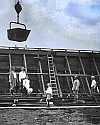
In 1909, workers poured the first concrete for the Panama Canal at a lock site at Gatun. Finishing all the locks there took nearly four years. A dam holds back the artificial Gatun Lake to supply water for the locks. The Gatun gate was closed on 27 Jun 1913, allowing Gatun Lake to fill to its planned depth. A few months later, on 26 Sep 1913, the tugboat Gatun made a trial run through the Gatun Locks. The control panel was not ready for the event, so the locks were operated manually. Everything worked perfectly. The Panama Canal crosses the Isthmus of Panama, joining the Atlantic and Pacific Oceans. Built 1904-14, it is only half the length of the Suez Canal. Unlike the Suez, the Panama Canal uses locks to raise and lower ships.
Path Between The Seas: The Creation of the Panama Canal, by David McCullough. - book suggestion.
In 1907, the Bréguet-Richet Gyroplane No. 1 made what is generally accepted as the first vertical flight, hovering about 2 feet (0.6 meters) off the ground for one minute, powered by a 45 h.p. engine. It was built by the brothers Louis and Jacques Bréguet with assistance from Professor Charles Richet. It lacked stability, any control system, and it needed four men to steady it while it hovered, so it did not represent a practical helicopter. (Some sources give the date as 29 Sep 1907.)
In 1869, the first U.S. patent for a waffle iron was issued to Cornelius Swarthout of Troy, N.Y. (No. 94,093).
In 1853, it has been claimed that the first potato chips were prepared by Chef George Crum, an American Indian, at Moon's Lake House in Saratoga Springs, NY. When railroad magnate Commodore Cornelius Vanderbilt was dining there, he sent his fried potatoes back to the kitchen, complaining they were "too thick." The chef, George Crum retaliated by slicing paper thin strips of potatoes and frying them to a crisp. But Vanderbilt loved these "Saratoga Chips" and they became an instant success.*(Note: webmaster seeks a reliable reference for the particular date, but year 1853 is given by several sources. The story is too good not to include somewhere, even if the day is not verified!)
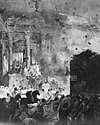
In 79 A.D., the long-dormant Mount Vesuvius erupted in Italy, burying the Roman cities of Pompeii and Herculaneum in volcanic ash. An estimated 20,000 people died. When discovered, the sites became astonishing archaeological time capsules. Official excavations began on 6 Apr 1748 on behalf of the Italian king’s interest in collecting antiquities. (Although until recently, August had been accepted for the date, new thinking is that signs of clothing for colder weather suggests later in the year, such as October.)
more
The Complete Pompeii, by Joanne Berry. - book suggestion.