 Short Stories of Science and InventionA Collection of Radio Talks byCharles F. KetteringINDEXWeekly, from September 1942 to July 1945, Charles F. Kettering gave five-minute intermission talks about Science and Invention during the radio broadcasts of the General Motors Symphony of the Air. Kettering invented the first automobile self-starter, and for 31 years directed a research laboratory for General Motors. These radio talks are a fascinating legacy from the mind of a prolific inventor. The obvious anachronisms now add a historical perspective of the war-time period in which they were written. These web pages now preserve some of the most popular stories for a new generation to read The text and art come from a General Motors booklet of selected talks. (Reprint, March 1959) |
A Radio Talk by Charles F. Kettering 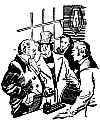 Howe was employed in Boston by an instrument maker by the name of
Davis, and one day he overheard a conversation between Davis and a man
who had brought a model of a knitting machine to the shop for Davis to
see. Davis asked the man why he didn't invent a sewing machine. The
inventor said it couldn't be done. But a man nearby said, "Some day it
will be done" - "And the inventor will make a fortune," said another
bystander. This started Howe on his great venture.
Howe was employed in Boston by an instrument maker by the name of
Davis, and one day he overheard a conversation between Davis and a man
who had brought a model of a knitting machine to the shop for Davis to
see. Davis asked the man why he didn't invent a sewing machine. The
inventor said it couldn't be done. But a man nearby said, "Some day it
will be done" - "And the inventor will make a fortune," said another
bystander. This started Howe on his great venture. At first, young Howe tried to imitate mechanically the motions of the hands but that was too complicated. He made many unsuccessful devices during the next two years until finally he recalled the moving shuttle he had seen in the textile mills. But Howe really solved the problem when he overcame his mental inertia and put the eye and point on the same end of the needle. By combining the eye-pointed needle with the shuttle principle, he had the right idea but he realized in order to build a working model he would need more money and equipment than he could possibly afford. |