• Science
    Quotes
  • What's
    New
  • Science
    Stories
  • Chemistry
    Stories
  • Perpetual
    Motion
  • Newsletter
    Sign-up
  • Search
    search icon
  • Feedback
    email icon
  • Home
  • Text Menu
  • Science Store
  • News
  • Wall Calendar
  • Survey
  • Privacy
  • Terms of Use
TODAYINSCI ®

Find science on your birthday
TODAY IN SCIENCE HISTORY
Follow @todayinsci
Thumbnail of Henry Fourdrinier (source)
Henry Fourdrinier
(11 Feb 1766 - 3 Sep 1854)

English inventor of paper-making machinery known by his name, which is still at the core of modern continuous production equipment.

Short biography of Henry Fourdrinier >>

Henry Fourdrinier

from Dictionary of National Biography (1889)
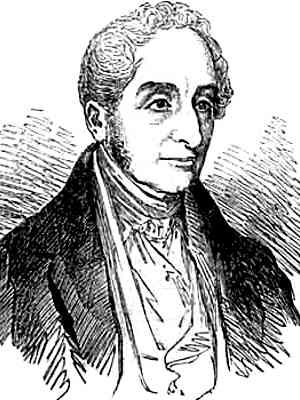
Henry Fourdrinier
Henry Fourdrinier
from Illustrated London News (7 Oct 1854) (source)

Henry Fourdrinier (1766-1854), inventor, was born 11 Feb. 1766, in Lombard Street, London. His father was a paper-maker and wholesale stationer, and was in all probability grandson of Paul Fourdrinier.

Henry Fourdrinier succeeded his father as a paper manufacturer. In conjunction with his brother Sealy he devoted himself for many years to the invention and improvement of paper-making machinery. Their first patent was taken out in 1801. In 1807 they perfected their machine for making continuous paper. This machine imitated with some improvements the processes used in paper by hand. Its chief advantages were that it produced paper of any size, and with greatly increases rapidity.

The experiments were very costly, and much litigation was required to protect the patent. When the invention was completed they had expended 60,000 pounds, and became bankrupt. Parliament extended the Fourdriniers' letters patent for fourteen years, and the new system of paper-making was widely adopted, but the brothers were greatly hampered by the defective state of the law of patents. In 1814, the Emperor Alexander, while visiting England, was interested in Fourdiniers' machine. An agreement was made that the Fourdriniers should receive 700 pounds annually for the use of two machines for ten years. The machines were erected at Peterhoff under the superintendence of Henry Fourdrinier's son, but no portion of the stipulated sum was ever paid. Henry Fourdrinier repeatedly asserted his claim, and at the age of seventy-two, attended by his daughter, made a journey to St. Petersberg, and placed his petition personally in the hands of Emperor Nicholas. No result followed.

Meanwhile the Fourdriniers had petitioned parliament for compensation on the losses sustained by them. On 25 April 1839 a motion was brought forward in the House of Commons, when the chancellor of the exchequer promised to ;go into the merits of the case. On 8 May 1840, 7,000 pounds was voted to the Fourdriniers. Many persons thought this was inadequate, and a few years later a subscription, raised by firms in the paper trade, enabled annuities to be purchased for Henry Fourdrinier, the then surviving patentee, and his two daughters, insuring a comfortable income during their respective lives.

Henry Fourdrinier died on 3 Sept. 1854, in his eighty-ninth year, at Mavesyn Ridware, near Rugeley, [Staffordshire,] where he spent the last years of his life in humble but cheerful retirement.

His brother, Sealy Fourdrinier, participated in the parliamentary compensation, but died in 1847 before the subscription had been applied.

[Hansard, vols. xlvii. liii., 3rd ser.; Illustrated London News, 9 Sept. 1854; British and Colonial Printer and Stationer, September 1888.]

J. B-y.

Image added (not in original article) from Illustrated London News (7 Oct 1854), 345. Text from Leslie Stephen, Dictionary of National Biography (1889), Vol. 20, 78. (source)

See also:
  • todayinsci icon 11 Feb - short biography, births, deaths and events on date of Fourdrinier's birth.
  • todayinsci icon The Fourdrinier Paper-Making Machine - from Paper Manufacturing in the United States (1916).
  • todayinsci icon The Fourdrinier Paper-Making Machine - from Paper & Paper Making Ancient and Modern (1863).
  • todayinsci icon Fourdrinier Patent 2950 (1806) - A machine for cutting paper on a different principle from any hitherto used.
  • todayinsci icon Fourdrinier Patent 2951 (1806) - Method of making a machine for manufacturing paper of an indefinite length, laid and wove, with separated moulds.
  • todayinsci icon Fourdrinier Patent 3068 (1807) - Making paper by means of machinery.
  • todayinsci icon Henry Fourdrinier Obituary from Gentleman's Magazine (1855).
  • todayinsci icon 24 Jul - events for date of patent on Paper-Making Machine.

Carl Sagan Thumbnail In science it often happens that scientists say, 'You know that's a really good argument; my position is mistaken,' and then they would actually change their minds and you never hear that old view from them again. They really do it. It doesn't happen as often as it should, because scientists are human and change is sometimes painful. But it happens every day. I cannot recall the last time something like that happened in politics or religion. (1987) -- Carl Sagan

More quotes:     Name Index    Isaac Newton    Lord Kelvin    Charles Darwin    Albert Einstein    Aristotle    Michio Kaku    Srinivasa Ramanujan    Carl Sagan    Florence Nightingale    Atomic  Bomb    Biology    Chemistry    Deforestation    Engineering

Sitewide search within all Today In Science History pages:
Custom Quotations Search - custom search within only our quotations pages:


Please add a link from your own site or blog if you find this site useful.
Author Icon by Ian Ellis
who invites your feedback
Thank you for sharing the site with Tweets, Facebook and Stumble Upon.


Explore 100 Famous Scientist Quotes Pages

Click above to expand
- 100 -
Sophie Germain
Gertrude Elion
Ernest Rutherford
James Chadwick
Marcel Proust
William Harvey
Johann Goethe
John Keynes
Carl Gauss
Paul Feyerabend
- 90 -
Antoine Lavoisier
Lise Meitner
Charles Babbage
Ibn Khaldun
Euclid
Ralph Emerson
Robert Bunsen
Frederick Banting
Andre Ampere
Winston Churchill
- 80 -
John Locke
Bronislaw Malinowski
Bible
Thomas Huxley
Alessandro Volta
Erwin Schrodinger
Wilhelm Roentgen
Louis Pasteur
Bertrand Russell
Jean Lamarck
- 70 -
Samuel Morse
John Wheeler
Nicolaus Copernicus
Robert Fulton
Pierre Laplace
Humphry Davy
Thomas Edison
Lord Kelvin
Theodore Roosevelt
Carolus Linnaeus
- 60 -
Francis Galton
Linus Pauling
Immanuel Kant
Martin Fischer
Robert Boyle
Karl Popper
Paul Dirac
Avicenna
James Watson
William Shakespeare
- 50 -
Stephen Hawking
Niels Bohr
Nikola Tesla
Rachel Carson
Max Planck
Henry Adams
Richard Dawkins
Werner Heisenberg
Alfred Wegener
John Dalton
- 40 -
Pierre Fermat
Edward Wilson
Johannes Kepler
Gustave Eiffel
Giordano Bruno
JJ Thomson
Thomas Kuhn
Leonardo DaVinci
Archimedes
David Hume
- 30 -
Andreas Vesalius
Rudolf Virchow
Richard Feynman
James Hutton
Alexander Fleming
Emile Durkheim
Benjamin Franklin
Robert Oppenheimer
Robert Hooke
Charles Kettering
- 20 -
Carl Sagan
James Maxwell
Marie Curie
Rene Descartes
Francis Crick
Hippocrates
Michael Faraday
Srinivasa Ramanujan
Francis Bacon
Galileo Galilei
- 10 -
Aristotle
John Watson
Rosalind Franklin
Michio Kaku
Isaac Asimov
Charles Darwin
Sigmund Freud
Albert Einstein
Florence Nightingale
Isaac Newton

Scroll above for more
Scientist Quotes Index
Today in Science History ©  1999 - 2013 by Todayinsci ®