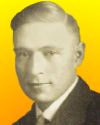
Born 20 Nov 1892; died 19 Jun 1965 at age 72.
Canadian biochemist co-discovered insulin. He worked with Frederick Banting and Charles Best to refine a method of removing and purifying insulin. Working with the bovine pancreas, Collip produced insulin in a form which permitted clinical use. Together with his other contributions in endocrinology, including his isolation of the parathyroid hormone and establishing a bioassay for measuring serum calcium. He stands as a major figure in Canadian medical history.
Canadian biochemist co-discovered insulin. He worked with Frederick Banting and Charles Best to refine a method of removing and purifying insulin. Working with the bovine pancreas, Collip produced insulin in a form which permitted clinical use. Together with his other contributions in endocrinology, including his isolation of the parathyroid hormone and establishing a bioassay for measuring serum calcium. He stands as a major figure in Canadian medical history.
The Discovery of Insulin, by Michael Bliss. - book suggestion.
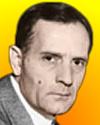
Born 20 Nov 1889; died 28 Sep 1953 at age 63. quotes
American astronomer who is considered the founder of extragalactic astronomy and who provided the first evidence of the expansion of the universe. In 1923-5 he identified Cepheid variables in “spiral nebulae” M31 and M33 and proved conclusively that they are outside the Galaxy. His investigation of these objects, which he called extragalactic nebulae and which astronomers today call galaxies, led to his now-standard classification system of elliptical, spiral, and irregular galaxies, and to proof that they are distributed uniformly out to great distances. Hubble measured distances to galaxies and their redshifts, and in 1929 he published the velocity-distance relation which is the basis of modern cosmology.
American astronomer who is considered the founder of extragalactic astronomy and who provided the first evidence of the expansion of the universe. In 1923-5 he identified Cepheid variables in “spiral nebulae” M31 and M33 and proved conclusively that they are outside the Galaxy. His investigation of these objects, which he called extragalactic nebulae and which astronomers today call galaxies, led to his now-standard classification system of elliptical, spiral, and irregular galaxies, and to proof that they are distributed uniformly out to great distances. Hubble measured distances to galaxies and their redshifts, and in 1929 he published the velocity-distance relation which is the basis of modern cosmology.
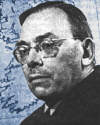
Born 20 Nov 1887; died 3 May 1954 at age 66. quotes
Earnest Albert Hooton was an American physical anthropologist and primatologist who investigated human evolution and racial differentiation, classified and described human populations, and examined the relationship between personality and physical type, particularly with respect to criminal behaviour. He established Harvard University as a principal U.S. centre for physical anthropology. In the 1930s, he studied American criminals, and in his controversial books, The American Criminal (1939) and Crime and the Man (1939), he sought to to connect criminal behaviour with physical or racial factors. His books written for the layperson include: Up from the Ape; Apes, Men and Morons; and Twilight of Man, Why We Behave Like Apes and Vice Versa.
Earnest Albert Hooton was an American physical anthropologist and primatologist who investigated human evolution and racial differentiation, classified and described human populations, and examined the relationship between personality and physical type, particularly with respect to criminal behaviour. He established Harvard University as a principal U.S. centre for physical anthropology. In the 1930s, he studied American criminals, and in his controversial books, The American Criminal (1939) and Crime and the Man (1939), he sought to to connect criminal behaviour with physical or racial factors. His books written for the layperson include: Up from the Ape; Apes, Men and Morons; and Twilight of Man, Why We Behave Like Apes and Vice Versa.
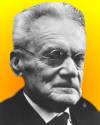
Born 20 Nov 1886; died 12 Jun 1982 at age 95.
Zoologist whose studies of communication among bees added significantly to the knowledge of the chemical and visual sensors of insects and simple animals. He shared the 1973 Nobel Prize for Physiology or Medicine with animal behaviourists Konrad Lorenz and Nikolaas Tinbergen. He showed that bees have the ability to recognize different odours and tastes, and discovered their famous "waggle dance" used by bees to communicate among with others in the hive. This sequence of body movements indicates the direction and distance to food. He showed polarized light is used by the bees as a "compass" for navigation, even when the sun is not visible. In fish, he demonstrated their acute hearing, and ability to distinguish colours and brightness.
Zoologist whose studies of communication among bees added significantly to the knowledge of the chemical and visual sensors of insects and simple animals. He shared the 1973 Nobel Prize for Physiology or Medicine with animal behaviourists Konrad Lorenz and Nikolaas Tinbergen. He showed that bees have the ability to recognize different odours and tastes, and discovered their famous "waggle dance" used by bees to communicate among with others in the hive. This sequence of body movements indicates the direction and distance to food. He showed polarized light is used by the bees as a "compass" for navigation, even when the sun is not visible. In fish, he demonstrated their acute hearing, and ability to distinguish colours and brightness.
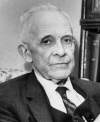
Born 20 Nov 1873; died 15 Sep 1962 at age 88.
William W(eber) Coblentz was an American physicist and astronomer whose work lay primarily in infrared spectroscopy. In 1905 he founded the radiometry section of the National Bureau of Standards, which he headed for 40 years. Coblentz measured the infrared radiation from stars, planets, and nebulae and was the first to determine accurately the constants of blackbody radiation, thus confirming Planck's law.
William W(eber) Coblentz was an American physicist and astronomer whose work lay primarily in infrared spectroscopy. In 1905 he founded the radiometry section of the National Bureau of Standards, which he headed for 40 years. Coblentz measured the infrared radiation from stars, planets, and nebulae and was the first to determine accurately the constants of blackbody radiation, thus confirming Planck's law.
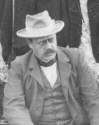
Born 20 Nov 1862; died 3 Sep 1939 at age 76. quotes
Finnish sociologist, philosopher, and anthropologist who denied the widely held view that early humans had lived in a state of promiscuity and instead theorized that the original form of human sexual attachment had been monogamy. He asserted that primitive marriage was rooted in the needs of the nuclear family, which he considered to be the fundamental and universal unit of society.
Finnish sociologist, philosopher, and anthropologist who denied the widely held view that early humans had lived in a state of promiscuity and instead theorized that the original form of human sexual attachment had been monogamy. He asserted that primitive marriage was rooted in the needs of the nuclear family, which he considered to be the fundamental and universal unit of society.
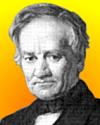
Born 20 Nov 1794; died 10 Dec 1884 at age 90.
(Wilhelm Peter) Eduard (Simon) Rüppell was a German naturalist and explorer who made zoological and ethnographical collections in northeastern Africa. He was assisted on his first expedition (1821-27) by surgeon Michael Hey. After travelling through the Sinai desert, in 1822 they were the first European explorers to reach the Gulf of Aqaba, and the following year, they travelled up the Nile. On another African expedition, in 1830 Rüppell became the first naturalist to traverse Ethiopia. Rüppell is remembered in the names of Rüppell's Warbler and Rüppell's Vulture.«
(Wilhelm Peter) Eduard (Simon) Rüppell was a German naturalist and explorer who made zoological and ethnographical collections in northeastern Africa. He was assisted on his first expedition (1821-27) by surgeon Michael Hey. After travelling through the Sinai desert, in 1822 they were the first European explorers to reach the Gulf of Aqaba, and the following year, they travelled up the Nile. On another African expedition, in 1830 Rüppell became the first naturalist to traverse Ethiopia. Rüppell is remembered in the names of Rüppell's Warbler and Rüppell's Vulture.«
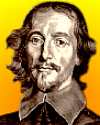
Born 20 Nov 1602; died 11 May 1686 at age 83.
German physicist who investigated the properties of a vacuum invented (1654) the first piston air pump to produce a vacuum. While mayor of Madgeburg, in 1663, he demonstrated that two 51 cm diameter copper hemispheres with air pumped out of their interior would be so strongly held together by the force of air pressure that teams of horses harnessed to each hemisphere were not able to pull the hemispheres apart. He studied the role of air in combustion and respiration. With his invention of the first electrostatic machine - a rotating ball of sulphur electrified by friction against his hand - he produced sizeable sparks and showed that like charges repel each other.«
German physicist who investigated the properties of a vacuum invented (1654) the first piston air pump to produce a vacuum. While mayor of Madgeburg, in 1663, he demonstrated that two 51 cm diameter copper hemispheres with air pumped out of their interior would be so strongly held together by the force of air pressure that teams of horses harnessed to each hemisphere were not able to pull the hemispheres apart. He studied the role of air in combustion and respiration. With his invention of the first electrostatic machine - a rotating ball of sulphur electrified by friction against his hand - he produced sizeable sparks and showed that like charges repel each other.«

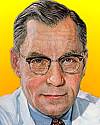
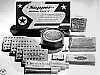
American nutritionist and epidemiologist who was the first to identify the role of saturated fats in causing heart disease. In 1935, he studied the physiological effects of altitude, which he conducted in the Andes. At the onset of WW II, he designed the lightweight yet nutritious K ration used by American paratroops. The hard biscuits, dry sausage, hard candy and chocolate it contained were items he originally selected at a Minneapolis grocery store, and the ration was named with his initial. In 1947, he began a decade of study of 283 local businessmen. From its results, he determined that saturated fat chiefly determined blood cholesterol levels, and linked smoking, high blood pressure and elevated cholesterol with heart attacks.«[Image right: K-ration Supper]
The Benevolent Bean, by Ancel Keys, Margaret Keys. - book suggestion.
1938
Died 20 Nov 1976 at age 78 (born 29 Sep 1898).
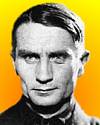
Soviet biologist and agronomist who not only believed the Mendelian theory of heredity to be wrong, but with Stalin's support for two decades actively obstructed the course of Soviet biology. He caused the imprisonment and death of many of the country's eminent biologists. He followed I. V. Michurin's fanciful idea that plants could be forced to adapt to any environmental conditions, for example converting summer wheat to winter wheat by storing the seeds in ice. As director of the Institute of Genetics of the Soviet Academy of Sciences (1940-65) his interference contributed to the disastrous decline of Soviet agriculture. After Stalin's death in 1956, he lost support and eventually in 1965 was exiled to an experimental farm.«
Soviet biologist and agronomist who not only believed the Mendelian theory of heredity to be wrong, but with Stalin's support for two decades actively obstructed the course of Soviet biology. He caused the imprisonment and death of many of the country's eminent biologists. He followed I. V. Michurin's fanciful idea that plants could be forced to adapt to any environmental conditions, for example converting summer wheat to winter wheat by storing the seeds in ice. As director of the Institute of Genetics of the Soviet Academy of Sciences (1940-65) his interference contributed to the disastrous decline of Soviet agriculture. After Stalin's death in 1956, he lost support and eventually in 1965 was exiled to an experimental farm.«
The Rise and Fall of T.D. Lysenko, by Zhores A Medvedev. - book suggestion.
Died 20 Nov 1967 at age 83 (born 23 Feb 1884). quotes
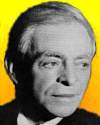
Polish-American biochemist who coined the term “vitamine.” In 1912, as had previously been proposed by Sir Frederick Hopkins, Funk pusued the idea that diseases such as beriberi, scurvy, rickets and pellagra were caused by lack of vital substances in the diet. His investigation of Christiaan Eijkman's anti-beriberi factor had shown that it was an amine (an organic substance wih molecules containing the -NH2 amine group). Funk assumed (though incorrectly) that all similar substances were also amines, and he named such factors vitamines ("life-amines"). When later it was discovered that not all the factors were amines, the spelling of the word was changed to "vitamin." Funk isolated nicotinic acid from rice polishing, later used against pellagra by Warburgh and Elvehjem.
Polish-American biochemist who coined the term “vitamine.” In 1912, as had previously been proposed by Sir Frederick Hopkins, Funk pusued the idea that diseases such as beriberi, scurvy, rickets and pellagra were caused by lack of vital substances in the diet. His investigation of Christiaan Eijkman's anti-beriberi factor had shown that it was an amine (an organic substance wih molecules containing the -NH2 amine group). Funk assumed (though incorrectly) that all similar substances were also amines, and he named such factors vitamines ("life-amines"). When later it was discovered that not all the factors were amines, the spelling of the word was changed to "vitamin." Funk isolated nicotinic acid from rice polishing, later used against pellagra by Warburgh and Elvehjem.
The Vitamines, by Casimir Funk. - book suggestion.
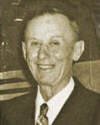
Died 20 Nov 1954 at age 74 (born 5 Dec 1879).
American Aviator, aircraft manufacturer who invented the cantilever wing and a V-shaped tail configuration and a simple, flexible monoplane design.
American Aviator, aircraft manufacturer who invented the cantilever wing and a V-shaped tail configuration and a simple, flexible monoplane design.
(EB)
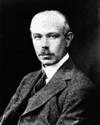
Died 20 Nov 1945 at age 68 (born 1 Sep 1877). quotes
English chemist, physicist and chemist who was awarded the 1922 Nobel Prize for Chemistry for his development of the mass spectrograph, a device that separates atoms or molecular fragments of different mass and measures those masses with remarkable accuracy. In 1910 he became an assistant to Sir J.J. Thomson at Cambridge, who was investigating positively charged rays emanating from gaseous discharges. Aston invented his mass spectrograph (a new type of positive-ray apparatus) after WWI, with which he showed that many elements are mixtures of isotopes. In fact, he discovered 212 of the 287 naturally occurring nuclides. The mass spectrograph is now widely used in geology, chemistry, biology, and nuclear physics.
English chemist, physicist and chemist who was awarded the 1922 Nobel Prize for Chemistry for his development of the mass spectrograph, a device that separates atoms or molecular fragments of different mass and measures those masses with remarkable accuracy. In 1910 he became an assistant to Sir J.J. Thomson at Cambridge, who was investigating positively charged rays emanating from gaseous discharges. Aston invented his mass spectrograph (a new type of positive-ray apparatus) after WWI, with which he showed that many elements are mixtures of isotopes. In fact, he discovered 212 of the 287 naturally occurring nuclides. The mass spectrograph is now widely used in geology, chemistry, biology, and nuclear physics.
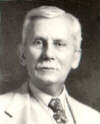
Died 20 Nov 1942 at age 84 (born 3 Jul 1858). quotes
American invertebrate paleontologist who was a leader in the development of paleogeography, the study of the distribution of lands and seas in the geological past. During the 1880s he made a living drawing fossil illustrations for state geological surveys, while continuing to search for specimens for his own growing collection. After serving as curator of the U.S. National Museum (1894-1904), Charles Schuchert joined the Yale University faculty following their first invertebrate paleontologist, Charles E. Beecher.
American invertebrate paleontologist who was a leader in the development of paleogeography, the study of the distribution of lands and seas in the geological past. During the 1880s he made a living drawing fossil illustrations for state geological surveys, while continuing to search for specimens for his own growing collection. After serving as curator of the U.S. National Museum (1894-1904), Charles Schuchert joined the Yale University faculty following their first invertebrate paleontologist, Charles E. Beecher.
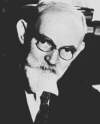
Died 20 Nov 1934 at age 62 (born 6 May 1872). quotes
Dutch mathematician, astronomer, and cosmologist who developed theoretical models of the universe based on Albert Einstein's general theory of relativity. He worked extensively on the motions of the satellites of Jupiter, determining their masses and orbits from decades of observations. He redetermined the fundamental constants of astronomy and determined the variation of the rotation of the earth. He also performed statistical studies of the distribution and motions of stars, but today he is best known for his contributions to cosmology. His 1917 solution to Albert Einstein's field equations showed that a near-empty universe would expand. Later, he and Einstein found an expanding universe solution without space curvature.
Dutch mathematician, astronomer, and cosmologist who developed theoretical models of the universe based on Albert Einstein's general theory of relativity. He worked extensively on the motions of the satellites of Jupiter, determining their masses and orbits from decades of observations. He redetermined the fundamental constants of astronomy and determined the variation of the rotation of the earth. He also performed statistical studies of the distribution and motions of stars, but today he is best known for his contributions to cosmology. His 1917 solution to Albert Einstein's field equations showed that a near-empty universe would expand. Later, he and Einstein found an expanding universe solution without space curvature.
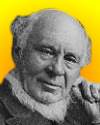
Died 20 Nov 1898 at age 81 (born 15 Jul 1817).
Sir John Fowler, 1st Baronet was an English civil engineer who helped design and build the London Metropolitan Railway, thus pioneering the original London underground. He was a railway consultant from 1844, and later was engaged in river improvement and dock construction. He designed the Pimlico Railway Bridge which carried the first railway across the Thames (1860) and was consulting engineer to Ismail Pasha, the Khedive of Egypt (1871-79). He was joint designer (with Sir Benjamin Baker) of the Forth Railway Bridge in Scotland (1882-90), for which work he was knighted (1890). more
Sir John Fowler, 1st Baronet was an English civil engineer who helped design and build the London Metropolitan Railway, thus pioneering the original London underground. He was a railway consultant from 1844, and later was engaged in river improvement and dock construction. He designed the Pimlico Railway Bridge which carried the first railway across the Thames (1860) and was consulting engineer to Ismail Pasha, the Khedive of Egypt (1871-79). He was joint designer (with Sir Benjamin Baker) of the Forth Railway Bridge in Scotland (1882-90), for which work he was knighted (1890). more
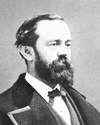
(EB)
Died 20 Nov 1882 at age 45 (born 7 Mar 1837).
American physician and amateur astronomer who made the first photograph of the spectrum of a star (Vega), in 1872. He was also the first to photograph a nebula, the Orion Nebula, in 1880. For his photography of the transit of Venus in 1874, Congress ordered a gold medal struck in his honour. His father, John William Draper, in 1840 had made the first photograph of the Moon.
American physician and amateur astronomer who made the first photograph of the spectrum of a star (Vega), in 1872. He was also the first to photograph a nebula, the Orion Nebula, in 1880. For his photography of the transit of Venus in 1874, Congress ordered a gold medal struck in his honour. His father, John William Draper, in 1840 had made the first photograph of the Moon.
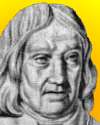
Died 20 Nov 1856 at age 81 (born 9 Feb 1775). quotes
Farkas (Wolfgang) Bolyai was a Hungarian mathematician, poet and dramatist who spent a lifetime trying to prove Euclid's (fifth) postulate that parallel lines do not meet. While studying at the University of Göttingen, he met as a fellow student, the noted German mathematician Carl F. Gauss, with whom he corresponded as a life-long friend. Bolyai taught mathematics, physics and chemistry at Marosvásárhely all his life. He discouraged his son, János Bolyai, from studying the parallel axiom as he had, writing in a letter to him: “For God's sake, please give it up. Fear it no less than the sensual passion, because it, too, may take up all your time and deprive you of your health, peace of mind and happiness in life.”Wolfgang is the German form for the Hungarian name Farkas.
Farkas (Wolfgang) Bolyai was a Hungarian mathematician, poet and dramatist who spent a lifetime trying to prove Euclid's (fifth) postulate that parallel lines do not meet. While studying at the University of Göttingen, he met as a fellow student, the noted German mathematician Carl F. Gauss, with whom he corresponded as a life-long friend. Bolyai taught mathematics, physics and chemistry at Marosvásárhely all his life. He discouraged his son, János Bolyai, from studying the parallel axiom as he had, writing in a letter to him: “For God's sake, please give it up. Fear it no less than the sensual passion, because it, too, may take up all your time and deprive you of your health, peace of mind and happiness in life.”Wolfgang is the German form for the Hungarian name Farkas.
Died 20 Nov 1764 at age 74 (born 18 Mar 1690).
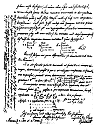
Russian mathematician whose contributions to number theory include Goldbach's conjecture, formulated in a letter to Leonhard Euler dated 7 Jul 1742. Stated in modern terms it proposes that: "Every even natural number greater than 2 is equal to the sum of two prime numbers." It has been checked by computer for vast numbers - up to at least 4 x 10¹⁴ - but still remains unproved. Goldbach made another conjecture that every odd number is the sum of three primes, on which Vinogradov made progress in 1937. (It has been checked by computer for vast numbers, but remains unproved.) Goldbach also studied infinite sums, the theory of curves and the theory of equations.«[Image: Letter to Euler, in which Goldbach presented his conjecture.]
Russian mathematician whose contributions to number theory include Goldbach's conjecture, formulated in a letter to Leonhard Euler dated 7 Jul 1742. Stated in modern terms it proposes that: "Every even natural number greater than 2 is equal to the sum of two prime numbers." It has been checked by computer for vast numbers - up to at least 4 x 10¹⁴ - but still remains unproved. Goldbach made another conjecture that every odd number is the sum of three primes, on which Vinogradov made progress in 1937. (It has been checked by computer for vast numbers, but remains unproved.) Goldbach also studied infinite sums, the theory of curves and the theory of equations.«[Image: Letter to Euler, in which Goldbach presented his conjecture.]
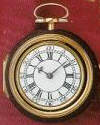
c. 1735.
Died 20 Nov 1751 (born c. 1674).
Eminent English watchmaker who was first a partner with, then successor to Tompion's business. Graham improved Tompion's cylinder escapement. In addition, he invented (c. 1715) the dead-beat escapement (in which the escape wheel remains stationary when not moving forward.) Using these two developments together, Graham's timepieces ran with an accuracy unsurpassed for more than a century and a half. He also made astronomical devices for Edmond Halley, James Bradley, the French Academy of Sciences, and Charles Boyle, 4th Earl of Orrery. For the latter, he designed a clockwork model showing the motions of the planets around the Sun, thereafter known as an orrery. He invented a beam caliper with a micrometer screw.
Eminent English watchmaker who was first a partner with, then successor to Tompion's business. Graham improved Tompion's cylinder escapement. In addition, he invented (c. 1715) the dead-beat escapement (in which the escape wheel remains stationary when not moving forward.) Using these two developments together, Graham's timepieces ran with an accuracy unsurpassed for more than a century and a half. He also made astronomical devices for Edmond Halley, James Bradley, the French Academy of Sciences, and Charles Boyle, 4th Earl of Orrery. For the latter, he designed a clockwork model showing the motions of the planets around the Sun, thereafter known as an orrery. He invented a beam caliper with a micrometer screw.
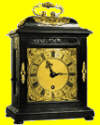
(EB)
Died 20 Nov 1713 at age 74 (baptized 25 Jul 1639).
Most famous English clockmaker of his time, especially known for watchmaking improvements. He worked closely with experimental physicist Robert Hooke, and in 1675, following Hooke's design, Tompion made one of the first English watches regulated by a balance spring. In 1695, with Edward Barlow and William Houghton, he patented the cylinder escapement (a controlling device) that allowed use of a horizontal wheel, enabling Tompion to make the first of the flat and more compact watches.[Image: Bracket clock with oak case ebony veneer, and gilt bronze mounts by Tompion, c. 1690.]
Most famous English clockmaker of his time, especially known for watchmaking improvements. He worked closely with experimental physicist Robert Hooke, and in 1675, following Hooke's design, Tompion made one of the first English watches regulated by a balance spring. In 1695, with Edward Barlow and William Houghton, he patented the cylinder escapement (a controlling device) that allowed use of a horizontal wheel, enabling Tompion to make the first of the flat and more compact watches.[Image: Bracket clock with oak case ebony veneer, and gilt bronze mounts by Tompion, c. 1690.]
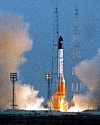
In 1998, the first module of the International Space Station was launched on a Russian Proton rocket from Baikonur Cosmodrome, Kazakhstan. This $240 million Zarya functional cargo block was followed two weeks later by the Unity connecting module from the U.S. After 16 years of planning and design, the orbiting station was taking shape, the beginning of what some called "a city in space." The project, initiated by NASA in 1983, also involved Canada, Japan and the 11 members of the European Space Agency. After the Cold War, the Russians had been invited to participate, not merely as an exercise in international cooperation, but also to employ Russian scientists who might have otherwise sold their expertise to renegade countries.
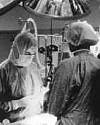
In 1985, a successful heart transplant to a 4-day-old infant, Eddie Anguiano known then as Baby Moses, was performed by Dr. Leonard Lee Bailey of the Loma Linda University Medical Center. Eddie had been born with the fatal heart defect hypoplastic left heart syndrome, and had only days to live. Luckily, the heart of a brain-dead baby became available. His was the third such transplant attempted. The previous two were unsuccessful, but Eddie thrived. By his 10th birthday, almost 300 other children at Loma Linda, 203 of them under six months old, had their faulty hearts replaced. Eddie celebrated his 21st birthday in 2006. In earlier work, Dr Bailey had transplanted a young baboon's heart into Baby Fae (26 Oct 1984).«*
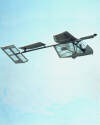
In 1980, Steve Ptacek in Solar Challenger piloted its first solar-powered flight. The aircraft was designed and built by AeroVironment, Inc. (founded in 1971 by ultra-light airplane innovator, Dr. Paul MacCready). An earlier, 71-ft wingspan, solar-powered design, the Gossamer Penguin, after test flights, flew about 1.95 miles at a public demonstration on 7 Aug 1980. Solar Challenger built upon this experience to be a piloted, solar-powered aircraft strong enough to handle both long and high flights when encountering normal turbulence. With only a 46.5-ft wingspan, it had a huge horizontal stabilizer and had enough wing area for 16,128 solar cells. After design modifications, Ptacek flew across the English Channel flight on 7 July 1981.
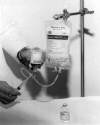
In 1979, artificial blood was first used in a patient by transfusion at the University of Minnesota Hospital. The patient was a Jehovah's Witness, who had refused a transfusion of real blood because of his religious beliefs.
Blood: An Epic History of Medicine and Commerce, by Douglas Starr. - book suggestion.
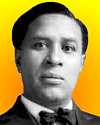
In 1923, African-American Garrett Morgan (1877-1963) patented an automatic traffic signal. He later sold the technology for the Morgan traffic signal to General Electric Corporation for $40,000. His invention came after he had seen an automobile crash into a horse-drawn carriage. Morgan was distressed by that traffic accident, and so he developed a new way to make streets safer for motorists and pedestrians.
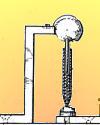
In 1906, a U.S. patent was issued for the crystal detector, which was one of the first devices widely used for receiving radio broadcasts (until superseded by the triode vacuum tube). It was invented by Greenleaf Whittier Pickard, a U.S. electrical engineer. His patent described it as "a means for receiving intelligence communicated by electric waves."
In 1906, Charles Stewart Rolls and Frederick Henry Royce formed Rolls-Royce.
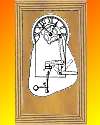
In 1888, Willard LeGrand Bundy, a jeweller, was issued the first U.S. patent for a time recording clock (No. 393,205). A workman inserted a key which actuating his number by engaging corresponding catches on a type-wheel mechanism. This printed his identification number and time on a paper tape. In this way, a company could save the expense of watchmen or time-keepers usually employed for the purpose of recording the time of arrival and departure of the employees. With his brother, Bundy formed the Bundy Manufacturing Company (1889), which later was consolidated into one of IBM's forerunners in 1902. Bundy clocks were also sold in England, where they were also used for time recording to regulate schedules on routes of trams and buses.
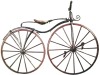
In 1866, the first U.S. patent on a rotary crank bicycle was issued to Pierre Lallemont of Paris, France (No. 59,915). With pedals applied directly to the front wheel, this so called velocipede ("fast foot") was a major advance on the old hobby horse bicycle that had to be pushed with the feet. It soon came to be known as "the bone shaker" because being made of stiff materials, straight angles and steel wheels, it gave a stiff ride over the cobblestone roads of the day. Soon indoor riding academies, similar to roller rinks, could be found in large cities. He rode on it from Ansonia, Conn. to the green at New Haven, Conn.

In 1866, the first U.S. patent for a yo-yo was issued to James L. Haven and Charles Hittrick of Cincinnati, Ohio. Although termed a “Whirligig” or a “Bandalore” in the patent title, it had the familiar construction of a yo-yo with two disks “coupled together at their centers by means of a clutch.” It was also the first time rim-weighting to maintain momentum was mentioned in a patent. “It will be observed that the marginal swell … exercises the function of a flywheel.” This patent is important since it shows the first use of patents to protect design improvements in the manufacture of a yo-yo. Messrs. Haven and Hettrick were in the business of mass-producing yo-yos over a half century before the better known Flores brand.«
more
In 1807, Humphry Davy presented a Bakerian Lecture to the Royal Society, “on some new Phenomena of Chemical Changes produced by electricity, particularly the decomposition of the fixed alkalis.” He by reporting his meticulous study of electrolysis of distilled water, and how he found traces of soda alkali resulted from the glass tubes used. He reviewed his results of electolysis of various “earth compounds.” In various minerals he detected soda or potash. He described numerous other experiments decomposing substances using electricity from a Voltaic battery composed of up to 100 pairs of 6 inch square plates of copper and zinc in an alum solution with diluted sulphuric acid.«