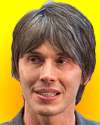
Born 3 Mar 1968. quotes
English particle physicist, populariser of science and author who is best-known as Britain’s successor to David Attenborough and Patrick Moore as an outstanding television and radio presenter bringing science to the general public. He was inspired by Carl Sagan and Patrick Moore to pursue a Ph.D. in physics, and became a member of the High Energy Physics group at the University of Manchester. He works at CERN in Geneva on the ATLAS experiment, studying the forward proton detectors for the Large Hadron Collider there. He believes curiosity-driven science pays for itself, powering innovation and a profound appreciation of our existence.«
English particle physicist, populariser of science and author who is best-known as Britain’s successor to David Attenborough and Patrick Moore as an outstanding television and radio presenter bringing science to the general public. He was inspired by Carl Sagan and Patrick Moore to pursue a Ph.D. in physics, and became a member of the High Energy Physics group at the University of Manchester. He works at CERN in Geneva on the ATLAS experiment, studying the forward proton detectors for the Large Hadron Collider there. He believes curiosity-driven science pays for itself, powering innovation and a profound appreciation of our existence.«
Born 3 Mar 1956; died 2 Jul 2002 at age 46.
Korean theoretical physicist specializing in statistical physics and nonlinear dynamic physics, who with colleague Hugo Caram, originated the void diffusing-void model of granular flow, which is recognized as an effective theoretical treatment for a broad range of dynamical phenomena in granular media. In general, his work ranged from percolation network, viscous fingering, granular flows to traffic equations. He studied and taught in America from 1981, and wrote articles for popular magazines on various topics. He died at the young age of 46 of cardiac arrest.«
Korean theoretical physicist specializing in statistical physics and nonlinear dynamic physics, who with colleague Hugo Caram, originated the void diffusing-void model of granular flow, which is recognized as an effective theoretical treatment for a broad range of dynamical phenomena in granular media. In general, his work ranged from percolation network, viscous fingering, granular flows to traffic equations. He studied and taught in America from 1981, and wrote articles for popular magazines on various topics. He died at the young age of 46 of cardiac arrest.«
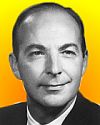
Born 3 Mar 1918; died 26 Oct 2007 at age 89.
American biochemist and physician who shared the 1959 Nobel Prize for Physiology or Medicine (with Severo Ochoa) for the “discovery of the mechanisms in the biological synthesis of deoxyribonucleic acid” Kornberg showed not only how DNA molecules are duplicated both in nature within bacterial cells, but also isolated the first DNA polymerising enzyme (1958), and reproduced the process in the test tube. His research included studying the nucleic acids which control heredity in animals, plants, bacteria and viruses.«
American biochemist and physician who shared the 1959 Nobel Prize for Physiology or Medicine (with Severo Ochoa) for the “discovery of the mechanisms in the biological synthesis of deoxyribonucleic acid” Kornberg showed not only how DNA molecules are duplicated both in nature within bacterial cells, but also isolated the first DNA polymerising enzyme (1958), and reproduced the process in the test tube. His research included studying the nucleic acids which control heredity in animals, plants, bacteria and viruses.«
For the Love of Enzymes: The Odyssey of a Biochemist, by Arthur Kornberg. - book suggestion.
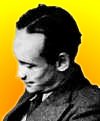
Born 3 Mar 1898; died 20 Dec 1962 at age 64. quotes
Austro-German mathematician who worked in algebraic number theory, made a major contribution to field theory, and stated a law of reciprocity which included all previously known laws of reciprocity (1927). He also worked on the theory of braids (1925), and on rings with the minimum condition on right ideals, now called Artinian rings (1944). Artin has the distinction of solving (1927) one of the famous 23 problems previously posed by Hilbert in 1900. With his Jewish wife, he left Nazi Germany in 1937, and worked at universities in the U.S. until 1956, when he returned to his home country.«
Austro-German mathematician who worked in algebraic number theory, made a major contribution to field theory, and stated a law of reciprocity which included all previously known laws of reciprocity (1927). He also worked on the theory of braids (1925), and on rings with the minimum condition on right ideals, now called Artinian rings (1944). Artin has the distinction of solving (1927) one of the famous 23 problems previously posed by Hilbert in 1900. With his Jewish wife, he left Nazi Germany in 1937, and worked at universities in the U.S. until 1956, when he returned to his home country.«
Galois Theory (Notre Dame Mathematical Lectures), by Emil Artin, et al. - book suggestion.
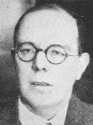
Born 3 Mar 1883; died 10 Oct 1971 at age 88. quotes
British psychologist who was a leader in developing methods of statistical data analysis, particularly factor analysis, in psychological testing. He investigated the role of heredity in intelligence with twin studies and the role of nuture in juvenile deliquency. In 1913, he was appointed the school psychologist for the schools administered by the London County Council (LCC) This was the first appointment of this kind in the U.K. In 1926, he proposed a national testing program of intelligence tests on children at about age 11. Subsequently, the national "Eleven-Plus" exam was used to identify whether children were high scorers suitable for education at a grammar schools, or not. After Burt's death his later work on twins was questioned as flawed or fraud.«
British psychologist who was a leader in developing methods of statistical data analysis, particularly factor analysis, in psychological testing. He investigated the role of heredity in intelligence with twin studies and the role of nuture in juvenile deliquency. In 1913, he was appointed the school psychologist for the schools administered by the London County Council (LCC) This was the first appointment of this kind in the U.K. In 1926, he proposed a national testing program of intelligence tests on children at about age 11. Subsequently, the national "Eleven-Plus" exam was used to identify whether children were high scorers suitable for education at a grammar schools, or not. After Burt's death his later work on twins was questioned as flawed or fraud.«
Cyril Burt, Psychologist, by Leslie S. Hearnshaw. - book suggestion.
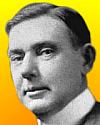
Born 3 Mar 1879; died 15 Nov 1967 at age 88.
American biochemist who originated the letter system of naming vitamins. He discovered vitamins A, B and worked with others on vitamin D. He performed extensive research work in nutrition and growth. He was the first in the U.S. to establish a colony of white rats as laboratory animals to be the subject of his nutrition experiments. In the 1910's, he recognized that a healthy diet required certain fats, and he named the essential component "fat-soluble A," as distinct from another he named "water-soluble B." Although at first he thought each was a single compound, he later showed that they were in fact complexes. He researched how certain minerals were important as nutrients, including calcium, phosphorus, fluorine, manganese and zinc.«
American biochemist who originated the letter system of naming vitamins. He discovered vitamins A, B and worked with others on vitamin D. He performed extensive research work in nutrition and growth. He was the first in the U.S. to establish a colony of white rats as laboratory animals to be the subject of his nutrition experiments. In the 1910's, he recognized that a healthy diet required certain fats, and he named the essential component "fat-soluble A," as distinct from another he named "water-soluble B." Although at first he thought each was a single compound, he later showed that they were in fact complexes. He researched how certain minerals were important as nutrients, including calcium, phosphorus, fluorine, manganese and zinc.«
A history of nutrition: The sequence of ideas in nutrition investigations, by Elmer Verner McCollum. - book suggestion.
Born 3 Mar 1850; died 1 Aug 1930 at age 80.
American naturalist, ornithologist, and ethnologist. From 1872-79, he made annual field trips to various parts of the West as naturalist with the Wheeler Survey, exploring west of the one-hundredth meridian, and prepared reports to Washington. In addition to making a notable collection of birds, he took an interest in other branches of natural history. In 1885 his collection of birds and eggs was acquired by the British Museum. During a period while ornithological work was available, he worked for the Bureau of Ethnology.
American naturalist, ornithologist, and ethnologist. From 1872-79, he made annual field trips to various parts of the West as naturalist with the Wheeler Survey, exploring west of the one-hundredth meridian, and prepared reports to Washington. In addition to making a notable collection of birds, he took an interest in other branches of natural history. In 1885 his collection of birds and eggs was acquired by the British Museum. During a period while ornithological work was available, he worked for the Bureau of Ethnology.
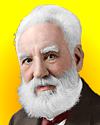
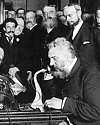
Scottish-American inventor of the telephone. Bell's career was influenced by his grandfather (who published The Practical Elocutionist and Stammering and Other Impediments of Speech), his father (whose interest was the mechanics and methods of vocal communication) and his mother (who was deaf). As a teenager, Alexander was intrigued by the writings of German physicist Hermann Von Helmholtz, On The Sensations of Tone. At age 23 he moved to Canada. In 1871, Bell began giving instruction in Visible Speech at the Boston School for Deaf Mutes. This background set his course in developing the transmission of voice over wires. He cofounded Bell Telephone Co in 1877. With his father-in-law, he re-established the journal Science (1882).«
Alexander Graham Bell, by Edwin S. Grosvenor, Morgan Wesson. - book suggestion.
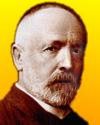
Born 3 Mar 1845; died 6 Jan 1918 at age 72. quotes
Georg (Ferdinand Ludwig Philipp) Cantor was a Russian-German mathematician who created modern set theory and extended it to give the concept of transfinite numbers,with cardinal and ordinal number classes. Although Cantor's earliest work was concerned with Fourier series, his reputation rests upon his contribution to transfinite set theory. He began with the definition of infinite sets proposed by Dedekind in 1872: a set is infinite when it is similar to a proper part of itself. Sets with this property, such as the set of natural numbers are said to be 'denumerable' or 'countable'. His career was repeatedly interrupted after 1884 by mental illness. He died of heart failure in 1918 in a mental institution.
Georg (Ferdinand Ludwig Philipp) Cantor was a Russian-German mathematician who created modern set theory and extended it to give the concept of transfinite numbers,with cardinal and ordinal number classes. Although Cantor's earliest work was concerned with Fourier series, his reputation rests upon his contribution to transfinite set theory. He began with the definition of infinite sets proposed by Dedekind in 1872: a set is infinite when it is similar to a proper part of itself. Sets with this property, such as the set of natural numbers are said to be 'denumerable' or 'countable'. His career was repeatedly interrupted after 1884 by mental illness. He died of heart failure in 1918 in a mental institution.
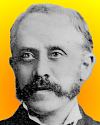
Born 3 Mar 1843; died 22 Nov 1902 at age 59.
English metallurgist whose research on the physical properties of metals and their alloys had many practical and industrial applications. He established methods to determine the composition of an alloy, invented an automatic recording pyrometer to track the temperature changes of furnaces and their molten contents and. researched diffusion between a sheet of gold and a block of lead. He was a professor at the Royal School of Mines, and from 1882 a chemist and assayer at the Mint, becoming a world authority on the technical aspects of minting coins. He was knighted in 1899. Austenite (a non-magnetic solid solution of ferric carbide or carbon in iron, used in making corrosion-resistant steel) was named after him.«
English metallurgist whose research on the physical properties of metals and their alloys had many practical and industrial applications. He established methods to determine the composition of an alloy, invented an automatic recording pyrometer to track the temperature changes of furnaces and their molten contents and. researched diffusion between a sheet of gold and a block of lead. He was a professor at the Royal School of Mines, and from 1882 a chemist and assayer at the Mint, becoming a world authority on the technical aspects of minting coins. He was knighted in 1899. Austenite (a non-magnetic solid solution of ferric carbide or carbon in iron, used in making corrosion-resistant steel) was named after him.«
Introduction to the Study of Metallurgy, by William Chandler Roberts Austen. - book suggestion.
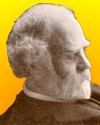
Born 3 Mar 1841; died 16 Mar 1914 at age 73. quotes
Scottish naturalist who, as one of its founders, coined the name oceanography. He studied ocean basins, deep-sea deposits, and coral-reef formation. As a marine scientist, he took part in the Challenger Expedition (1872-76), the first major oceanographic expedition of the world. He was first to observe the Mid-Atlantic Ridge and the existence of marine trenches. He attempted with Buchan to construct from temperature and salinity observations a qualitative theory of water movement in the world's oceans. With Alexander Agassiz, he put forward a modified hypothesis for coral reef development, arguing against Charles Darwin's hypothesis and suggesting that subsidence was not always a controlling mechanism. He died in 1914, killed by a motor car.
Scottish naturalist who, as one of its founders, coined the name oceanography. He studied ocean basins, deep-sea deposits, and coral-reef formation. As a marine scientist, he took part in the Challenger Expedition (1872-76), the first major oceanographic expedition of the world. He was first to observe the Mid-Atlantic Ridge and the existence of marine trenches. He attempted with Buchan to construct from temperature and salinity observations a qualitative theory of water movement in the world's oceans. With Alexander Agassiz, he put forward a modified hypothesis for coral reef development, arguing against Charles Darwin's hypothesis and suggesting that subsidence was not always a controlling mechanism. He died in 1914, killed by a motor car.
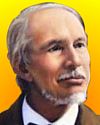
Born 3 Mar 1838; died 16 Apr 1914 at age 76.
U.S. mathematical astronomer considered by many of his peers to be the greatest master of celestial mechanics of his time. Hill joined the Nautical Almanac Office in 1861. He computed the orbit of the moon while making original contributions to the three body problem. He introduced infinite determinants, a concept which later found application in many fields of mathematics and physics. When Simon Newcomb took over the Nautical Almanac in 1877 and began a complete recomputation of all solar system motions, Hill was assigned the difficult problem of the orbits of Jupiter and Saturn. After completing the enormous labor in ten years, he returned to his farm, where he continued his research in celestial mechanics.
U.S. mathematical astronomer considered by many of his peers to be the greatest master of celestial mechanics of his time. Hill joined the Nautical Almanac Office in 1861. He computed the orbit of the moon while making original contributions to the three body problem. He introduced infinite determinants, a concept which later found application in many fields of mathematics and physics. When Simon Newcomb took over the Nautical Almanac in 1877 and began a complete recomputation of all solar system motions, Hill was assigned the difficult problem of the orbits of Jupiter and Saturn. After completing the enormous labor in ten years, he returned to his farm, where he continued his research in celestial mechanics.
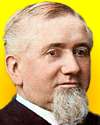
c. 1894
Born 3 Mar 1831; died 19 Oct 1897 at age 66.
George Mortimer Pullman was an American inventor and industrialist who revolutionized train travel with his innovation, the Pullman sleeping car, introduced in Aug 1859. Born in New York, Pullman started his career constructing buildings and later began improving railroad sleeping accommodations, which were uncomfortable at the time. In 1867, he founded the Pullman Palace Car Company, producing luxury sleeping cars that transformed long-distance rail travel. His success led to the creation of the company town, Pullman, Chicago. The Depression forced downsizing his business. In 1894, workers protesting wage cuts led to the violent Pullman Strike. His concepts were pioneering, but Pullman’s legacy is also tied to the labor controversies of his era.«
George Mortimer Pullman was an American inventor and industrialist who revolutionized train travel with his innovation, the Pullman sleeping car, introduced in Aug 1859. Born in New York, Pullman started his career constructing buildings and later began improving railroad sleeping accommodations, which were uncomfortable at the time. In 1867, he founded the Pullman Palace Car Company, producing luxury sleeping cars that transformed long-distance rail travel. His success led to the creation of the company town, Pullman, Chicago. The Depression forced downsizing his business. In 1894, workers protesting wage cuts led to the violent Pullman Strike. His concepts were pioneering, but Pullman’s legacy is also tied to the labor controversies of his era.«
Palace Car Prince: A Biography of George Mortimer Pullman, by Liston Edgington Leyendecker. - book suggestion.
Born 3 Mar 1751; died 8 Apr 1839 at age 88.
Swiss physicist and philosopher who first showed that all bodies radiate heat, no matter how hot or cold they are. In Sur l'equilibre du feu (1792) he made a significant step forward in understanding the nature of heat. With the Prévost theory of exchanges, he introduced the concept of dynamic equilibrium in which all bodies are both radiating and absorbing heat to and from the surroundings at the same rate. (As opposed to the two “imponderable fluids” of frigoric (cold) and caloric (heat) widely believed at the time.) Prévost recognized that cooling was the loss of heat, not the gain of cold. He believed all bodies contained some measure of heat at any temperature, and that heat would flow from a hotter body to a colder body. This interpretation in his caloric theory remained true when described seventy years later in Maxwell's kinetic theory (that heat is energy of particle motion). In his later years, Prévost studied the human aging process, using himself as the subject of his observations.
Swiss physicist and philosopher who first showed that all bodies radiate heat, no matter how hot or cold they are. In Sur l'equilibre du feu (1792) he made a significant step forward in understanding the nature of heat. With the Prévost theory of exchanges, he introduced the concept of dynamic equilibrium in which all bodies are both radiating and absorbing heat to and from the surroundings at the same rate. (As opposed to the two “imponderable fluids” of frigoric (cold) and caloric (heat) widely believed at the time.) Prévost recognized that cooling was the loss of heat, not the gain of cold. He believed all bodies contained some measure of heat at any temperature, and that heat would flow from a hotter body to a colder body. This interpretation in his caloric theory remained true when described seventy years later in Maxwell's kinetic theory (that heat is energy of particle motion). In his later years, Prévost studied the human aging process, using himself as the subject of his observations.
Born 3 Mar 1709; died 7 Aug 1782 at age 73.
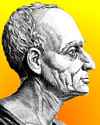
Andreas Sigismund Marggraf was a German chemist who was a pioneer in analytical work. He used the flame test to distinguish between potash and soda. He isolated zinc from its calamine ore, and he recognized alumina in clay. In 1747, Marggraf demonstrated that various kinds of beet-root contained sugar and that the sugar could be extracted and crystallized. The practical significance of this discovery was not recognized at the time, for many years was regarded as merely a laboratory exercise. However, a few decades later, it led to the development of the modern sugar industry, when Franz Karl Achard, a pupil of Marggraf, attacked the problem of beet-root cultivation. Achard succeeded in extracting sugar from beets on a commercial scale.« more
Andreas Sigismund Marggraf was a German chemist who was a pioneer in analytical work. He used the flame test to distinguish between potash and soda. He isolated zinc from its calamine ore, and he recognized alumina in clay. In 1747, Marggraf demonstrated that various kinds of beet-root contained sugar and that the sugar could be extracted and crystallized. The practical significance of this discovery was not recognized at the time, for many years was regarded as merely a laboratory exercise. However, a few decades later, it led to the development of the modern sugar industry, when Franz Karl Achard, a pupil of Marggraf, attacked the problem of beet-root cultivation. Achard succeeded in extracting sugar from beets on a commercial scale.« more

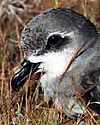
Zino’s Petrel
Portuguese ornithologist and conservationist who gave his name to Zino's petrel, Europe's rarest breeding bird. Only perhaps 45 mating pairs of the Zino's petrel (Pterodroma madeira) remain on the island of Madeira, south-west of Portugal, where this small black and white seabird breeds. The abundance population of the bird started to decline with the arrival of settlers (1419). By mid-20th century it was thought extinct. Zino, a successful businessman and native of Madeira, devoted much of the second half of his life to conservation. After searching, he re-discovered a small colony of the bird, in Jun 1969. Therafter, he studied and protected it. Zino's petrel continues to raise young in burrows on remote precipices of the mountains of Madeira.
Died 3 Mar 1999 at age 94 (born 25 Dec 1904).
German-Canadian physicist who was awarded the 1971 Nobel Prize for Chemistry "for his contributions to the knowledge of electronic structure and geometry of molecules, particularly free radicals." He published his first work in molecular spectroscopy at the end of the 1920's. His measurement of how molecules absorb ultraviolet and infrared energy yield information on energy states in molecules, leading to knowledge of their size, shape and other properties. For example, he showed that radicals can drastically change their shape with increasing energy, such as methylene which is linear in its ground state but bent in higher energy states. He also applied spectroscopy in astronomy, identifying molecules in space, planetary atmospheres and comets.«
German-Canadian physicist who was awarded the 1971 Nobel Prize for Chemistry "for his contributions to the knowledge of electronic structure and geometry of molecules, particularly free radicals." He published his first work in molecular spectroscopy at the end of the 1920's. His measurement of how molecules absorb ultraviolet and infrared energy yield information on energy states in molecules, leading to knowledge of their size, shape and other properties. For example, he showed that radicals can drastically change their shape with increasing energy, such as methylene which is linear in its ground state but bent in higher energy states. He also applied spectroscopy in astronomy, identifying molecules in space, planetary atmospheres and comets.«
Gerhard Herzberg: An Illustrious Life in Science, by Boris Stoicheff. - book suggestion.
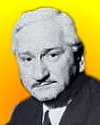
Died 3 Mar 1993 at age 86 (born 26 Aug 1906).
Polish-American physician and microbiologist best known for developing the first oral polio vaccine (1955), which was administered to millions of children in Europe, Africa, and the Americas beginning in the late 1950s. He was also known for his research in the fields of human viral diseases, toxoplasmosis, and cancer.
Polish-American physician and microbiologist best known for developing the first oral polio vaccine (1955), which was administered to millions of children in Europe, Africa, and the Americas beginning in the late 1950s. He was also known for his research in the fields of human viral diseases, toxoplasmosis, and cancer.
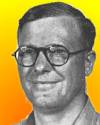
Died 3 Mar 1991 at age 81 (born 24 Jun 1909).
(Baron Penney of East Hendred) British nuclear physicist who led Britain's development of the atomic bomb. Penney was to Britain as Robert Oppenheimer was to the U.S. He was a prominent part of the British Mission at Los Alamos during WW II, where his principal assignment was studying the damage effects from the blast wave of the atomic bomb, but he became involved in implosion studies as well. Penney's combination of expertise, analytical skill, effective communication, and the ability to translate them into practical application soon made him one of the five members of the Los Alamos “brain trust” that made key decisions. He was the only Briton to be part of the ten man Target Committee that drew up the list of targets for the atomic bombing of Japan.
(Baron Penney of East Hendred) British nuclear physicist who led Britain's development of the atomic bomb. Penney was to Britain as Robert Oppenheimer was to the U.S. He was a prominent part of the British Mission at Los Alamos during WW II, where his principal assignment was studying the damage effects from the blast wave of the atomic bomb, but he became involved in implosion studies as well. Penney's combination of expertise, analytical skill, effective communication, and the ability to translate them into practical application soon made him one of the five members of the Los Alamos “brain trust” that made key decisions. He was the only Briton to be part of the ten man Target Committee that drew up the list of targets for the atomic bombing of Japan.
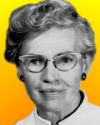
Died 3 Mar 1990 at age 91 (born 24 Sep 1898).
American astrophysicist who organized, analyzed, and published definitive books on the solar spectrum and spectral line multiplets. From 1945 to age 90, she conducted this work at the U.S. National Bureau of Standards and the Naval Research Laboratory. She detected that technetium, an unstable element (previously known only as a result of laboratory experiments with nuclear reactions) exists in nature. She made major contributions to the compilation of tables for atomic-energy levels associated with optical spectra, which are now standard reference material. As instruments carried in space rockets provided new data in the ultraviolet, she extended these tables beyond the optical range. She was awarded the Bruce Medal in 1990.«
American astrophysicist who organized, analyzed, and published definitive books on the solar spectrum and spectral line multiplets. From 1945 to age 90, she conducted this work at the U.S. National Bureau of Standards and the Naval Research Laboratory. She detected that technetium, an unstable element (previously known only as a result of laboratory experiments with nuclear reactions) exists in nature. She made major contributions to the compilation of tables for atomic-energy levels associated with optical spectra, which are now standard reference material. As instruments carried in space rockets provided new data in the ultraviolet, she extended these tables beyond the optical range. She was awarded the Bruce Medal in 1990.«
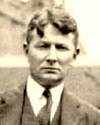
1928
Died 3 Mar 1988 at age 98 (born 21 Dec 1889). quotes
American population geneticist and evolutionary theorist who was one of the founders of modern theoretical population genetics. He researched the effects of inbreeding and crossbreeding with guinea pigs, and later on the effects of gene action on inherited characteristics. He adopted statistical techniques to develop evolutionary theory. Wright is best known for his concept of genetic drift, called the Sewall Wright effect - that when small populations of a species are isolated, out of pure chance the few individuals who carry certain relatively rare genes may fail to transmit them. The genes may therefore disappear and their loss may lead to the emergence of new species, although natural selection has played no part in the process.«
American population geneticist and evolutionary theorist who was one of the founders of modern theoretical population genetics. He researched the effects of inbreeding and crossbreeding with guinea pigs, and later on the effects of gene action on inherited characteristics. He adopted statistical techniques to develop evolutionary theory. Wright is best known for his concept of genetic drift, called the Sewall Wright effect - that when small populations of a species are isolated, out of pure chance the few individuals who carry certain relatively rare genes may fail to transmit them. The genes may therefore disappear and their loss may lead to the emergence of new species, although natural selection has played no part in the process.«
Sewall Wright and Evolutionary Biology, by William B. Provine. - book suggestion.
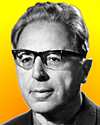
Died 3 Mar 1985 at age 68 (born 1 Jul 1916).
Iosif Samuilovich Shklovskii was a Soviet astrophysicist who identified the continuum radiation of the Crab Nebula as synchrotron radiation, and he linked x-ray stars to binary systems containing a neutron star. His investigation of the corona of the sun showed it had a temperature of the order of a million kelvin, and that magnetic fields act to confine it. He applied radio astronomy to study supernovae. Mass extinctions on earth, he suggested, may have resulted from the cosmic rays ejected from past supernovae happening at relatively close range to our solar sytem. He was awarded the 1972 Bruce Medal. Shklovskii was one of the earliest well-respected astrophysicists to regard the possibility of extraterrestrial life as worthy of consideration. His popular books include Intelligent Life in the Universe (English translation by Carl Sagan).«
Iosif Samuilovich Shklovskii was a Soviet astrophysicist who identified the continuum radiation of the Crab Nebula as synchrotron radiation, and he linked x-ray stars to binary systems containing a neutron star. His investigation of the corona of the sun showed it had a temperature of the order of a million kelvin, and that magnetic fields act to confine it. He applied radio astronomy to study supernovae. Mass extinctions on earth, he suggested, may have resulted from the cosmic rays ejected from past supernovae happening at relatively close range to our solar sytem. He was awarded the 1972 Bruce Medal. Shklovskii was one of the earliest well-respected astrophysicists to regard the possibility of extraterrestrial life as worthy of consideration. His popular books include Intelligent Life in the Universe (English translation by Carl Sagan).«
Five Billion Vodka Bottles to the Moon: Tales of a Soviet Scientist, by Iosif Shklovsky. - book suggestion.
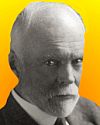
Died 3 Mar 1939 at age 82 (born 19 Oct 1856). quotes
American biologist known for his researches in embryology and cytology. His first experimental studies, in embryology, led him to investigations at the cellular level. His principal work was on the function of the cell in heredity and showed the chromosomal basis of sex determination in the embryo (1905). Wilson concluded that females have XX chromosomes, while males possess XY chromosomes. Following the process of meiosis, all eggs are left with an X chromosome, but sperm can have either X or Y. If an X chromosome sperm fertilizes an egg, the result is a female. If a Y chromosome sperm fertilizes and egg, the result is a male. He was the first scientist to publish photographs illustrating how a cell divides.
American biologist known for his researches in embryology and cytology. His first experimental studies, in embryology, led him to investigations at the cellular level. His principal work was on the function of the cell in heredity and showed the chromosomal basis of sex determination in the embryo (1905). Wilson concluded that females have XX chromosomes, while males possess XY chromosomes. Following the process of meiosis, all eggs are left with an X chromosome, but sperm can have either X or Y. If an X chromosome sperm fertilizes an egg, the result is a female. If a Y chromosome sperm fertilizes and egg, the result is a male. He was the first scientist to publish photographs illustrating how a cell divides.
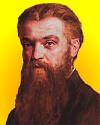
Died 3 Mar 1879 at age 33 (born 4 May 1845). quotes
British philosopher and mathematician who developed the theory of biquaternions (a generalization of the Irish mathematician Sir William Rowan Hamilton's theory of quaternions) and then linked them with more general associative algebras. In 1870, he survived a shipwreck near Sicily while on an expedition to Italy to obtain scientific data from an eclipse. Influenced by the work of Riemann and Lobachevsky, Clifford studied non-euclidean geometry. In 1870 he wrote On the Space Theory of Matter in which he argued that energy and matter are simply different types of curvature of space. In this work he presented ideas which were to form a fundamental role in Einstein's general theory of relativity.
British philosopher and mathematician who developed the theory of biquaternions (a generalization of the Irish mathematician Sir William Rowan Hamilton's theory of quaternions) and then linked them with more general associative algebras. In 1870, he survived a shipwreck near Sicily while on an expedition to Italy to obtain scientific data from an eclipse. Influenced by the work of Riemann and Lobachevsky, Clifford studied non-euclidean geometry. In 1870 he wrote On the Space Theory of Matter in which he argued that energy and matter are simply different types of curvature of space. In this work he presented ideas which were to form a fundamental role in Einstein's general theory of relativity.
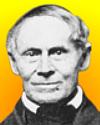
c. 1850
Died 3 Mar 1855 at age 73 (born 12 Aug 1781).
American architect and engineer who designed the Washington Monument in Washington, D.C. Mills also designed buildings in several Eastern states. In 1836, he won the competition for the design of the Washington Monument. Construction began in 1848 and proceeded slowly because of a lack of funds. The monument was only 152-ft high when Mills died in 1855; only in 1878 did Congress appropriate money to complete the structure, which was finished at 555-ft in 1884. He also designed the Department of Treasury building and several other federal buildings. His diverse interests included mapping and making a directory of lighthouses. He adopted fire-proofing measures in the design of buildings.«
American architect and engineer who designed the Washington Monument in Washington, D.C. Mills also designed buildings in several Eastern states. In 1836, he won the competition for the design of the Washington Monument. Construction began in 1848 and proceeded slowly because of a lack of funds. The monument was only 152-ft high when Mills died in 1855; only in 1878 did Congress appropriate money to complete the structure, which was finished at 555-ft in 1884. He also designed the Department of Treasury building and several other federal buildings. His diverse interests included mapping and making a directory of lighthouses. He adopted fire-proofing measures in the design of buildings.«
Robert Mills: America's First Architect, by John Bryan. - book suggestion.
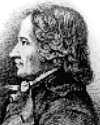
Died 3 Mar 1808 at age 63 (born 7 Jan 1745).
Danish entomologist who was one of the great entomologists of the 18th century. After studying with Swedish naturalist Linnaeus, Fabricius travelled widely in Europe to see insect collections and produced many publications describing all the new species that he saw. He named and classified some 10,000 species of insects. The system of classification of insects he developed was based on mouth structure (instead of wing). He offered theories, progressive for his time, suggesting that hybridization could produce produce new species or varieties, and that environmental adaptation could influence changes in anatomical structure or function.
Danish entomologist who was one of the great entomologists of the 18th century. After studying with Swedish naturalist Linnaeus, Fabricius travelled widely in Europe to see insect collections and produced many publications describing all the new species that he saw. He named and classified some 10,000 species of insects. The system of classification of insects he developed was based on mouth structure (instead of wing). He offered theories, progressive for his time, suggesting that hybridization could produce produce new species or varieties, and that environmental adaptation could influence changes in anatomical structure or function.
Died 3 Mar 1765 at age 77 (born 7 Nov 1687).
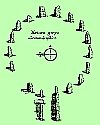
English antiquary and physician whose studies of the monumental Neolithic Period-Bronze Age stone circles at Stonehenge and Avebury, Wiltshire, led him to elaborate extravagant theories relating them to the Druids (ancient Celtic priest-magicians). These views were widely and enthusiastically accepted in the late 18th century. Despite his romantic theorizing, he was an excellent field archaeologist, and his surveys of the monuments in the 1720s remain of interest. Stukeley was the first to note the midsummer alignment at Stonehenge, and the first to describe the Stonehenge and Beckhampton "Avenues" (his name, as were "Cursus" and "trilithon").Main representative of the theory of electricity as the cause of earthquakes in Britain.Image: a sketch made by William Stukeley of the Meini Gwyr site before near total destruction in the following years.
English antiquary and physician whose studies of the monumental Neolithic Period-Bronze Age stone circles at Stonehenge and Avebury, Wiltshire, led him to elaborate extravagant theories relating them to the Druids (ancient Celtic priest-magicians). These views were widely and enthusiastically accepted in the late 18th century. Despite his romantic theorizing, he was an excellent field archaeologist, and his surveys of the monuments in the 1720s remain of interest. Stukeley was the first to note the midsummer alignment at Stonehenge, and the first to describe the Stonehenge and Beckhampton "Avenues" (his name, as were "Cursus" and "trilithon").Main representative of the theory of electricity as the cause of earthquakes in Britain.Image: a sketch made by William Stukeley of the Meini Gwyr site before near total destruction in the following years.
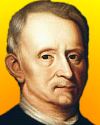
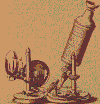
English physicist who discovered the law of elasticity, known as Hooke's law, and invented the balance spring for clocks. He was a virtuoso scientist whose scope of research ranged widely, including physics, astronomy, chemistry, biology, geology, architecture and naval technology. On 5 Nov 1662, Hooke was appointed the Curator of Experiments at the Royal Society, London. After the Great Fire of London (1666), he served as Chief Surveyor and helped rebuild the city. He also invented or improved meteorological instruments such as the barometer, anemometer, and hygrometer. Hooke authored the influential Micrographia (1665).«[Image left: No authentic image is known to exist of Hooke. This portrait was claimed by biographer Lisa Jardine to be Hooke, but was strongly disputed. Image right: Hooke's compound microscope (source).]
The Curious Life of Robert Hooke: The Man Who Measured London, by Lisa Jardine. - book suggestion.
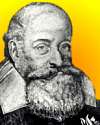
Died 3 Mar 1616 (born 1538).
French physician and botanist whose Stirpium adversaria nova (1570; written in collaboration with Pierre Pena) was a milestone in modern botany, a collection of notes and data on 1,300 plants that he had observed and gathered in France and England. In this book, he argued that botany and medicine must be based on thorough, exact observation. L'Obel divided plants according to the form of their leaves. His two professions were closed related, as most medicines derived from plants. Thus, l'Obel managed several gardens of herbs, and wrote on them. The popular garden perennial Lobelia was named by Linneaus for him. (De l'Obel is French for "of the white poplar" and his family coat of arms was a poplar leaf.)
French physician and botanist whose Stirpium adversaria nova (1570; written in collaboration with Pierre Pena) was a milestone in modern botany, a collection of notes and data on 1,300 plants that he had observed and gathered in France and England. In this book, he argued that botany and medicine must be based on thorough, exact observation. L'Obel divided plants according to the form of their leaves. His two professions were closed related, as most medicines derived from plants. Thus, l'Obel managed several gardens of herbs, and wrote on them. The popular garden perennial Lobelia was named by Linneaus for him. (De l'Obel is French for "of the white poplar" and his family coat of arms was a poplar leaf.)
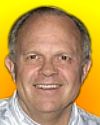
In 2005, the first solo non-stop and fastest flight around the world without refueling ended as Steve Fossett landed at the Salina Municipal Airport, Kansas. He left there 67 hours earlier on 28 Feb 2005, in The GlobalFlyer, a single-engine, single-use experimental jet plane. The first non-stop two-person flight around the world, was made in 1986 by Jeana Yeager and Dick Rutan in nine days, covering 26,366 miles without refueling. The GlobalFlyer, purpose-built of light composites, carried fuel comprising 86 percent of its weight at take-off in 13 tanks in its long wings and boom tanks. The chief designer, Jon Karkow, had spent five years planning the project, sponsored by Sir Richard Branson, owner of Virgin Atlantic Airways.«
In 1969, Apollo 9 was launched from Cape Kennedy on a mission to test the lunar module.«
In 1966, plans to begin broadcasting television programmes in colour from the following year were announced. The British Broadcasting Corporation (BBC) would make Britain the first European country to have a schedule of colour programs. Postmaster General, Anthony Wedgwood Benn, made the announcement in the House of Commons. The cost of production would be paid from a higher licence fee for the use of colour televisions, beginning with four hours of original programming per week in colour, with David Attenborough, controller of BBC2, in charge. Service was expected to expand to 10-12 hours weekly within a year. A new colour receiver then cost about £250. Black and white reception would be unaffected.«
In 1923, the first radio facsimile transmission made in the U.S. to a distant point sent a photgraphic image from the U.S. Navy Radio Station NOF, at Anacostia, D.C., to the Evening Bulletin in Philadelphia, Pennsylvania. A few months earlier, on 3 Oct 1922, photographs had been sent as a facsimile transmission over a city telephone line within Washington D.C., using a photographic plate to record the signal received at the radio station NOF, attended by Commander Albert Hoyt Taaylor, U.S.N.«*
In 1919, the first U.S. international airmail service began. Mail was flown 74 miles from Seattle, Washington to Victoria, B.C., Canada. The carrier was pilot Edward Hubbard flying a Boeing type-C open cockpit biplane with pontoons. Edward Boeing accompanied as a passenger on the first interantional airmail flight.«*
In 1901, the office of Standards, Weights and Measures was created by an act of Congress (31 Stat. L. 1449), establishing it as a separate bureau for the work previously conducted by the U.S. Coast and Geodetic Survey of the Treasury Department. Its first director was Samuel Wesley Stratton. On 1 Jul 1913, it became the National Bureau of Standards under the Department of Commerce.«*
In 1892, the first tuberculosis test on cattle in the U.S. was made by Dr. Leonard Pearson with tuberculin that he had brought from Europe. He was the Dean of the Veterinary Department of the University of Pennsylvania, Philadelphia, and he conducted the test on a herd at Claremont Farms, Villa Nova, Pennsylvania, owned by Dr. J. E. Gillingham.«*

Logo 1889
In 1885, American Telephone and Telegraph Company was incorporated in New York State, as a wholly owned subsidiary of American Bell. The company originated in 1874 formed as the Bell Patent Association, to protect the patent rights of the inventor, Alexander Graham Bell. The following year, the Bell Telephone Company was established. As the reach of the telephone wires continued to spread, a few years later, on 3 Mar 1885, operation of the long-distance telephone network was operated as the separately incorporated company (AT&T). It continued to grow into the world’s first commercially viable nation-wide telephone system. The first bell logo was introduced in 1889, used on porcelain-metal bell signs made in England.«
Events in Telecommunications History, by AT&T. - book suggestion.
In 1883, the first permanent Edison central station in Europe, generating electricity for illumination, began service in Milan, Italy. It was built on the site of the demolished Theatre Santa Radegonda in less than one year since the initial order (May 1882). Steam-powered “Jumbo” generators were used, with others added over time until eventually ten in all were powering nearly 10,000 lamps. This system served for almost 17 years, until retired on 9 Feb 1900. It was replaced with a larger installation distributing standard D.C. voltage over the existing three-wire network in Milan, from a high-tension polyphase current generated with water power 30 or so miles away at Paderno on the river Adda.«
In 1883, the first steel vessels of the U.S. Navy were authorized by Congress. Four boats were built - the cruisers Atlanta, Boston, Chicago, and a dispatch boat Dolphin (22 Stat. L. 477). The Atlanta was launched 9 Oct 1884, and commissioned 19 Jul 1886. Of these, the Chicago was the largest, with a length of 325 feet and width of 48 feet. The Atlanta and the Boston were 270 feet long and 42 feet wide, powered by horizontal back-acting engines and cylindrical tubular boilers.«*
In 1882, the first steam distribution plant of importance in the U.S. made its first distribution of steam from a central plant to the United Bank Building on Broadway. The New York Steam Corporation, formed 26 Jul 1880, consolidated with the Steam Heating and Power Company of New York on 19 Sep 1881. The plant, built on the block bounded by Cortlandt, Dey, Greenwich and Washington Streets had a 225-ft high chimney, and generated steam from 48 boilers each rated 250-h.p. By nine months later, the output served 62 customers.*«
In 1879, the office of director of the U.S. Geological Survey was authorized by Congress (20 Stat. L. 394), which made appropriations "for sundry civil expenses of the government." Clarence King, the first director, was nominated on 21 Mar 1879 and started work on 24 May 1879. The Survey was national in scope for the classification of public lands and their geological structure, mineral resources, and products. The first geological survey financed by Congress was authorized by act of Congress on 28 Jun 1834 (4 Stat. L. 394) which provided $5,000 for a survey made by George William Featherstonhaugh of the land between the Missouri and Red Rivers. The earliest survey at state expense was made in 1830-33 by Massachussetts.«*
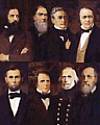
In 1863, the National Academy of Sciences was chartered in the U.S. as President Abraham Lincoln approved the Act of Congress which established it (12 Stat. L. 806). The Act stipulated that the Academy would “whenever called upon by any department of the Government, investigate, examine, experiment or report upon any subject of science or art.” The Academy would receive no compensation, but the actual expenses incurred for the Government's requirements were to be paid from appropriations. In 1863, Alexander Dallas Bache became its first president, who served until 1867. Several scientific societies were formed in the U.S. before this date, the earliest being the Boston Philosophical Society founded in 1683.*«[Image: Details from 1924 portrait made for the dedication of the Academy Building, showing Founders at signing of the charter (top L to bottom R) Peirce, Bache (first president of the Academy), Henry, Agassiz, President Lincoln, Sen. Henry Wilson, Adm. Davis, and Gould.]
In 1821, the first U.S. patent issued to a Black-American was granted to Thomas Jennings for a “dry-scouring”cleaning process (3 Mar 1821 No. X3306). Jennings used his royalties to buy his family out of slavery and to support the abolition of slavery. In 1831, Thomas Jennings became assistant secretary for the First Annual Convention of the People of Color in Philadelphia, Pennsylvania. For some time Henry Blair had been regarded as the first Black-American receiving a patent, for a corn planter (14 Oct 1834, No. X8447), until it became better known that the Jennings held that distinction.
The Inventive Spirit of African Americans: Patented Ingenuity, by Patricia Carter Sluby. - book suggestion.