Born 14 Sep 1936.
American physician and pharmacologist who was a co-winner of the 1998 Nobel Prize for Physiology or Medicine for discovering that a gas, nitric oxide, acts as a signalling molecule in the cardiovascular system. This work, performed in the 1980's, uncovered an entirely new mechanism for how blood vessels in the body relax and widen. It led to the development of the anti-impotence drug Viagra and potential new approaches for understanding and treating other diseases. He was a co-worker with Robert F. Furchgott and Louis J. Ignarro.
American physician and pharmacologist who was a co-winner of the 1998 Nobel Prize for Physiology or Medicine for discovering that a gas, nitric oxide, acts as a signalling molecule in the cardiovascular system. This work, performed in the 1980's, uncovered an entirely new mechanism for how blood vessels in the body relax and widen. It led to the development of the anti-impotence drug Viagra and potential new approaches for understanding and treating other diseases. He was a co-worker with Robert F. Furchgott and Louis J. Ignarro.
1938
Born 14 Sep 1914; died 19 May 1995 at age 80.
Robert Sinclair Dietz was an American geophysicist and oceanographer who set forth a theory (1961) of seafloor spreading (a term he coined), in which new crustal material continually upwells from the Earth's depths along the mid-ocean ridges and spreads outward at a rate of several inches per year. While a student Dietz identified the Kentland structure in Indiana as a meteoric impact site. His professors steered him toward marine geology. He became the founder and director of the Sea Floor Studies Section at the Naval Electronics Laboratory (1946-1963). He also achieved prominence by studying meteorite craters, both on Earth and on the moon and arguing that these impact craters were common. He died of a heart attack.
Robert Sinclair Dietz was an American geophysicist and oceanographer who set forth a theory (1961) of seafloor spreading (a term he coined), in which new crustal material continually upwells from the Earth's depths along the mid-ocean ridges and spreads outward at a rate of several inches per year. While a student Dietz identified the Kentland structure in Indiana as a meteoric impact site. His professors steered him toward marine geology. He became the founder and director of the Sea Floor Studies Section at the Naval Electronics Laboratory (1946-1963). He also achieved prominence by studying meteorite craters, both on Earth and on the moon and arguing that these impact craters were common. He died of a heart attack.
Born 14 Sep 1909; died 29 Aug 1989 at age 79.
Sir Peter Markham Scott, son of Robert Falcon Scott (Scott of the Antarctic), was a British naturalist, conservationist, artist, and author. He was a founder of both the Severn Wildfowl Trust (1946, now renamed as the Wildlife and Wetlands Trust) and the World Wildlife Fund. From 1953 to 1970 he hosted the environmental television series Look for the British Broadcasting Corporation. (In 1978, he gave the Loch Ness Monster a scientific name, Nessiteras rhombopteryx. Scottish Member of Parliament Nicholas Fairbairn later anagrammed it: "Monster Hoax by Sir Peter S." )
Sir Peter Markham Scott, son of Robert Falcon Scott (Scott of the Antarctic), was a British naturalist, conservationist, artist, and author. He was a founder of both the Severn Wildfowl Trust (1946, now renamed as the Wildlife and Wetlands Trust) and the World Wildlife Fund. From 1953 to 1970 he hosted the environmental television series Look for the British Broadcasting Corporation. (In 1978, he gave the Loch Ness Monster a scientific name, Nessiteras rhombopteryx. Scottish Member of Parliament Nicholas Fairbairn later anagrammed it: "Monster Hoax by Sir Peter S." )
Born 14 Sep 1887; died 22 Jun 1954 at age 66. quotes
American educator and physicist who directed development of radar during WW II. His research included the passage of photoelectrons through metals, ionization and the motion of electrons in gases, fluorescence, the theory of the electric arc, and collisions of electrons and atoms. In 1933, President Roosevelt asked him to chair the new Scientific Advisory Board. When the National Defense Research Committee was formed in 1940, he was chief of Division D (detection: radar, fire control, etc.) In 1941, he was in charge of those divisions concerned with radar within the new Office of Scientific Research and Development (OSRD). Afterwards he was cited for personally shortening the duration of the war. He was the first recipient William Procter Prize for Scientific Achievement, and brother of Arthur H. Compton.
American educator and physicist who directed development of radar during WW II. His research included the passage of photoelectrons through metals, ionization and the motion of electrons in gases, fluorescence, the theory of the electric arc, and collisions of electrons and atoms. In 1933, President Roosevelt asked him to chair the new Scientific Advisory Board. When the National Defense Research Committee was formed in 1940, he was chief of Division D (detection: radar, fire control, etc.) In 1941, he was in charge of those divisions concerned with radar within the new Office of Scientific Research and Development (OSRD). Afterwards he was cited for personally shortening the duration of the war. He was the first recipient William Procter Prize for Scientific Achievement, and brother of Arthur H. Compton.
A Scientist Speaks: Excerpts from Addresses by Karl Taylor Compton, by Karl Taylor Compton. - book suggestion.
Born 14 Sep 1883; died 3 Jan 1958 at age 74.
Austrian engineer whose work in antenna design, amplification, and detection advanced the development of radio telegraphy. In 1907 he joined the Telefunken Company of Berlin, where he conducted research on radio problems. He improved the design of antennas for transmitting at long wavelengths, devised new vacuum-tube circuits and amplification systems, and developed the heterodyne principle for radio reception. In 1911 Meissner designed the first rotary radio beacon to aid in the navigation of the Zeppelin airships. In 1913 he was the first to amplify high-frequency radio signals by using feedback in a vacuum triode; this principle made it possible to build radio receivers more sensitive than any earlier type.
Austrian engineer whose work in antenna design, amplification, and detection advanced the development of radio telegraphy. In 1907 he joined the Telefunken Company of Berlin, where he conducted research on radio problems. He improved the design of antennas for transmitting at long wavelengths, devised new vacuum-tube circuits and amplification systems, and developed the heterodyne principle for radio reception. In 1911 Meissner designed the first rotary radio beacon to aid in the navigation of the Zeppelin airships. In 1913 he was the first to amplify high-frequency radio signals by using feedback in a vacuum triode; this principle made it possible to build radio receivers more sensitive than any earlier type.
Born 14 Sep 1879; died 6 Sep 1966 at age 86. quotes
(née Maragret Louisa Higgins) American birth-control champion who founded the first U.S. birth-control clinic in Brooklyn, New York (1916), where she had witnessed firsthand the interaction of poverty, uncontrolled fertility, and deaths from botched abortions, together with high rates of infant and maternal mortality. She became an international leader, and is credited with originating the term "birth control."
(née Maragret Louisa Higgins) American birth-control champion who founded the first U.S. birth-control clinic in Brooklyn, New York (1916), where she had witnessed firsthand the interaction of poverty, uncontrolled fertility, and deaths from botched abortions, together with high rates of infant and maternal mortality. She became an international leader, and is credited with originating the term "birth control."
1880
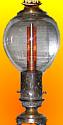
Pavel Nikolayevich Yablochkov (or Paul Jablochkov) was a Russian electrical engineer who invented an improved arc lamp, known as the Yablochkov candle (1876). Being cheap and relatively inexpensive, it was used in public buildings and to light streets for several decades before the advent of incandescent lighting which required much less maintenance. A brilliant white light was produced by an electric arc between two parallel carbon rods, using alternating current to ensure that the rods vaporised at equal rates. Yablochkov candles were used from 1877 in Paris, and were installed in London along Victoria Embankment (1878), followed by Billingsgate fish market, the Mansion House and Holborn Viaduct.«[Image right: Yablochkov candle.]
Born 14 Sep 1847; died 8 Nov 1908 at age 61. quotes
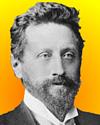
English physicist and inventor who was a pioneer in technical education. He collaborated with John Perry, and their numerous inventions include an electric tricycle (1882), the first practical portable ammeter, voltmeter and other instruments for electrical measurement. Earlier in his career, he had spent five years with the Indian Telegraph Service during which time he developed techniques for fault detection in order to maintain the telegraph system.«
English physicist and inventor who was a pioneer in technical education. He collaborated with John Perry, and their numerous inventions include an electric tricycle (1882), the first practical portable ammeter, voltmeter and other instruments for electrical measurement. Earlier in his career, he had spent five years with the Indian Telegraph Service during which time he developed techniques for fault detection in order to maintain the telegraph system.«
Born 14 Sep 1811; died 9 Jan 1880 at age 68. quotes
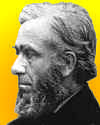
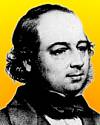
English physician who followed his father and five of his brothers into the medical profession. He earned his M.D. degree at the University of Edinburgh (1838). From 1841, he practiced in Bristol. At a time before Pasteur's knowledge of microorganisms, Budd recognized that the contagious disease was related to unidentified poisons that multiplied in the intestines and were passed in excretions. In On Malignant Cholera (1849), he warned that disease was transmitted when excretions contaminated drinking water. He was inspired by the similar work of John Snow in London. With a regimen to protect Bristol's water supply from such contamination, in 1866, Budd was able to curb the epidemic spread of cholera. He studied other communicable diseases, including diptheria, scarlet fever, rinderpest and TB.« more
English physician who followed his father and five of his brothers into the medical profession. He earned his M.D. degree at the University of Edinburgh (1838). From 1841, he practiced in Bristol. At a time before Pasteur's knowledge of microorganisms, Budd recognized that the contagious disease was related to unidentified poisons that multiplied in the intestines and were passed in excretions. In On Malignant Cholera (1849), he warned that disease was transmitted when excretions contaminated drinking water. He was inspired by the similar work of John Snow in London. With a regimen to protect Bristol's water supply from such contamination, in 1866, Budd was able to curb the epidemic spread of cholera. He studied other communicable diseases, including diptheria, scarlet fever, rinderpest and TB.« more
William Budd: Bristol's Most Famous Physician, by M.S. Dunhill. - book suggestion.
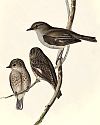
Dusky Robins (c.1849)
English ornithologist whose life work produced 41 lavishly illustrated volumes on birds from all over the world, containing in all about 3,000 plates, all lithographed and hand-painted. Of these, his Birds of Australia was particularly significant (1840-69) as the first comprehensive record of the continent's birds and mammals. With its plates of the birds were descriptions, notes on their distribution and adaptation to the environment. He assisted Charles Darwin with identification of the specimens collected during the voyage of the Beagle. By informing Darwin that the finches belonging to separate species, he provided essential information giving Darwin insight leading to his later development of the theory of evolution.«[Image right: Plate from Vol III of Birds of Australia showing a male and two young Dusky Robins, Petroica Fesca.]
John Gould's Birds, by John Gould and Maureen Lambourne. - book suggestion.
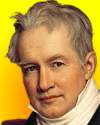
Born 14 Sep 1769; died 6 May 1859 at age 89. quotes
Baron Friedrich Wilhelm Heinrich Alexander von Humboldt was a German natural scientist, archaeologist, explorer and geographer, who made two major expeditions to Latin America (1799-1804) and to Asia (1829). During the first, equipped with the best scientific instruments, he surveyed and collected geological, zoological, botanical, and ethnographic specimens, including over 60,000 rare or new tropical plants. He observed and charted a cold ocean current along the Peruvian coast, now named the Humboldt Current. In geology, he made pioneering observations of stratigraphy, structure and geomorphology; he understood the connections between volcanism and earthquakes. Humboldt named the Jurassic System. more
Baron Friedrich Wilhelm Heinrich Alexander von Humboldt was a German natural scientist, archaeologist, explorer and geographer, who made two major expeditions to Latin America (1799-1804) and to Asia (1829). During the first, equipped with the best scientific instruments, he surveyed and collected geological, zoological, botanical, and ethnographic specimens, including over 60,000 rare or new tropical plants. He observed and charted a cold ocean current along the Peruvian coast, now named the Humboldt Current. In geology, he made pioneering observations of stratigraphy, structure and geomorphology; he understood the connections between volcanism and earthquakes. Humboldt named the Jurassic System. more
Alexander von Humboldt: A Metabiography, by Nicolaas A. Rupke. - book suggestion.
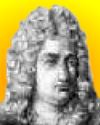
Born 14 Sep 1698; died 16 Jul 1739 at age 40.
Charles François de Cisternay Du Fay was a French chemist who made early experiments in electricity. In 1733, he distinguished electrical fluid in two types he named “vitreous electricity” and “resinous electricity” depending on the objects that produced the charge (subsequently called “positive” and “negative” by Benjamin Franklin). Du Fay discovered that objects with like charges repel each other, but oppositely charged objects attract. He also noted the effect of electricity shock on his body, and visible spark when making contact with a highly charged object. He observed that electricity may be conducted in the gaseous matter (now called plasma) adjacent to a red-hot body. Du Fay was also a pioneer in crystal optics.«
Charles François de Cisternay Du Fay was a French chemist who made early experiments in electricity. In 1733, he distinguished electrical fluid in two types he named “vitreous electricity” and “resinous electricity” depending on the objects that produced the charge (subsequently called “positive” and “negative” by Benjamin Franklin). Du Fay discovered that objects with like charges repel each other, but oppositely charged objects attract. He also noted the effect of electricity shock on his body, and visible spark when making contact with a highly charged object. He observed that electricity may be conducted in the gaseous matter (now called plasma) adjacent to a red-hot body. Du Fay was also a pioneer in crystal optics.«


1966
Died 14 Sep 2003 at age 88 (born 21 Apr 1915). quotes
American ecologist, microbiologist and author known for his classic essay on ecology and social ethics Tragedy of the Commons (published in Science, 13 Dec 1968), a parable about farmers who, allowed to graze their cattle in one field as much as they wanted to, each acted in their own self-interest, and the field was destroyed. He extended the idea of self-interest beyond the individual to households, villages, companies or nations. His concept of the commons includes ecosystems, rivers, oceans, organisms or mineral resources with actions such as over-fishing, deforestation and greenhouse gas emissions. He concluded that the Earth will likewise be destroyed by overpopulation. Hardin was a founding member of Planned Parenthood. He died by suicide when in frail health.«
American ecologist, microbiologist and author known for his classic essay on ecology and social ethics Tragedy of the Commons (published in Science, 13 Dec 1968), a parable about farmers who, allowed to graze their cattle in one field as much as they wanted to, each acted in their own self-interest, and the field was destroyed. He extended the idea of self-interest beyond the individual to households, villages, companies or nations. His concept of the commons includes ecosystems, rivers, oceans, organisms or mineral resources with actions such as over-fishing, deforestation and greenhouse gas emissions. He concluded that the Earth will likewise be destroyed by overpopulation. Hardin was a founding member of Planned Parenthood. He died by suicide when in frail health.«
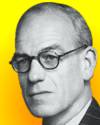
Died 14 Sep 1996 at age 90 (born 12 Jan 1906). quotes
Edred John Henry Corner was an English botanist, mycologist and author who was one of the greatest exponents of tropical botany. In 1929, the year after he graduated, Corner was appointed Assistant Director of the Singapore Botanic Garden, tasked to study the diversity of fungi in the then Malayan Straits Settlements, where he remained for 16 years. During wartime Japanese occupation, though under a form of house arrest, he was still able to continue his research, and protect the herbarium and plant collections. In subsequent years, from his time spent in the tropical forest, he gained expertise on tropical plants. He published several books, many papers, gaining international recognition. He collected plant samples on excursions worldwide.«
Edred John Henry Corner was an English botanist, mycologist and author who was one of the greatest exponents of tropical botany. In 1929, the year after he graduated, Corner was appointed Assistant Director of the Singapore Botanic Garden, tasked to study the diversity of fungi in the then Malayan Straits Settlements, where he remained for 16 years. During wartime Japanese occupation, though under a form of house arrest, he was still able to continue his research, and protect the herbarium and plant collections. In subsequent years, from his time spent in the tropical forest, he gained expertise on tropical plants. He published several books, many papers, gaining international recognition. He collected plant samples on excursions worldwide.«
The Life of Plants, by E.J.H. Corner. - book suggestion.

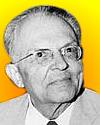
Died 14 Sep 1970 at age 79 (born 18 May 1891). quotes
German-American philosopher who made significant contributions to logic and the philosophy of science. To avoid the ambiguities resulting from the use of ordinary language, he made a logical analysis of language. He believed in studying philosphical issues in artificial languages constructed under the rules of logic and mathematics. His applications of such languages included the different interpretation of probability, the nature of explanation and the distinctions between analytic and synthetic, a priori and a posteriori, and necessary and contingent statements. His influential books include The Logical Structure of the World (1928) and The Logical Syntax of Language (1934).«
German-American philosopher who made significant contributions to logic and the philosophy of science. To avoid the ambiguities resulting from the use of ordinary language, he made a logical analysis of language. He believed in studying philosphical issues in artificial languages constructed under the rules of logic and mathematics. His applications of such languages included the different interpretation of probability, the nature of explanation and the distinctions between analytic and synthetic, a priori and a posteriori, and necessary and contingent statements. His influential books include The Logical Structure of the World (1928) and The Logical Syntax of Language (1934).«
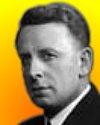
Died 14 Sep 1960 at age 79 (born 16 Jan 1881).
English engineer who was a major figure in developing techniques for manufacturing radar components. During WW I, Fleming made important advances in submarine-detection gear. In 1920, as a pioneer in the development of radio, he established in Manchester the second British transmitting station to broadcast programs on a daily basis. His work on demountable, high-power thermionic tubes made it possible to establish radar stations in Great Britain by the time WW II began in 1939.
English engineer who was a major figure in developing techniques for manufacturing radar components. During WW I, Fleming made important advances in submarine-detection gear. In 1920, as a pioneer in the development of radio, he established in Manchester the second British transmitting station to broadcast programs on a daily basis. His work on demountable, high-power thermionic tubes made it possible to establish radar stations in Great Britain by the time WW II began in 1939.
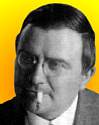
Died 14 Sep 1940 at age 61 (born 6 Jan 1879). quotes
Swiss geologist who studied the structure of the Alps. He produced a map of the Dent Blanche massif (1908) with a description of his investigation of the strata. In 1915, he coined the term embryotectonics for a new line of research which analyzed the sequential evolution of geological structures back to its origins as a sedimentary terrain.«
Swiss geologist who studied the structure of the Alps. He produced a map of the Dent Blanche massif (1908) with a description of his investigation of the strata. In 1915, he coined the term embryotectonics for a new line of research which analyzed the sequential evolution of geological structures back to its origins as a sedimentary terrain.«
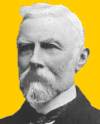
Died 14 Sep 1926 at age 74 (born 13 Feb 1852).
Danish astronomer who compiled the New General Catalogue of Nebulae and Clusters of Stars, (NGC) in 1888. When he became Director of the Armagh Observatory in 1882, financially it was destitute, with no prospect of replacing its aging instruments. Though Dreyer obtained a new 10-inch refractor by Grubb, the lack of funding for an assistant, precluded him from a continuation of traditional positional astronomy. Instead he concentrated on the compilation of observations made earlier. The NGC he listed 7840 objects and in its supplements (1895, 1908) he added a further 5386 objects. It still remains one of the standard reference catalogs.
Danish astronomer who compiled the New General Catalogue of Nebulae and Clusters of Stars, (NGC) in 1888. When he became Director of the Armagh Observatory in 1882, financially it was destitute, with no prospect of replacing its aging instruments. Though Dreyer obtained a new 10-inch refractor by Grubb, the lack of funding for an assistant, precluded him from a continuation of traditional positional astronomy. Instead he concentrated on the compilation of observations made earlier. The NGC he listed 7840 objects and in its supplements (1895, 1908) he added a further 5386 objects. It still remains one of the standard reference catalogs.
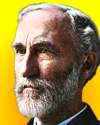
Died 14 Sep 1916 at age 55 (born 10 Jun 1861). quotes
Pierre-Maurice-Marie Duhem was a French physicist, philosopher of science and mathematician who emphasized a history of modern science based on evolutionary metaphysical concepts. He had a wide variety of mathematical interests from mechanics and physics to philosophy and the history of mathematics. Duhem studied magnetism following the work of Gibbs and Helmholtz and also worked on thermodynamics and hydrodynamics producing over 400 papers. He maintained that the role of theory in science is to systematize relationships rather than to interpret new phenomena.
Pierre-Maurice-Marie Duhem was a French physicist, philosopher of science and mathematician who emphasized a history of modern science based on evolutionary metaphysical concepts. He had a wide variety of mathematical interests from mechanics and physics to philosophy and the history of mathematics. Duhem studied magnetism following the work of Gibbs and Helmholtz and also worked on thermodynamics and hydrodynamics producing over 400 papers. He maintained that the role of theory in science is to systematize relationships rather than to interpret new phenomena.
Died 14 Sep 1895 at age 51 (born 18 Sep 1843).
British-born American entomologist who pioneered the scientific study of insects for their economic impact in agriculture. He was a keen observer of relationships in nature, and enhanced his written observations with drawings. He initiated biological control. After studying the parasites and predators of the cottony cushion scale, which was destroying the citrus industry in California, he introduced (1888) a natural enemy of the scale from Australia. The effectiveness of the Vedalia cardinalis beetle in reducing the populations of the cottony cushion scale promoted the study of biological control of pests. He helped establish the Division of Entomology of the U.S. Department of Agriculture.«
British-born American entomologist who pioneered the scientific study of insects for their economic impact in agriculture. He was a keen observer of relationships in nature, and enhanced his written observations with drawings. He initiated biological control. After studying the parasites and predators of the cottony cushion scale, which was destroying the citrus industry in California, he introduced (1888) a natural enemy of the scale from Australia. The effectiveness of the Vedalia cardinalis beetle in reducing the populations of the cottony cushion scale promoted the study of biological control of pests. He helped establish the Division of Entomology of the U.S. Department of Agriculture.«
Died 14 Sep 1882 (born 1839).
French engineer who invented the wet cell Leclanché battery (1866), ancestor of the familiar carbon-zinc dry cell batteries used to power portable electric lights and electronic devices. His wet cell, provided an e.m.f. of about 1.5 volts. A porous pot containing manganese dioxide and a carbon rod as current collector was immersed in an electrolyte of ammonium chloride solution with a negative terminal of zinc metal. From 1867, Leclanché gave full-time attention to his invention, which was adopted the following year by the Belgian telegraph service. He opened a factory to manufacture the battery. In 1881, J.A. Thiebaut had the idea of packing the chemicals in a zinc cup. Carl Gassner made the first commercially successful “dry” cell.«
French engineer who invented the wet cell Leclanché battery (1866), ancestor of the familiar carbon-zinc dry cell batteries used to power portable electric lights and electronic devices. His wet cell, provided an e.m.f. of about 1.5 volts. A porous pot containing manganese dioxide and a carbon rod as current collector was immersed in an electrolyte of ammonium chloride solution with a negative terminal of zinc metal. From 1867, Leclanché gave full-time attention to his invention, which was adopted the following year by the Belgian telegraph service. He opened a factory to manufacture the battery. In 1881, J.A. Thiebaut had the idea of packing the chemicals in a zinc cup. Carl Gassner made the first commercially successful “dry” cell.«
Died 14 Sep 1712 at age 87 (born 8 Jun 1625).
Italian-French astronomer who discovered (1675) the dark gap subdividing Saturn’s rings into two parts, now known as Cassini’s Division. He stated that Saturn’s ring, believed by Huygens to be a single body, was actually composed of small particles. Cassini also discovered four of Saturn's moons: Iapetus (Sep 1671), Rhea (1672) and on 21 Mar 1684, Tethys and Dione. He compiled new tables (1662) on the annual motion of the Sun. He observed shadows of four Galilean satellites on Jupiter (1664), and measured its rotation period by studying the bands and spots on its surface. He determined the period of rotation of Mars (1666), and attempted the same for Venus. His son Jacques was also an astronomer.«[A.k.a. Gian Domenico Cassini.]
Italian-French astronomer who discovered (1675) the dark gap subdividing Saturn’s rings into two parts, now known as Cassini’s Division. He stated that Saturn’s ring, believed by Huygens to be a single body, was actually composed of small particles. Cassini also discovered four of Saturn's moons: Iapetus (Sep 1671), Rhea (1672) and on 21 Mar 1684, Tethys and Dione. He compiled new tables (1662) on the annual motion of the Sun. He observed shadows of four Galilean satellites on Jupiter (1664), and measured its rotation period by studying the bands and spots on its surface. He determined the period of rotation of Mars (1666), and attempted the same for Venus. His son Jacques was also an astronomer.«[A.k.a. Gian Domenico Cassini.]
Died 14 Sep 1638 at age 54 (born 19 Aug 1584).
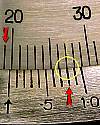
French mathematician who invented the vernier scale, which enabled instruments to make more accurate linear or angular measurements. He first described it in a work entitled La construction, l'usage et les propriétés du cadran nouveau (1631)*. It consists of a small graduated scale or arc made to slide along a larger fixed scale or arc to enable determining the increment between two graduations of the larger scale. The ten divisions of the smaller, vernier scale are equal to nine of the fixed scale. For example, calipers with a larger scale graduated in tenths of inches can be read by use of the vernier scale to within one-hundredths of an inch. Vernier scales are also used on sextants and mercury column barometers.«[Image: An angle scale reading of 19.8 degrees. The black arrow is the index mark showing the measurement on the fixed scale. "19" (not quite "20") is read at the left red arrow, ".8" from the right red arrow on the vernier scale, which graduation best aligns with a graduation on the fixed scale.][DSB gives dates 19 Aug 1584 - 14 Sep 1638. EB gives c.1580 to 14 Sep 1637.]
French mathematician who invented the vernier scale, which enabled instruments to make more accurate linear or angular measurements. He first described it in a work entitled La construction, l'usage et les propriétés du cadran nouveau (1631)*. It consists of a small graduated scale or arc made to slide along a larger fixed scale or arc to enable determining the increment between two graduations of the larger scale. The ten divisions of the smaller, vernier scale are equal to nine of the fixed scale. For example, calipers with a larger scale graduated in tenths of inches can be read by use of the vernier scale to within one-hundredths of an inch. Vernier scales are also used on sextants and mercury column barometers.«[Image: An angle scale reading of 19.8 degrees. The black arrow is the index mark showing the measurement on the fixed scale. "19" (not quite "20") is read at the left red arrow, ".8" from the right red arrow on the vernier scale, which graduation best aligns with a graduation on the fixed scale.][DSB gives dates 19 Aug 1584 - 14 Sep 1638. EB gives c.1580 to 14 Sep 1637.]
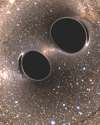
On 14 Sep 2015, LIGO made the first detection of gravitational waves, a century after they were predicted. The Laser Interferometer Gravitational-Wave Observatory (LIGO) confirmed Albert Einstein’s conjecture in his General Theory of Relativity (1915) on its 100th anniversary. These gravity waves—ripples in the fabric of spacetime—are believed to result from a cataclysmic event calculated as 1.3 billion light years away. Physicists describe these waves as being produced in the final fraction of a second of a collision of two black holes merging into a single, more massive, spinning black hole. A portion of their mass is converted into the energy carried by a strong burst of gravitational waves, as given by E=mc².«
Einstein’s Unfinished Symphony: The Story of a Gamble, Two Black Holes, and a New Age of Astronomy, by Marcia Bartusiak. - book suggestion.
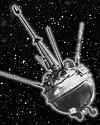
In 1959, the first space probe to strike the moon was the Soviet Luna 2, which crashed east of the Sea of Serenity. Thirty-six hours after its launch on 12 Sep 1959, it was the first man-made object reach a celestial body.
In 1956, the first U.S. prefrontal lobotomy surgery was performed. Surgeons J.W. Watts and Walter Freeman operated on a 63-year-old woman at the George Washington University Hospital.
In 1905, the oldest car race still run was first held on the Isle of Man, Great Britain for the Royal Automobile Club Tourist Trophy.

(USPTO)
In 1886, the first U.S. patent for a typewriter ribbon was issued to George Kerr Anderson of Memphis, Tennessee (No. 349,026). His invention was to provide portions near the ends of a ribbon with a colour contrasting from that of the body of the ribbon. This was intended to notify the operator of the machine to manually change the direction of the ribbon feed. Although the typed result near the end of a ribbon would be in a different colour, it was not lost. Before, in uses such as stenographic work, if a ribbon stopped at the end of its reel, the result gave a rapidly fading imprint while there may still be a need to finish a line before stopping to reverse the ribbon.
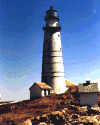
In 1716, Boston Light, the first lighthouse in America was first lighted just before sunset. Located on Little Brewster Island to mark the entrance to Boston, Massachusetts, harbour, has guided ships since then. Building it was authorized 23 Jul 1715 by the Boston Light Bill. In the 1600s, treacherous rocks caused countless loss of lives. False signal fires lit in the wrong places by “wreckers” lured ships aground to plunder. Boston Light was blown up by the British in 1776, but rebuilt in 1783 by Governor John Hancock. The lighthouse is also the last remaining manned station in the U.S.