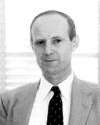
Born 24 Dec 1910; died 15 Mar 2004 at age 93.
Engineer and physicist, head of the team that developed Explorer 1, the first U.S. satellite. He collaborated with Neher and Robert Millikan on cosmic ray experiments in the 1930s, taught electronics in the 1930s, and was at Caltech during the war. He spent the rest of his career with the Jet Propusion Laboratory, becoming its Director (1954) with responsibility for the U.S. unmanned exploration of the planets and the solar system. Among these were the Mariner spacecraft to Venus and Mercury, and the Viking mission to Mars. The Voyager spacecraft yielded stunning photographs of the planets Jupiter and Saturn.
Engineer and physicist, head of the team that developed Explorer 1, the first U.S. satellite. He collaborated with Neher and Robert Millikan on cosmic ray experiments in the 1930s, taught electronics in the 1930s, and was at Caltech during the war. He spent the rest of his career with the Jet Propusion Laboratory, becoming its Director (1954) with responsibility for the U.S. unmanned exploration of the planets and the solar system. Among these were the Mariner spacecraft to Venus and Mercury, and the Viking mission to Mars. The Voyager spacecraft yielded stunning photographs of the planets Jupiter and Saturn.
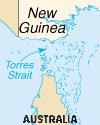
Born 24 Dec 1873; died 19 Sep 1940 at age 66.
C(harles) G(abriel) Seligman was a pioneer in British anthropology who conducted significant field research in Melanesia, Ceylon (now Sri Lanka), and, most importantly, the Nilotic Sudan. After his education as a physician he went with the Cambridge Anthropological Expedition to the Torres Straits (1898-9). Subsequently, his interests turned from medical research towards anthropology, and revisited New Guinea (1904) to distinguish the characteristic racial, cultural, and social traits of the peoples of the region. In the 1920's, he pioneered a psychoanalytic approach: studying cross-cultural similarity of dreams. He concluded that the psychology of the unconscious could provide an approach to some basic anthropological problems.
C(harles) G(abriel) Seligman was a pioneer in British anthropology who conducted significant field research in Melanesia, Ceylon (now Sri Lanka), and, most importantly, the Nilotic Sudan. After his education as a physician he went with the Cambridge Anthropological Expedition to the Torres Straits (1898-9). Subsequently, his interests turned from medical research towards anthropology, and revisited New Guinea (1904) to distinguish the characteristic racial, cultural, and social traits of the peoples of the region. In the 1920's, he pioneered a psychoanalytic approach: studying cross-cultural similarity of dreams. He concluded that the psychology of the unconscious could provide an approach to some basic anthropological problems.
Born 24 Dec 1854; died 6 Apr 1920 at age 65.
Johann Philipp Ludwig Julius Elster was a German physicist who had a very productive collaboration with Hans Geitel, and have been called the “Castor and Pollux” of physics. They constructed the first photelectric cell, and photelectric photometer as part of their study of the photoelectric effect and thermal electron emission. They declined to patent these inventions, preferring to share the benefits. From 1884, they researched electrical phenomena in gases, atmospheric electricity, measured the electrical field of the Earth, and in 1899 were the first to determine the charge on falling raindrops from thunderclouds. When they investigated radioactivity, they regarded it as due to a spontaneous release of energy by the atoms. They showed that lead is not in itself radioactive, and that conductivity of the atmosphere was due to ionization from radioactive substances.«
Johann Philipp Ludwig Julius Elster was a German physicist who had a very productive collaboration with Hans Geitel, and have been called the “Castor and Pollux” of physics. They constructed the first photelectric cell, and photelectric photometer as part of their study of the photoelectric effect and thermal electron emission. They declined to patent these inventions, preferring to share the benefits. From 1884, they researched electrical phenomena in gases, atmospheric electricity, measured the electrical field of the Earth, and in 1899 were the first to determine the charge on falling raindrops from thunderclouds. When they investigated radioactivity, they regarded it as due to a spontaneous release of energy by the atoms. They showed that lead is not in itself radioactive, and that conductivity of the atmosphere was due to ionization from radioactive substances.«
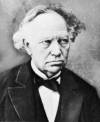
Born 24 Dec 1822; died 14 Jan 1901 at age 78. quotes
French mathematician whose work in the theory of functions includes the application of elliptic functions to provide the first solution to the general equation of the fifth degree, the quintic equation. In 1873 he published the first proof that e is a transcendental number. Hermite is known also for a number of mathematical entities that bear his name, Hermite polynomials, Hermite's differential equation, Hermite's formula of interpolation and Hermitian matrices. Poincaré is the best known of Hermite's students.
French mathematician whose work in the theory of functions includes the application of elliptic functions to provide the first solution to the general equation of the fifth degree, the quintic equation. In 1873 he published the first proof that e is a transcendental number. Hermite is known also for a number of mathematical entities that bear his name, Hermite polynomials, Hermite's differential equation, Hermite's formula of interpolation and Hermitian matrices. Poincaré is the best known of Hermite's students.
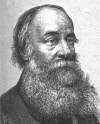
Born 24 Dec 1818; died 11 Oct 1889 at age 70. quotes
English physicist who established that the various forms of energy - mechanical, electrical, and heat - are basically the same and can be changed, one into another. Thus he formed the basis of the law of conservation of energy, the first law of thermodynamics. He discovered (1840) the relationship between electric current, resistance, and the amount of heat produced. In 1849 he devised the kinetic theory of gases, and a year later announced the mechanical equivalent of heat. Later, with William Thomson (Lord Kelvin), he discovered the Joule-Thomson effect. The SI unit of energy or work , the joule (symbol J), is named after him. It is defined as the work done when a force of 1 newton moves a distance of 1 metre in the direction of the force.
English physicist who established that the various forms of energy - mechanical, electrical, and heat - are basically the same and can be changed, one into another. Thus he formed the basis of the law of conservation of energy, the first law of thermodynamics. He discovered (1840) the relationship between electric current, resistance, and the amount of heat produced. In 1849 he devised the kinetic theory of gases, and a year later announced the mechanical equivalent of heat. Later, with William Thomson (Lord Kelvin), he discovered the Joule-Thomson effect. The SI unit of energy or work , the joule (symbol J), is named after him. It is defined as the work done when a force of 1 newton moves a distance of 1 metre in the direction of the force.
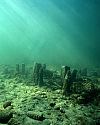
Born 24 Dec 1800; died 21 Jun 1881 at age 80.
Swiss archaeologist and prehistorian who conducted the first systematic excavation of prehistoric Alpine lake dwellings, at Obermeilen on Lake Zürich, Switzerland. In the dry winter of 1853-4, the water-level there dropped to reveal numerous wooden pilings. After farmers found flints, bones, and bronze jewelry under the mud around them. Keller began a thorough examination of the site. His finds included even pieces of cloth, basketry, and netting. Keller declared that the pilings were remaining portions of platforms needed to support dwellings in marshy land about 4000 years ago. He thus initiated the study of similar remains elsewhere in Switzerland and Europe, from which much was learned about Late Stone Age and Bronze Age life.
Swiss archaeologist and prehistorian who conducted the first systematic excavation of prehistoric Alpine lake dwellings, at Obermeilen on Lake Zürich, Switzerland. In the dry winter of 1853-4, the water-level there dropped to reveal numerous wooden pilings. After farmers found flints, bones, and bronze jewelry under the mud around them. Keller began a thorough examination of the site. His finds included even pieces of cloth, basketry, and netting. Keller declared that the pilings were remaining portions of platforms needed to support dwellings in marshy land about 4000 years ago. He thus initiated the study of similar remains elsewhere in Switzerland and Europe, from which much was learned about Late Stone Age and Bronze Age life.
Born 24 Dec 1761; died 14 Oct 1831 at age 69.
French astronomer.
French astronomer.
Born 24 Dec 1740; died 11 Dec 1784 at age 43.
Swedish astronomer.
Swedish astronomer.

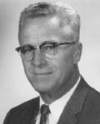
Died 24 Dec 1998 at age 88 (born 11 Nov 1910).
Raemer Edgar Schreiber was an American physicist who during World War II was one of the scientists that worked on the Manhattan Project in Los Alamos, N.M., to develop the first atomic bombs. Schreiber started work at Los Alamos on the Water Boiler Reactor, which went critical in May 1944, the first reactor to go critical using enriched uranium. He continued to work on improved reactor models until April 1945, when he became a member of the pit assembly team for the Trinity test. After Trinity, Schreib escorted the plutonium core of the Fat Man device to Tinian Island, where he helped assemble the Nagasaki bomb. After the war he stayed on at Los Alamos in the weapons division and helped develop the hydrogen bomb.
Raemer Edgar Schreiber was an American physicist who during World War II was one of the scientists that worked on the Manhattan Project in Los Alamos, N.M., to develop the first atomic bombs. Schreiber started work at Los Alamos on the Water Boiler Reactor, which went critical in May 1944, the first reactor to go critical using enriched uranium. He continued to work on improved reactor models until April 1945, when he became a member of the pit assembly team for the Trinity test. After Trinity, Schreib escorted the plutonium core of the Fat Man device to Tinian Island, where he helped assemble the Nagasaki bomb. After the war he stayed on at Los Alamos in the weapons division and helped develop the hydrogen bomb.
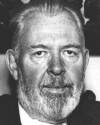
Died 24 Dec 1953 at age 60 (born 27 Feb 1893).
American anthropologist who had a marked influence on the development of cultural anthropology. After combat in France during World War I, he received a Ph.D. from Harvard (1925). In the early 1920's he did fieldwork in Polynesia. He introduced the terms "status" and "role" to social science and influenced the development of the culture-and-personality school of anthropology. His works, such as The Study of Man (1936) and The Tree of Culture (1955), are regarded more as popularizations of anthropology than as original scholarship.
American anthropologist who had a marked influence on the development of cultural anthropology. After combat in France during World War I, he received a Ph.D. from Harvard (1925). In the early 1920's he did fieldwork in Polynesia. He introduced the terms "status" and "role" to social science and influenced the development of the culture-and-personality school of anthropology. His works, such as The Study of Man (1936) and The Tree of Culture (1955), are regarded more as popularizations of anthropology than as original scholarship.
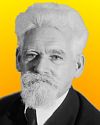
Died 24 Dec 1950 at age 74 (born 14 Feb 1876).
Russian geographer and zoologist who established the foundations of limnology in Russia with his systematic studies on the physical, chemical, and biological conditions of fresh waters, particularly of lakes. Important, too, was his work in ichthyology, which yielded much useful data on the paleontology, anatomy, and embryology of fishes in Russia.
Russian geographer and zoologist who established the foundations of limnology in Russia with his systematic studies on the physical, chemical, and biological conditions of fresh waters, particularly of lakes. Important, too, was his work in ichthyology, which yielded much useful data on the paleontology, anatomy, and embryology of fishes in Russia.
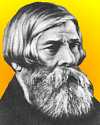
Died 24 Dec 1927 at age 70 (born 20 Jan 1857).
Vladimir Mikhailovich Bekhterev was a Russian neurophysiologist and psychiatrist who studied the anatomy and physiology of the nervous system. He made contributed knowledge of the brain formations, investigated reflexes, mental disorders and identified the localization of brain functions. His name is associated with Bekhterev's disease, various reflexive actions, and some anatomical structures. In 1895, he established at Kazan the first laboratory for research on the anatomy and physiology of the nervous system. In 1896, he founded the Nevrologichesky Vestnik, the first Russian journal on nervous diseases. Funding it himself, in 1907, he opened a psycho neurological institute, which later became a state academy. He died suddenly while in good health, and is believed to have been murdered by Stalin after giving him a consultation and a diagnosis of “grave paranoia.”[Date of birth is 20 Feb 1857 on the old calendar.]
Vladimir Mikhailovich Bekhterev was a Russian neurophysiologist and psychiatrist who studied the anatomy and physiology of the nervous system. He made contributed knowledge of the brain formations, investigated reflexes, mental disorders and identified the localization of brain functions. His name is associated with Bekhterev's disease, various reflexive actions, and some anatomical structures. In 1895, he established at Kazan the first laboratory for research on the anatomy and physiology of the nervous system. In 1896, he founded the Nevrologichesky Vestnik, the first Russian journal on nervous diseases. Funding it himself, in 1907, he opened a psycho neurological institute, which later became a state academy. He died suddenly while in good health, and is believed to have been murdered by Stalin after giving him a consultation and a diagnosis of “grave paranoia.”[Date of birth is 20 Feb 1857 on the old calendar.]
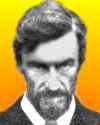
Died 24 Dec 1927 at age 72 (born 5 Aug 1855).
William Henry Dines was an English meterologist (like his father) and inventor of related measurement instruments such as the Dines pressure tube anemometer (the first instrument to measure both the velocity and direction of wind, 1901), a very lightweight meteorograph, and a radiometer (1920). He joined the Royal Meteorological Society study of the cause of the disastrous Tay Bridge collapse of 1879. His measurements of upper air conditions, first with kites and later by balloon ascents (1907), brought an understanding of cyclones from dynamic processes in the lower stratosphere rather than thermal effects nearer to the ground.
William Henry Dines was an English meterologist (like his father) and inventor of related measurement instruments such as the Dines pressure tube anemometer (the first instrument to measure both the velocity and direction of wind, 1901), a very lightweight meteorograph, and a radiometer (1920). He joined the Royal Meteorological Society study of the cause of the disastrous Tay Bridge collapse of 1879. His measurements of upper air conditions, first with kites and later by balloon ascents (1907), brought an understanding of cyclones from dynamic processes in the lower stratosphere rather than thermal effects nearer to the ground.
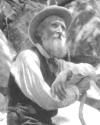
Yosemite 1907
Died 24 Dec 1914 at age 76 (born 21 Apr 1838). quotes
Scottish-American naturalist, farmer, explorer, writer and conservationist who championed the establishment of Sequoia and Yosemite national parks in California. In 1849, the Muir family emigrated to the U.S. As an inventor, he carved clocks and curious but practical mechanisms (like a device that tipped him out of bed before dawn), that won Wisconsin State Fair prizes (1860). He had begun travelling the U.S. by 1867. In his later years he wrote extensively: 300 articles and 10 major books that recounted his travels, his beloved Sierra Nevada, and expounded his naturalist philosophy. Muir drew attention to the devastation of mountain meadows and forests by sheep and cattle, leading to his role as “Father of the National Park System.” more
Scottish-American naturalist, farmer, explorer, writer and conservationist who championed the establishment of Sequoia and Yosemite national parks in California. In 1849, the Muir family emigrated to the U.S. As an inventor, he carved clocks and curious but practical mechanisms (like a device that tipped him out of bed before dawn), that won Wisconsin State Fair prizes (1860). He had begun travelling the U.S. by 1867. In his later years he wrote extensively: 300 articles and 10 major books that recounted his travels, his beloved Sierra Nevada, and expounded his naturalist philosophy. Muir drew attention to the devastation of mountain meadows and forests by sheep and cattle, leading to his role as “Father of the National Park System.” more
John Muir: The Eight Wilderness Discovery Books, by John Muir. - book suggestion.
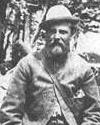
In a mountain camp
Died 24 Dec 1901 at age 59 (born 6 Jan 1842).
American geologist and mining engineer who directed the survey of the 40th parallel (1867-78), an intensive study of the mineral resources along the site of the proposed Union Pacific Railroad, recorded in his classic volume, Systematic Geology (1878). This investigative effort included the first discovery of glaciers in the U.S. while studying the extinct volcanoes of Mounts Shasta, Rainier, and Hood. He is credited with introducing the use of contour lines on maps to indicate topographic features. Instrumental in forming the U.S. Geological Survey, he was then appointed its first head (1879-81). He wrote a series of Atlantic Monthly articles on Mountaineering in the Sierra Nevada (1872), marking a transition to popularized climbing sport.
American geologist and mining engineer who directed the survey of the 40th parallel (1867-78), an intensive study of the mineral resources along the site of the proposed Union Pacific Railroad, recorded in his classic volume, Systematic Geology (1878). This investigative effort included the first discovery of glaciers in the U.S. while studying the extinct volcanoes of Mounts Shasta, Rainier, and Hood. He is credited with introducing the use of contour lines on maps to indicate topographic features. Instrumental in forming the U.S. Geological Survey, he was then appointed its first head (1879-81). He wrote a series of Atlantic Monthly articles on Mountaineering in the Sierra Nevada (1872), marking a transition to popularized climbing sport.
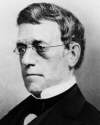
Died 24 Dec 1877 at age 73 (born 5 Oct 1804).
U.S. inventor who developed the rifled cannon known as the Parrott gun, the most formidable cannon of its time. He graduated from West Point Military Academy (1824), and spent 12 years with the Army, gaining ordinance experience. He was the army's inspector of ordinance at the private firm, West Point Foundry at Cold Spring when he retired from the army to become its civilian superintendent (31 Oct 1836) for 41 years. He perfected and manufactured a 10 pounder rifled cannon. It used a projectile with an encircling brass ring that expanded upon firing to fit the rifling grooves of the barrel. He patented both in 1861. Production of 20- and 30-pounder designs followed. During the Civil War years, he developed the Parrott sight and fuze.
U.S. inventor who developed the rifled cannon known as the Parrott gun, the most formidable cannon of its time. He graduated from West Point Military Academy (1824), and spent 12 years with the Army, gaining ordinance experience. He was the army's inspector of ordinance at the private firm, West Point Foundry at Cold Spring when he retired from the army to become its civilian superintendent (31 Oct 1836) for 41 years. He perfected and manufactured a 10 pounder rifled cannon. It used a projectile with an encircling brass ring that expanded upon firing to fit the rifling grooves of the barrel. He patented both in 1861. Production of 20- and 30-pounder designs followed. During the Civil War years, he developed the Parrott sight and fuze.
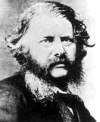
Died 24 Dec 1872 at age 52 (born 5 Jul 1820). quotes
Scottish engineer and physicist and one of the founders of the science of thermodynamics, particularly in reference to steam-engine theory. As the chair (1855) of civil engineering and mechanics at Glasgow, he developed methods to solve the force distribution in frame structures. Rankine also wrote on fatigue in the metal of railway axles, on Earth pressures in soil mechanics and the stability of walls. He was elected a Fellow of the Royal Society in 1853. Among his most important works are Manual of Applied Mechanics (1858), Manual of the Steam Engine and Other Prime Movers (1859) and On the Thermodynamic Theory of Waves of Finite Longitudinal Disturbance.
Scottish engineer and physicist and one of the founders of the science of thermodynamics, particularly in reference to steam-engine theory. As the chair (1855) of civil engineering and mechanics at Glasgow, he developed methods to solve the force distribution in frame structures. Rankine also wrote on fatigue in the metal of railway axles, on Earth pressures in soil mechanics and the stability of walls. He was elected a Fellow of the Royal Society in 1853. Among his most important works are Manual of Applied Mechanics (1858), Manual of the Steam Engine and Other Prime Movers (1859) and On the Thermodynamic Theory of Waves of Finite Longitudinal Disturbance.
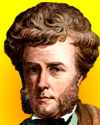
Died 24 Dec 1856 at age 54 (born 10 Oct 1802). quotes
Scottish geologist, theologian and stonemason whose geological writings popularized the subject of geologic history. He was self-taught, with no college education, but gained his experience from much time spent in the field. Miller started taking an interest in the local Devonian rocks as a result of his work starting in his youth as a quarryman. He wrote of his studies of the Devonian fossil fish of Scotland in The Old Red Sandstone (1841). Miller’s death by suicide followed a prolonged time affected by bouts of “illness of the brain,” perhaps resulting from the stress while his final work, The Testimony of the Rocks. It was published posthumously, and in this book, he attempted to bring together both his religious beliefs and the truths revealed by his scientific investigations.«
Scottish geologist, theologian and stonemason whose geological writings popularized the subject of geologic history. He was self-taught, with no college education, but gained his experience from much time spent in the field. Miller started taking an interest in the local Devonian rocks as a result of his work starting in his youth as a quarryman. He wrote of his studies of the Devonian fossil fish of Scotland in The Old Red Sandstone (1841). Miller’s death by suicide followed a prolonged time affected by bouts of “illness of the brain,” perhaps resulting from the stress while his final work, The Testimony of the Rocks. It was published posthumously, and in this book, he attempted to bring together both his religious beliefs and the truths revealed by his scientific investigations.«
Hugh Miller: Stonemason, Geologist, Writer, by Michael Taylor. - book suggestion.
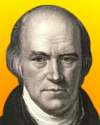
Died 24 Dec 1839 at age 72 (born 6 Mar 1767). quotes
Davies Gilbert (born Davies Giddy) was an English engineer and author who was President of the Royal Society (1827-30). In this position, he followed Sir Humphry Davy (1820-1827), whose scientific career he had advanced many years earlier by introducing him to Dr. Thomas Beddoes. Born Davies Giddy, he took the name and arms of Gilbert, pursuant to royal sign manual, on 10 Dec 1817, subsequent to his marriage (18 Apr 1808) to Mary Anne, only daughter and heiress of Thomas Gilbert.«
Davies Gilbert (born Davies Giddy) was an English engineer and author who was President of the Royal Society (1827-30). In this position, he followed Sir Humphry Davy (1820-1827), whose scientific career he had advanced many years earlier by introducing him to Dr. Thomas Beddoes. Born Davies Giddy, he took the name and arms of Gilbert, pursuant to royal sign manual, on 10 Dec 1817, subsequent to his marriage (18 Apr 1808) to Mary Anne, only daughter and heiress of Thomas Gilbert.«
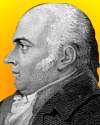
Died 24 Dec 1808 at age 48 (born 13 Apr 1760). quotes
English physician and philosopher who, in the late 1780s, began to explore the potential medical uses of gases. He founded the Pneumatic Medical Institute in Bristol (1798). The institute offered oxygen therapy, but because Beddoes' assumption–that some diseases would naturally respond to a higher or lower oxygen concentration–was incorrect, the treatments offered no real clinical benefit. However, Humphry Davy, launched his chemistry career there, researching nitrous oxide (“diminished nitrous air”). Beddoes published Hygeia: Or Essays Moral and Medical, on the Causes Affecting the Personal State of the Middling and Affluent Classes, 3 vols. (1802), a formal regimen for daily diet, exercise, and sleep for illness prevention.
English physician and philosopher who, in the late 1780s, began to explore the potential medical uses of gases. He founded the Pneumatic Medical Institute in Bristol (1798). The institute offered oxygen therapy, but because Beddoes' assumption–that some diseases would naturally respond to a higher or lower oxygen concentration–was incorrect, the treatments offered no real clinical benefit. However, Humphry Davy, launched his chemistry career there, researching nitrous oxide (“diminished nitrous air”). Beddoes published Hygeia: Or Essays Moral and Medical, on the Causes Affecting the Personal State of the Middling and Affluent Classes, 3 vols. (1802), a formal regimen for daily diet, exercise, and sleep for illness prevention.
The Atmosphere of Heaven: The Unnatural Experiments of Dr Beddoes, by Mike Jay. - book suggestion.
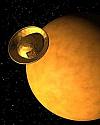
In 2004, the Huygens probe began a 22-day descent towards Saturn's largest moon, Titan. It had been launched as part of the Cassini spacecraft in 1997, and together they entered Saturn's orbit in June 2004. As the paths of the spacecraft and Titan converged, Cassini ejected the Huygens probe, sending it on a 22-day coast toward the cloud-covered moon. It landed 14 Jan 2005, and sent back photgraphs of the moon's surface. Cassini will remain in orbit around Saturn until at least July 2008. The Cassini-Huygens mission to study Saturn and its 33 known moons resulted from an unprecedented cooperative effort between the NASA of the United States, the European Space Agency and Italy's space program, at a cost of $3.3 billion.«
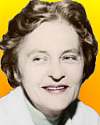
Maria Telkes
In 1948, the first U.S. house to be completely solar heated was occupied in Dover, Mass. The experiments were sponsored by Amelia Peabody. For the architect, Eleanor Raymond (1888-1989), the design of the Dover Sun House was one of her most ambitious works. The heating system, designed by Dr. Maria Telkes from the MIT Solar Laboratory, used black sheet metal collectors to capture solar energy, stored by the phase-change of sodium sulphate decahydrate in "heat bins". Fans distribute the heat as needed. Maria Telkes (1900-95) was a Hungarian-American physical chemist and biophysicist, dubbed "the Sun Queen" for her solar research, developed solar distillation of sea water for fresh water, solar ovens, and many other solar projects.

In 1945, a warning about Russian atomic bomb development was sent by an attaché at the U.S. Embassy in Moscow. Thomas P. Whitney wrote: “the U.S.S.R. is out to get the atomic bomb. This has been officially stated. The meager evidence available indicates that great efforts are being made and that super-priority will be given to the enterprise.” It was only four months since two atomic bombs had been dropped on Japan to end WW II. At first, military leaders were sceptical of Russia's ability to accomplish such an undertaking. Yet, the interest of Russia in atomic power was also documented by their removal of scientists from Berlin after WW II. The first Soviet atomic bomb was detonated on 29 Aug 1949, and announced by President Truman on 23 Sep 1949, less than four years since Whitney's prediction.«
The Making of the Atomic Bomb, by Richard Rhodes. - book suggestion.
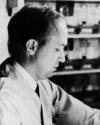
In 1936, the first radioactive isotope medicine was administered, Berkeley, Cal. When Ernest Lawrence, inventor of the cyclotron, recognized the possibilities for uses of nuclear isotopes in medicine, he persuaded his brother John to join the Berkeley Laboratory. John Lawrence started Donner Laboratory circa 1936. Treating a 28-yr-old woman with chronic leukemia, he administered a radioactive isotope of phosphorus-32 that had been artificially produced in a 37-in cyclotron. It was the first time that a radioactive isotope had been used in the treatment of a human disease as well as the start of a career-long contribution from John Lawrence. He became known as the father of nuclear medicine and his laboratory is considered the birthplace of this field.
In 1923, Time magazine described a process using extreme heat and pressure that could make granite and jade artificially within a few hours at the geophysical laboratory of the Carnegie Institution of Washington, D.C. The raw ingredients of the minerals were heated in a small electric furnace to 2,500°F under a pressure gradually increased up to 200,000-psi. Extreme pressure could also inject water into rock resulting in a soft, gelatin-like condition..«[Ref: Time 24 Dec 1923]
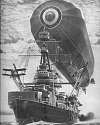
In 1923, Time magazine reported that bills introduced in Congress would conserve American helium resources as a monopoly for both war and peace purposes. Up to 500 million cubic feet of helium could be derived from natural gas wells, enough to maintain 200 airships. This amount was contrasted with probably not more than 15 cubic feet of isolated helium held before the World War. The production cost had been reduced to 7 cents per cubic foot, and helium would be preferred to airships inflated with hydrogen which could be exploded by anti-aircraft guns or engine accidents. The article also recognized that helium could be liquefied for easy storage, and that a laboratory in Toronto was producing liquid helium for military purposes.«[Ref: Time 24 Dec 1923] more
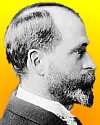
In 1912, Irving Fisher (1867-1947), a Yale professor, patented an archiving system with index cards. On 1 Jul 1925, Fisher's own firm, the Index Visible Company, merged with its principal competitor to form Kardex Rand Co., later Remington Rand, still later Sperry Rand. Fisher earned about $1 million for the invention, which grew to the princely sum of $9 million before being lost in the stock market crash of 1929. Fisher is widely regarded as the greatest economist America has produced, who made much use of mathematics in his work.
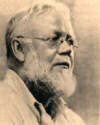
In 1906, Reginald A. Fessenden gave what is generally considered to be the first broadcast of entertainment by radio, as part of the ongoing promotion of the new system using his new alternator- transmitter. He had been working since 1898 on being able to transmit audio, not just dots-and-dashes, since 1898. Three days earlier, he had demonstrated it to invited representatives from a number of organizations, among them was the American Telephone & Telegraph Company. Fessenden and his financial backers dearly hoped AT&T would be so impressed it would buy the rights to the patents which covered the new system. The AT&T Co. found it was was “admirably adapted to the transmission of news, music, etc.” simultaneously to multiple locations, but decided that it was not yet refined enough for commercial telephone service.
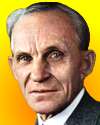
In 1893, Henry Ford completed his first useful gas motor. He and his wife tested the small one-cylinder engine in their kitchen. At the time Ford was chief steam engineer at the main Detroit Edison Company plant with responsibility for maintaining electric service in the city 24 hours a day. Because he was on call at all times, he had no regular hours and could experiment to his heart's content. His wages barely paid for living expenses and for tools and materials for his tinkering. But his wife was cooperative and did not complain but rather, encouraged him. A later version of that engine with two cylinders powered Ford's first automobile, his Quadricycle, when it took its inaugural drive on 4 Jun 1896. By 16 Jun 1903, he and eleven investors signed paperwork to incorporate the car-making Ford Motor Company.«
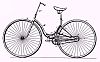
In 1889, a bicycle with a back-pedal brake was patented by Daniel Stover and William Hance of Freeport, Ill. (No. 418,142) .