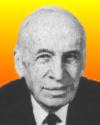
Born 13 Mar 1899; died 27 Oct 1980 at age 81. quotes
John Hasbrouck Van Vleck was an American physicist and mathematician, a pioneer in the modern quantum mechanical theory of magnetism, who shared the 1977 Nobel Prize for Physics (with Philip W. Anderson and Sir Nevill F. Mott) for his work on the behaviour of electrons in magnetic, noncrystalline solid materials. He introduced (c.1930) the contribution of the 2nd-order Zeeman effect to the theory of paramagnetic susceptibility for ions of samarium and europium, so calculations agreed with experimental results. Van Vleck extended (c.1929) Hans Bethe's theoretical work to develop the ligand, or crystal, field theory of molecular bonding. He also studied the theory for the nature of the chemical bond, especially as related to its magnetic properties, and contributed to theory of the spectra of free molecules.«[An earlier incorrect entry for death on 28 Nov 1980 was deleted from this site on 28 Nov 2025.]
John Hasbrouck Van Vleck was an American physicist and mathematician, a pioneer in the modern quantum mechanical theory of magnetism, who shared the 1977 Nobel Prize for Physics (with Philip W. Anderson and Sir Nevill F. Mott) for his work on the behaviour of electrons in magnetic, noncrystalline solid materials. He introduced (c.1930) the contribution of the 2nd-order Zeeman effect to the theory of paramagnetic susceptibility for ions of samarium and europium, so calculations agreed with experimental results. Van Vleck extended (c.1929) Hans Bethe's theoretical work to develop the ligand, or crystal, field theory of molecular bonding. He also studied the theory for the nature of the chemical bond, especially as related to its magnetic properties, and contributed to theory of the spectra of free molecules.«[An earlier incorrect entry for death on 28 Nov 1980 was deleted from this site on 28 Nov 2025.]
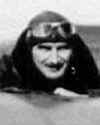
Born 13 Mar 1886; died 26 Mar 1949 at age 63.
U.S. Army officer, balloonist, and early aerial photographer who took the first photograph of the Earth's curvature (1930) and the first photographs of the Moon's shadow on the Earth during a solar eclipse (1932). On 11 Nov 1935, Stevens made a record balloon ascent in the Explorer II to 72,395 ft with Captain (later Lieutenant General) Orvil Anderson at Rapid City, S.D.
U.S. Army officer, balloonist, and early aerial photographer who took the first photograph of the Earth's curvature (1930) and the first photographs of the Moon's shadow on the Earth during a solar eclipse (1932). On 11 Nov 1935, Stevens made a record balloon ascent in the Explorer II to 72,395 ft with Captain (later Lieutenant General) Orvil Anderson at Rapid City, S.D.
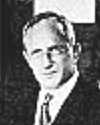
Born 13 Mar 1883; died 1924.
Clifford Milburn Holland was the American engineer who designed the 1.5-mile-long Holland Tunnel under the Hudson River, between New York City and Jersey City, NJ. In 1919, Holland, took office as Chief Engineer of the tunnel that would eventually bear his name. Tunnel construction began 12 Oct 1920 and was completed in 1927. In Holland's design, the new problem of noxious gases from internal combustion engines, was solved with huge-capacity fans in ventilating buildings at each end, forcing air through a supply duct below the roadway, with an exhaust duct above the ceiling. Holland did not see his dream come to fruition At age 41, he died one day before construction crews from the two sides met. The tunnel opened 13 Nov 1927.
Clifford Milburn Holland was the American engineer who designed the 1.5-mile-long Holland Tunnel under the Hudson River, between New York City and Jersey City, NJ. In 1919, Holland, took office as Chief Engineer of the tunnel that would eventually bear his name. Tunnel construction began 12 Oct 1920 and was completed in 1927. In Holland's design, the new problem of noxious gases from internal combustion engines, was solved with huge-capacity fans in ventilating buildings at each end, forcing air through a supply duct below the roadway, with an exhaust duct above the ceiling. Holland did not see his dream come to fruition At age 41, he died one day before construction crews from the two sides met. The tunnel opened 13 Nov 1927.
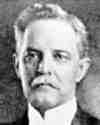
Born 13 Mar 1866; died 22 Feb 1941 at age 74. quotes
American physicist. Author of The Science of Musical Sounds (1916). Miller's collection of nearly 1,650 flutes and other instruments, and other materials mostly related to the flute, is now at the Library of Congress. To provide a mechanical means of recording sound waves photographically, he invented the phonodeik (1908). He became expert in architectural ecoustics. During WW I, he was consulted concerning using his photodeik to help locate enemy guns. Miller spent considerable research effort on repeating the Michelson and Morley experiment, proposed by Maxwell, to detect a stationary aether. He spent some time working with Morley (1902-4), then more time at Mt. Wilson, recording results favoring the presence of the aether.
American physicist. Author of The Science of Musical Sounds (1916). Miller's collection of nearly 1,650 flutes and other instruments, and other materials mostly related to the flute, is now at the Library of Congress. To provide a mechanical means of recording sound waves photographically, he invented the phonodeik (1908). He became expert in architectural ecoustics. During WW I, he was consulted concerning using his photodeik to help locate enemy guns. Miller spent considerable research effort on repeating the Michelson and Morley experiment, proposed by Maxwell, to detect a stationary aether. He spent some time working with Morley (1902-4), then more time at Mt. Wilson, recording results favoring the presence of the aether.
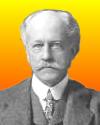
Born 13 Mar 1855; died 12 Nov 1916 at age 61. quotes
American astronomer who predicted the existence of the planet Pluto and initiated the search that ended in its discovery. Lowell was also passionately committed to finding proof of intelligent life on Mars. In 1894, he founded the Lowell Observatory, atop Mars Hill, at Flagstaff as Arizona's first astronomical observatory. Studying Mars, Lowell drew in intricate detail, the network of several hundred fine, straight lines and their intersection in a number of "oases." Lowell concluded that the bright areas were deserts and the dark ones were patches of vegetation. He believed further, that water from the melting polar cap flowed down the canals toward the equatorial region to revive the vegetation.
American astronomer who predicted the existence of the planet Pluto and initiated the search that ended in its discovery. Lowell was also passionately committed to finding proof of intelligent life on Mars. In 1894, he founded the Lowell Observatory, atop Mars Hill, at Flagstaff as Arizona's first astronomical observatory. Studying Mars, Lowell drew in intricate detail, the network of several hundred fine, straight lines and their intersection in a number of "oases." Lowell concluded that the bright areas were deserts and the dark ones were patches of vegetation. He believed further, that water from the melting polar cap flowed down the canals toward the equatorial region to revive the vegetation.
Percival Lowell: The Culture and Science of a Boston Brahmin, by David Strauss. - book suggestion.
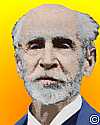
Born 13 Mar 1834; died 16 May 1928 at age 94.
English inventor who invented linoleum (pat. app. 19 Dec 1863, No. 3210). His 88 patents included artificial leather, distillation, plastics, flexible metal tubing, and Lincrusta, an embossed linoleum wall covering (1877). He was a self-described “practical utilitarian of the nineteenth century,” with no education in chemistry or engineering. Before linoleum, he patented (Sep 1861) a varnish applicable to the waterproofing and coating of fabrics. In Jan 1862 he applied with his brother for a patent in which textile card brushes had the short wire bristles held in an india rubber backing. Walton started in the family business of processing India rubber. He developed linoleum from observing the plastic dried surface layer of linseed oil-based paint, which he first investigated as an alternative to rubber and led to linoleum.« more
English inventor who invented linoleum (pat. app. 19 Dec 1863, No. 3210). His 88 patents included artificial leather, distillation, plastics, flexible metal tubing, and Lincrusta, an embossed linoleum wall covering (1877). He was a self-described “practical utilitarian of the nineteenth century,” with no education in chemistry or engineering. Before linoleum, he patented (Sep 1861) a varnish applicable to the waterproofing and coating of fabrics. In Jan 1862 he applied with his brother for a patent in which textile card brushes had the short wire bristles held in an india rubber backing. Walton started in the family business of processing India rubber. He developed linoleum from observing the plastic dried surface layer of linseed oil-based paint, which he first investigated as an alternative to rubber and led to linoleum.« more
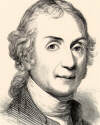
Born 13 Mar 1733; died 6 Feb 1804 at age 70. quotes
English chemist, clergyman and political theorist who discovered the element oxygen. His early scientific interest was electricity, but he is remembered for his later work in chemistry, especially gases. He investigated the “fixed air” (carbon dioxide) found in a layer above the liquid in beer brewery fermentation vats. Although known by different names at the time, he also discovered sulphur dioxide, ammonia, nitrogen oxides, carbon monoxide and silicon fluoride. Priestley is remembered for his invention of a way of making soda-water (1772), the pneumatic trough, and recognising that green plants in light released oxygen. His political opinions and support of the French Revolution, were unpopular. After his home and laboratory were set afire (1791), he sailed for America, arriving at New York on 4 Jun 1794.« more
English chemist, clergyman and political theorist who discovered the element oxygen. His early scientific interest was electricity, but he is remembered for his later work in chemistry, especially gases. He investigated the “fixed air” (carbon dioxide) found in a layer above the liquid in beer brewery fermentation vats. Although known by different names at the time, he also discovered sulphur dioxide, ammonia, nitrogen oxides, carbon monoxide and silicon fluoride. Priestley is remembered for his invention of a way of making soda-water (1772), the pneumatic trough, and recognising that green plants in light released oxygen. His political opinions and support of the French Revolution, were unpopular. After his home and laboratory were set afire (1791), he sailed for America, arriving at New York on 4 Jun 1794.« more
Joseph Priestley: Adventurer in Science and Champion of Truth, by F W. Gibbs. - book suggestion.
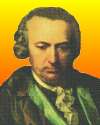
Born 13 Mar 1720; died 20 May 1793 at age 73. quotes
Swiss naturalist and philosophical writer who discovered parthenogenesis (reproduction without fertilization) in female aphids. Bonnet also: demonstrated the regenerative ability of annelid worms, found that insects breathe through pores which he called stigmata, studied photosynthesis and epinasty in plants and noted the emission of bubbles by a submerged illuminated leaf. With eyesight failing in the 1750's he turned to speculation. Remembering the aphid, in 1770, Bonnet published an argument that all females carry within them all future evolutionary generations in a miniature form, able to survive even such cataclysms as the biblical Flood. He predicted, moreover, that these catastrophes thus brought about evolutionary change.
Swiss naturalist and philosophical writer who discovered parthenogenesis (reproduction without fertilization) in female aphids. Bonnet also: demonstrated the regenerative ability of annelid worms, found that insects breathe through pores which he called stigmata, studied photosynthesis and epinasty in plants and noted the emission of bubbles by a submerged illuminated leaf. With eyesight failing in the 1750's he turned to speculation. Remembering the aphid, in 1770, Bonnet published an argument that all females carry within them all future evolutionary generations in a miniature form, able to survive even such cataclysms as the biblical Flood. He predicted, moreover, that these catastrophes thus brought about evolutionary change.

Born 13 Mar 1585; died 1 Aug 1630 at age 45.
Italian naturalist who founded the Accademia dei Lincei (1603, Academy of Linceans or Lynxes), often cited as the first modern scientific society, and of which Galileo was the sixth member (1611). Cesi first announced the word telescope for Galileo's instrument. At an early age, while being privately educated, Cesi became interested in natural history and that believed it should be studied directly, not philosophically. The name of the Academy, which he founded at age 18, was taken from Lynceus of Greek mythology, the animal Lynx with sharp sight. He devoted the rest of his life to recording, illustrating and an early classification of nature, especially botany. The Academy was dissolved when its funding from Cesi ceased upon his sudden death.
Italian naturalist who founded the Accademia dei Lincei (1603, Academy of Linceans or Lynxes), often cited as the first modern scientific society, and of which Galileo was the sixth member (1611). Cesi first announced the word telescope for Galileo's instrument. At an early age, while being privately educated, Cesi became interested in natural history and that believed it should be studied directly, not philosophically. The name of the Academy, which he founded at age 18, was taken from Lynceus of Greek mythology, the animal Lynx with sharp sight. He devoted the rest of his life to recording, illustrating and an early classification of nature, especially botany. The Academy was dissolved when its funding from Cesi ceased upon his sudden death.
The Eye of the Lynx: Galileo, His Friends, and the Beginnings of Modern Natural History, by David Freedberg. - book suggestion.

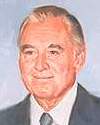
Died 13 Mar 1998 at age 86 (born 14 Dec 1911).
German aeronautical engineer who designed the first operational jet engine. Ohain, at age 22, conceived his theory of jet propulsion (1933) because to fly faster, airplanes could fly higher for lower air resistance, but there, propellers and piston engines worked badly. He saw turbojets as a solution, and took out his first patent on the gas-turbine jet engine in 1935, four years after Frank Whittle. By Sep 1937, Ohain had a hydrogen-fueled bench model producing a 250-km thrust. He designed the HeS3b turbojet engine that powered the first experimental jet aircraft, the He178, on its historic maiden flight at a top speed of about 350 mph on 27 Aug 1939, near Rostock, Germany. Whittle's first jet flew later, in 1941. His continued work on the gas-turbine engine during World War II resulted in abandonment of the centrifugal flow concept, and adoption of the axial flow compressor type engine. After WW II, Ohain worked for the U.S. airforce (1947-79). In 1945, he emigrated to the U.S. and became an engineer for the U.S. Air Force at its engine development centre. In 1956, Von Ohain became Director of the famed Air Force Aeronautical Research Laboratory.
German aeronautical engineer who designed the first operational jet engine. Ohain, at age 22, conceived his theory of jet propulsion (1933) because to fly faster, airplanes could fly higher for lower air resistance, but there, propellers and piston engines worked badly. He saw turbojets as a solution, and took out his first patent on the gas-turbine jet engine in 1935, four years after Frank Whittle. By Sep 1937, Ohain had a hydrogen-fueled bench model producing a 250-km thrust. He designed the HeS3b turbojet engine that powered the first experimental jet aircraft, the He178, on its historic maiden flight at a top speed of about 350 mph on 27 Aug 1939, near Rostock, Germany. Whittle's first jet flew later, in 1941. His continued work on the gas-turbine engine during World War II resulted in abandonment of the centrifugal flow concept, and adoption of the axial flow compressor type engine. After WW II, Ohain worked for the U.S. airforce (1947-79). In 1945, he emigrated to the U.S. and became an engineer for the U.S. Air Force at its engine development centre. In 1956, Von Ohain became Director of the famed Air Force Aeronautical Research Laboratory.
Hans Von Ohain: Elegance in Flight, by Margaret Conner. - book suggestion.
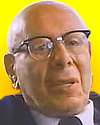
Died 13 Mar 1990 at age 86 (born 28 Aug 1903). quotes
Austrian-American psychologist known for his work in treating and educating emotionally disturbed children. Bettelheim was a revered author of influential clinical studies on the lives of autistic children as well as popular Freudian interpretations of myth and fairy tale; and founder of the Orthogenic School of psychoanalysis in Chicago. After his suicide, at the age of 86, a scandal followed when his reputation as a benevolent sage was besmirched by former patients who claimed that he had sadistically beaten them.
Austrian-American psychologist known for his work in treating and educating emotionally disturbed children. Bettelheim was a revered author of influential clinical studies on the lives of autistic children as well as popular Freudian interpretations of myth and fairy tale; and founder of the Orthogenic School of psychoanalysis in Chicago. After his suicide, at the age of 86, a scandal followed when his reputation as a benevolent sage was besmirched by former patients who claimed that he had sadistically beaten them.
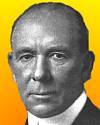
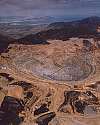
American mining engineer and metallurgist who founded the Utah Copper Company and with an economical method to process low-grade porphyry copper ores, below 2% copper. As electicity use expanded in the early 20th century, so demand for copper rose, and the need to exploit even low-grade ore. Such ore was obtained by open-pit mining then loaded by steam shovels into railroad cars and transported to concentrating mills. Jackling developed improved extraction/flotation processes to produce a higher-grade concentrate for smelting. By the time Jackling died, over 60% of the world's copper production took advantage of his low-grade ore processing methods. His Bingham Canyon Mine, now a huge pit, still produces copper.«[Image right: Bingham Mine]
Died 13 Mar 1939 at age 81 (born 19 Apr 1857).
French philosopher whose study of the psychology of primitive peoples gave anthropology a new approach to understanding irrational factors in social thought and primitive religion and mythology.
French philosopher whose study of the psychology of primitive peoples gave anthropology a new approach to understanding irrational factors in social thought and primitive religion and mythology.

Died 13 Mar 1937 at age 83 (born 29 Mar 1853). quotes
English-American engineer and inventor whose discoveries in the field of alternating current phenomena led to the development of successful alternating current motors. Thomson invented electric welding and other important inventions in electric lighting and power among his lifetime total of about 700 patents. Thomson was also a cofounder of the General Electric Company (in 1892, in a merger with the Edison Company) industry. more
English-American engineer and inventor whose discoveries in the field of alternating current phenomena led to the development of successful alternating current motors. Thomson invented electric welding and other important inventions in electric lighting and power among his lifetime total of about 700 patents. Thomson was also a cofounder of the General Electric Company (in 1892, in a merger with the Edison Company) industry. more
Innovation as a Social Process: Elihu Thomson and the Rise of General Electric, by W. Bernard Carlson. - book suggestion.
Died 13 Mar 1933 at age 71 (born 10 Nov 1861).
Robert Thorburn Ayton Innes was a Scottish astronomer who discovered Proxima Centauri (1915), the closest star to earth after the Sun. Invited by David Gill to the Cape Observatory, South Africa (1894), he became a successful binary star observer with the 7-inch refractor (1628 discoveries). His most famous discovery, Proxima Centauri is a faint star near the binary star Alpha Centauri, which is so far south it is not visible from most of the northern hemisphere. He was also the first to see the Daylight Comet of 1910, though this comet was found independently by so many people in the Southern Hemisphere that no single "original'' discoverer could be named. Innes recorded it on 17 Jan 1910.
Robert Thorburn Ayton Innes was a Scottish astronomer who discovered Proxima Centauri (1915), the closest star to earth after the Sun. Invited by David Gill to the Cape Observatory, South Africa (1894), he became a successful binary star observer with the 7-inch refractor (1628 discoveries). His most famous discovery, Proxima Centauri is a faint star near the binary star Alpha Centauri, which is so far south it is not visible from most of the northern hemisphere. He was also the first to see the Daylight Comet of 1910, though this comet was found independently by so many people in the Southern Hemisphere that no single "original'' discoverer could be named. Innes recorded it on 17 Jan 1910.

Died 13 Mar 1920 at age 77 (born 30 Sep 1842). quotes
English geologist who proposed what came to be called the Ordovician period (505 to 438 million years old) of geologic strata. Lapworth is famous for his work with marine fossils called graptolites. By fastidiously collecting the tiny, colonial sea creatures, he figured out the original order of layered rocks that had been faulted and folded in England's Southern Uplands. This method of correlating rocks with graptolites became a model for similar research throughout the world. In 1879, Lapworth proposed a new classification of Lower Paleozoic rocks with the Ordovician, between the redefined Cambrian and Silurian periods, Lapworth convincingly settled a heated dispute. The name comes from an ancient Welsh tribe, the Ordovices.
English geologist who proposed what came to be called the Ordovician period (505 to 438 million years old) of geologic strata. Lapworth is famous for his work with marine fossils called graptolites. By fastidiously collecting the tiny, colonial sea creatures, he figured out the original order of layered rocks that had been faulted and folded in England's Southern Uplands. This method of correlating rocks with graptolites became a model for similar research throughout the world. In 1879, Lapworth proposed a new classification of Lower Paleozoic rocks with the Ordovician, between the redefined Cambrian and Silurian periods, Lapworth convincingly settled a heated dispute. The name comes from an ancient Welsh tribe, the Ordovices.
Died 13 Mar 1911 at age 70 (born 4 Apr 1840). quotes
Henry Pickering Bowditch was an American physiologist who established first teaching laboratory of physiology in U.S. (1871). He discovered the 'all-or-none' law of muscle contraction (1871), and the indefatigability of nerves (1890). He was the grandson of Nathaniel Bowditch.
Henry Pickering Bowditch was an American physiologist who established first teaching laboratory of physiology in U.S. (1871). He discovered the 'all-or-none' law of muscle contraction (1871), and the indefatigability of nerves (1890). He was the grandson of Nathaniel Bowditch.
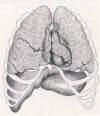
Died 13 Mar 1886 at age 73 (born 20 Oct 1812).
American physician who was an eminent doctor and pioneer of heart research in the United States during the nineteenth century. In 1847, he founded Buffalo Medical College and taught at several medical schools. Flint was an authority on pulmonary and respiratory diseases, and popularized the use of the binaural stethoscope. The Austin Flint murmur is a heart disorder he described in 1862 in which blood from the aorta is regurgitated into the heart before contraction of the ventricles. An authority on pulmonary and respiratory diseases, he popularized the use of the binaural stethoscope. The best known of his numerous textbooks is Treatise on the Principles and Practice of Medicine (1866).Image: Austin Flint's diagram of the relations of the heart to the lungs, liver, and stomach (1859).
American physician who was an eminent doctor and pioneer of heart research in the United States during the nineteenth century. In 1847, he founded Buffalo Medical College and taught at several medical schools. Flint was an authority on pulmonary and respiratory diseases, and popularized the use of the binaural stethoscope. The Austin Flint murmur is a heart disorder he described in 1862 in which blood from the aorta is regurgitated into the heart before contraction of the ventricles. An authority on pulmonary and respiratory diseases, he popularized the use of the binaural stethoscope. The best known of his numerous textbooks is Treatise on the Principles and Practice of Medicine (1866).Image: Austin Flint's diagram of the relations of the heart to the lungs, liver, and stomach (1859).
The Physiology Of Man,... The Existing State Of Physiological Science..., by Austin Flint. - book suggestion.
Died 13 Mar 1845 at age 55 (born 12 Mar 1790).
British chemist and meteorologist who invented the Daniell cell, which was a great improvement over the voltaic cell used in the early days of battery development. His research in1820 led to the invention of a dew-point hygrometer that measured relative humidity which afterwards became a standard instrument. Daniell began experiments in 1835 in an attempt to improve the Voltaic battery with its problem of being unsteady and as a weak source of electrical current. In 1836, he invented a primary cell in which hydrogen was eliminated in the generation of the electricity. Daniell had solved the problem of polarization due to the was a thin film of hydrogen bubbles that formed over the positive electrode that reduced current.
British chemist and meteorologist who invented the Daniell cell, which was a great improvement over the voltaic cell used in the early days of battery development. His research in1820 led to the invention of a dew-point hygrometer that measured relative humidity which afterwards became a standard instrument. Daniell began experiments in 1835 in an attempt to improve the Voltaic battery with its problem of being unsteady and as a weak source of electrical current. In 1836, he invented a primary cell in which hydrogen was eliminated in the generation of the electricity. Daniell had solved the problem of polarization due to the was a thin film of hydrogen bubbles that formed over the positive electrode that reduced current.
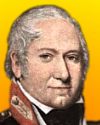
Died 13 Mar 1842 at age 80 (born 3 Jun 1761).
English soldier and inventor of the Shrapnel shell, a spherical case designed to explode in midair, spreading its content of small lead musket balls to injure enemy soldiers over a wide area. He joined the Royal Artillery shortly after his 18th birthday, and spent his life in service during which time he devised and refined his shell, invented a percussion lock for small arms (patented 1834) and other improvements in fuses, ammunition and small arms. He also prepared important artillery range tables and originated the brass tangent slide to improve the sighting of guns. Incorporating his idea of the parabolic chamber, howitzers and mortars were operated more efficiently.« more
English soldier and inventor of the Shrapnel shell, a spherical case designed to explode in midair, spreading its content of small lead musket balls to injure enemy soldiers over a wide area. He joined the Royal Artillery shortly after his 18th birthday, and spent his life in service during which time he devised and refined his shell, invented a percussion lock for small arms (patented 1834) and other improvements in fuses, ammunition and small arms. He also prepared important artillery range tables and originated the brass tangent slide to improve the sighting of guns. Incorporating his idea of the parabolic chamber, howitzers and mortars were operated more efficiently.« more
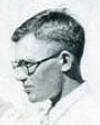
In 1930, the discovery of a ninth planet was announced by Clyde W. Tombaugh at Lowell Observatory. It is only one-tenth as large as Earth and four thousand million miles away. The planet was named Pluto on 24 May 1930. Pluto was declassified, no longer to be called a planet, on 24 Aug 2006, by a vote at the International Astronomical Union (IAU) during their 10-day General Assembly in Prague. It was given status instead as a “dwarf planet,” on account of its small size—less than the diameter of the Moon.
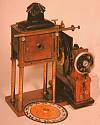
In 1882, the zoopraxiscope, an optical apparatus invented by Eadweard J. Muybridge (1879) to exhibit photographs of moving animals, was shown at the Royal Institution in the presence of the Prince of Wales. Muybridge's great work on the subject was published in 1887-9, and his Animals in Motion in 1899.* The zoopraxiscope projected images from rotating glass disks in rapid succession to give the impression of motion. It functioned as essentially the first movie projector, with a sequence of stop-motion silhouette images hand-painted around the edge of a circular glass disk, which was loaded onto the projector's side in a vertical position. In 1893, he lectured at "Zoopraxigraphical Hall" at the World's Columbian Exposition in Chicago.«[Image: Zoopraxiscope light source with chimney (left), glass disc (bottom alone, and right of centre mounted vertically). A large lens mounted for focussing the light beam stands on the right outside the picture.]
Eadweard Muybridge, by Gordon Hendricks. - book suggestion.

(USPTO)
In 1877, the first U.S. patent for earmuffs was issued to teen-aged Chester Greenwood of Farmington, Maine (No. 188,292). While trying out a new pair of ice-skates one winter, he experienced stinging ears, and solved his problem with beaver fur pads on a wire frame. By his mid-twenties, he had a factory and 11 workers producing in his hometown of Farmington producing 50,000 earmuffs yearly. His distribution grew to 400,000 pairs in 1936, the year he died. He patented many other inventions. In 1977, Maine's legislature declared 21 Dec, the first day of winter, as the annual Chester Greenwood Day. His hometown celebrates with a parade in early December, although the Greenwood Ear Protector factory is now a laundry.«
more
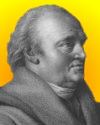
In 1781, English astronomer William Herschel detected Uranus in the night sky, but he thought it was a comet. It was the first planet to be discovered with the aid of a telescope. By 1787, he had also observed the Uranian satellites Titania and Oberon (11 Jan 1787), which were later given these names by his son, John Herschel.
more