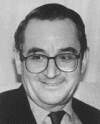
Born 12 Jul 1928.
American organic chemist, winner of the Nobel Prize for Chemistry in 1990 "for his development of the theory and methodology of organic synthesis." He is principally known for his work is in computer-aided analyses of synthesis problems. Using "retrosynthetic analysis," a target molecule might be broken down by reversible steps into simpler, readily available compounds, which is greatly assisted by the use of computers. Corey has synthesized over 100 substances for the first time, including terpenes (plant oil hydrocarbons) and ginkolide B (an extract from the ginko tree used to control asthma.)
American organic chemist, winner of the Nobel Prize for Chemistry in 1990 "for his development of the theory and methodology of organic synthesis." He is principally known for his work is in computer-aided analyses of synthesis problems. Using "retrosynthetic analysis," a target molecule might be broken down by reversible steps into simpler, readily available compounds, which is greatly assisted by the use of computers. Corey has synthesized over 100 substances for the first time, including terpenes (plant oil hydrocarbons) and ginkolide B (an extract from the ginko tree used to control asthma.)
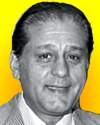
Born 12 Jul 1923; died 29 Jul 2000 at age 77.
René Gerónimo Favaloro was an Argentinian surgeon, educator and author who pioneered a form of coronary artery bypass grafting (CABG) using the great saphenous vein (a vein in the leg, the longest in the body). It now reduces the risk of heart attack and relieves chest pain for hundred of thousands of people each year. His career began as a country doctor for 12 years. He trained nurses, set up a blood bank, and built an operating room in his hometown, La Plata, Argentina. From 1962, in the U.S. at the Cleveland Clinic, he made advances in cardiac surgery. On 7 May 1967, he operated with his technique on a 51-yr-old patient. In 1971, he returned to Argentina. Favaloro died by suicide, agonized by corruption in the Argentine health system.«[CABG is often spoken as “cabbage”.]
René Gerónimo Favaloro was an Argentinian surgeon, educator and author who pioneered a form of coronary artery bypass grafting (CABG) using the great saphenous vein (a vein in the leg, the longest in the body). It now reduces the risk of heart attack and relieves chest pain for hundred of thousands of people each year. His career began as a country doctor for 12 years. He trained nurses, set up a blood bank, and built an operating room in his hometown, La Plata, Argentina. From 1962, in the U.S. at the Cleveland Clinic, he made advances in cardiac surgery. On 7 May 1967, he operated with his technique on a 51-yr-old patient. In 1971, he returned to Argentina. Favaloro died by suicide, agonized by corruption in the Argentine health system.«[CABG is often spoken as “cabbage”.]
Pathfinders of the Heart: The History of Cardiology at the Cleveland Clinic, by William C. Sheldon. - book suggestion.
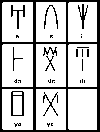
Born 12 Jul 1922; died 6 Sep 1956 at age 34.
Michael George Francis Ventris was an English architect and cryptographer who showed (1952) that the Minoan Linear B script was a very early form of Greek, the oldest known examples. Since archaeologists working in Crete had discovered (1900) these incriptions on ancient clay tablets, the writings had stymied the experts. Ventris had been a keen amateur cryptographer since his teenage years, was later a student in architecture, served in WW II, then returned intent on analysing the code. When he was able to decipher the inscriptions, he identified them to be from c. 1400 to 1200 BC, roughly the period of the events narrated in the Homeric epics. Ventris died young, in an auto accident, soon after this accomplishment, but having provided the key findings, his work was taken up by others.«
Michael George Francis Ventris was an English architect and cryptographer who showed (1952) that the Minoan Linear B script was a very early form of Greek, the oldest known examples. Since archaeologists working in Crete had discovered (1900) these incriptions on ancient clay tablets, the writings had stymied the experts. Ventris had been a keen amateur cryptographer since his teenage years, was later a student in architecture, served in WW II, then returned intent on analysing the code. When he was able to decipher the inscriptions, he identified them to be from c. 1400 to 1200 BC, roughly the period of the events narrated in the Homeric epics. Ventris died young, in an auto accident, soon after this accomplishment, but having provided the key findings, his work was taken up by others.«
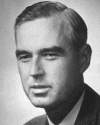
Born 12 Jul 1913; died 15 May 2008 at age 94.
Willis Eugene Lamb, Jr. was an American physicist and joint winner, with Polykarp Kusch, of the Nobel Prize for Physics in 1955 "for his discoveries concerning the fine structure of the hydrogen spectrum." His experimental work spurred refinements in the quantum theories of electromagnetic phenomena.
Willis Eugene Lamb, Jr. was an American physicist and joint winner, with Polykarp Kusch, of the Nobel Prize for Physics in 1955 "for his discoveries concerning the fine structure of the hydrogen spectrum." His experimental work spurred refinements in the quantum theories of electromagnetic phenomena.
(EB)
Born 12 Jul 1895; died 1 Jul 1983 at age 87. quotes
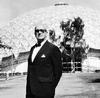
Richard Buckminster Fuller was an American inventor, educator, author, philosopher, engineer and architect who developed the geodesic dome. This large dome can be set directly on the ground as a complete structure. There is no limit to the size to which it may be built and retain sufficient structural strength. Fuller also invented a wide range of other paradigm-shifting machines and structural systems. He was especially interested in high-strength-to-weight designs, with a maximum of utility for minimum of material. His designs and engineering philosophy are part of the foundation of contemporary high-tech design aesthetics. He held over 2000 patents.Photo: R. Buckminster Fuller shown with a geodesic dome constructed as the U.S. pavilion at the American Exhange Exhibition, 1959.
Richard Buckminster Fuller was an American inventor, educator, author, philosopher, engineer and architect who developed the geodesic dome. This large dome can be set directly on the ground as a complete structure. There is no limit to the size to which it may be built and retain sufficient structural strength. Fuller also invented a wide range of other paradigm-shifting machines and structural systems. He was especially interested in high-strength-to-weight designs, with a maximum of utility for minimum of material. His designs and engineering philosophy are part of the foundation of contemporary high-tech design aesthetics. He held over 2000 patents.Photo: R. Buckminster Fuller shown with a geodesic dome constructed as the U.S. pavilion at the American Exhange Exhibition, 1959.
Born 12 Jul 1883; died 7 Jul 1954 at age 70. quotes
Russian-American physical chemist, a world leader in vacuum science and technology, a GE assistant director of research and author of several standard scientific textbooks. One example is Scientific Foundations of Vacuum Technique (1922). It is very readable and he gets to the hows and whys things work the way they do. One of the true classics, it was completely revised in 1961 by his colleague James Lafferty. Using a formula he derived, Dushman calculated the conductances for cylindrical tubes based on their measured dimensions and produced the table which he included in the book that is still used to design a vacuum system.
Russian-American physical chemist, a world leader in vacuum science and technology, a GE assistant director of research and author of several standard scientific textbooks. One example is Scientific Foundations of Vacuum Technique (1922). It is very readable and he gets to the hows and whys things work the way they do. One of the true classics, it was completely revised in 1961 by his colleague James Lafferty. Using a formula he derived, Dushman calculated the conductances for cylindrical tubes based on their measured dimensions and produced the table which he included in the book that is still used to design a vacuum system.
Born 12 Jul 1863; died 29 Oct 1933 at age 70.
French physician and bacteriologist who was a pupil of Louis Pasteur. He joined the Navy as a doctor, and was the Director of the Bacteriological Institute of Saigon (1891). On his return in France, as a professor of bacteriology, he created the Pasteur Institute of Lille. (1895-1919). Calmette studied the venoms of the snakes and anti-venomous serotherapy. He developed and improved several processes of vaccination, in particular that against tuberculosis with its fellow-member bacteriologist and veterinary Camille Guerin (1872-1961). These two researchers gave their name to the famous antituberculosis vaccine Bacillus Calmette-Guerin (BCG).
French physician and bacteriologist who was a pupil of Louis Pasteur. He joined the Navy as a doctor, and was the Director of the Bacteriological Institute of Saigon (1891). On his return in France, as a professor of bacteriology, he created the Pasteur Institute of Lille. (1895-1919). Calmette studied the venoms of the snakes and anti-venomous serotherapy. He developed and improved several processes of vaccination, in particular that against tuberculosis with its fellow-member bacteriologist and veterinary Camille Guerin (1872-1961). These two researchers gave their name to the famous antituberculosis vaccine Bacillus Calmette-Guerin (BCG).
1915
Born 12 Jul 1854; died 14 Mar 1932 at age 77. quotes
American inventor and industrialist who was a pioneering manufacturer of photographic materials, including rolled film (first patented on 14 Oct 1884) and the Kodak camera (patented 4 Sep 1888). He founded the Eastman-Kodak Company, which for years held a virtual monopoly in the camera and film industry. His introduction of the first Kodak (a coined word, 1888, that became a trademark) camera helped to promote large-scale amateur photography. more
American inventor and industrialist who was a pioneering manufacturer of photographic materials, including rolled film (first patented on 14 Oct 1884) and the Kodak camera (patented 4 Sep 1888). He founded the Eastman-Kodak Company, which for years held a virtual monopoly in the camera and film industry. His introduction of the first Kodak (a coined word, 1888, that became a trademark) camera helped to promote large-scale amateur photography. more
Born 12 Jul 1849; died 29 Dec 1919 at age 70. quotes
(Baronet) Canadian physician who revolutionized the medical curriculum in North America, adapting the best of the systems he had observed in England and Germany. He believed that students learn best by doing, teaching medical students at the bedside. He introduced postgraduate training system, instituting a general internship of one year to be followed by a residency of several years. His textbook, The Principles and Practice of Medicine (1892) included the advances of the previous half-century in clinical medical science, and remained the standard text for 40 years. Early in his life, in 1873, he made the most careful description to date of what later were called the "blood-platelets," which was presented to the Royal Society.« more
(Baronet) Canadian physician who revolutionized the medical curriculum in North America, adapting the best of the systems he had observed in England and Germany. He believed that students learn best by doing, teaching medical students at the bedside. He introduced postgraduate training system, instituting a general internship of one year to be followed by a residency of several years. His textbook, The Principles and Practice of Medicine (1892) included the advances of the previous half-century in clinical medical science, and remained the standard text for 40 years. Early in his life, in 1873, he made the most careful description to date of what later were called the "blood-platelets," which was presented to the Royal Society.« more
William Osler: A Life in Medicine, by Michael Bliss. - book suggestion.
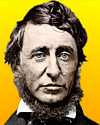
Born 12 Jul 1817; died 6 May 1862 at age 44. quotes
American author, philosopher, poet and naturalist, whose classic Walden; or, Life in the Woods has become a classic on the ecological relationship of man in an industrial society. He was a pacifist, whom Ralph Waldo Emerson would help out of trouble. Thoreau's moniker of the "Hermit of Walden" came from living in the woods around Walden pond for several years. Later in his short life, Thoreau turned his attention to observing and keeping thorough journals recording of the natural history around Concord, New Hampshire, where he was regarded as the town naturalist. Many scholars consider Henry David Thoreau to be the father of the American conservation movements. He died of tuberculosis at age 45.
American author, philosopher, poet and naturalist, whose classic Walden; or, Life in the Woods has become a classic on the ecological relationship of man in an industrial society. He was a pacifist, whom Ralph Waldo Emerson would help out of trouble. Thoreau's moniker of the "Hermit of Walden" came from living in the woods around Walden pond for several years. Later in his short life, Thoreau turned his attention to observing and keeping thorough journals recording of the natural history around Concord, New Hampshire, where he was regarded as the town naturalist. Many scholars consider Henry David Thoreau to be the father of the American conservation movements. He died of tuberculosis at age 45.
Born 12 Jul 1813; died 10 Feb 1878 at age 64. quotes
French physiologist who is noted for his discoveries about the role of the pancreas in digestion, the glycogenic function of the liver, and the regulation of the blood supply by the vasomotor nerves. He helped establish the principles of experimentation in the life sciences. His Introduction to the Study of Experimental Medicine (1865) is a scientific classic.
French physiologist who is noted for his discoveries about the role of the pancreas in digestion, the glycogenic function of the liver, and the regulation of the blood supply by the vasomotor nerves. He helped establish the principles of experimentation in the life sciences. His Introduction to the Study of Experimental Medicine (1865) is a scientific classic.
Born 12 Jul 1730; died 3 Jan 1795 at age 64.
English inventor, artist and potter who began a new branch of the pottery industry in the early 1760s. This inventor placed the manufacture of stoneware on a scientific basis, and founded the potteries of North Staffordshire. The agateware and unglazed blue or green stoneware he decorated with white neo-classical designs, used pigments he invented. In 1768 he used his engineering skills to design the machinery and high-temperature beehive-shaped kilns. For his invention of a pyrometer for measuring high temperatures, Wedgwood was made a fellow of the Royal Society. He was a major financial supporter of Dr. Thomas Beddoes’ Pneumatic Institute near Bristol, where Humphry Davy studied nitrous oxide (1800).
English inventor, artist and potter who began a new branch of the pottery industry in the early 1760s. This inventor placed the manufacture of stoneware on a scientific basis, and founded the potteries of North Staffordshire. The agateware and unglazed blue or green stoneware he decorated with white neo-classical designs, used pigments he invented. In 1768 he used his engineering skills to design the machinery and high-temperature beehive-shaped kilns. For his invention of a pyrometer for measuring high temperatures, Wedgwood was made a fellow of the Royal Society. He was a major financial supporter of Dr. Thomas Beddoes’ Pneumatic Institute near Bristol, where Humphry Davy studied nitrous oxide (1800).
Wedgwood: The First Tycoon, by Brian Dolan. - book suggestion.
Born 12 Jul 100 B.C.; died 15 Mar 44 B.C.. quotes
Roman politician, soldier and author who became Consul of Rome in 59 BC. History remembers he greatly expanding the Roman Empire and that he died by assassination. In 46 BC, Caesar introduced the leap year, adding a leap day, 29 Feb, to the calendar every four years, on the Julian calendar. A day is the time for one Earth rotation on its axis. The year is the time taken for the Earth to travel once around the Sun, which amounts to almost 365¼ days. Adding the leap day every four years, made a correction to keep the the calendar, and the seasons, more synchronized to the solar year. He was assisted by the astronomer Sosigenes of Alexandria. Centuries later, Pope Gregory XIII established skipping one leap year in each of three centuries out of four, to correct more precisely for the 365.242222 day solar year.«
Roman politician, soldier and author who became Consul of Rome in 59 BC. History remembers he greatly expanding the Roman Empire and that he died by assassination. In 46 BC, Caesar introduced the leap year, adding a leap day, 29 Feb, to the calendar every four years, on the Julian calendar. A day is the time for one Earth rotation on its axis. The year is the time taken for the Earth to travel once around the Sun, which amounts to almost 365¼ days. Adding the leap day every four years, made a correction to keep the the calendar, and the seasons, more synchronized to the solar year. He was assisted by the astronomer Sosigenes of Alexandria. Centuries later, Pope Gregory XIII established skipping one leap year in each of three centuries out of four, to correct more precisely for the 365.242222 day solar year.«

Died 12 Jul 1938 at age 68 (born 24 May 1870).
Ynes Enriquetta Julietta Mexia was an American botanical collector, who developed her passion for botany and fieldwork in her 50s, and yet was able to make about 150,000 collections in 12 years on seven expeditions. She was aged 55 when she made her first collecting trip. She accompanied Stanford's Assistant Herbarium Curator, Roxanna Ferris, in Mexico. Her activity was remarkable, as she spent several years exploring for specimens in remote reaches of Central and South Americas. At age 59, she began a 2½ year expedition in Peru and Brazil which included a three-month period trapped by floods with her team in a 600-m deep gorge which they escaped eventually by building a raft and running the river and its rapids.«
Ynes Enriquetta Julietta Mexia was an American botanical collector, who developed her passion for botany and fieldwork in her 50s, and yet was able to make about 150,000 collections in 12 years on seven expeditions. She was aged 55 when she made her first collecting trip. She accompanied Stanford's Assistant Herbarium Curator, Roxanna Ferris, in Mexico. Her activity was remarkable, as she spent several years exploring for specimens in remote reaches of Central and South Americas. At age 59, she began a 2½ year expedition in Peru and Brazil which included a three-month period trapped by floods with her team in a 600-m deep gorge which they escaped eventually by building a raft and running the river and its rapids.«
Ynes Mexia: Botanist And Adventurer, by Durlynn Anema. - book suggestion.
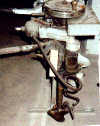
Died 12 Jul 1934 at age 57 (born 19 Apr 1877).
Norwegian inventor and manufacturer of the outboard marine engine. Ole Evinrude was rowing his small boat one day. It struck him that rowing was more difficult than it needed to be, when his purpose was a picnic on a distant small island. He resolved then and there to invent a means of moving small boats quickly and easily through the water. When he figured out a better way he had invented the first practical outboard motor in 1909. He patented it in 1910; it quickly replaced steam and foot-driven motors for boats and spurred a new industry. The result was the Evinrude Outboard Motor that remains popular to this day.Photo: ca. 1915 model
Norwegian inventor and manufacturer of the outboard marine engine. Ole Evinrude was rowing his small boat one day. It struck him that rowing was more difficult than it needed to be, when his purpose was a picnic on a distant small island. He resolved then and there to invent a means of moving small boats quickly and easily through the water. When he figured out a better way he had invented the first practical outboard motor in 1909. He patented it in 1910; it quickly replaced steam and foot-driven motors for boats and spurred a new industry. The result was the Evinrude Outboard Motor that remains popular to this day.Photo: ca. 1915 model
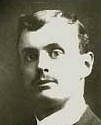
Died 12 Jul 1910 at age 32 (born 28 Aug 1877).
British motorist, aviator, and automobile manufacturer who was one of the founders of the Rolls-Royce Ltd. automobile company. He was the first aviator to fly across the English Channel and back nonstop (June 1910). Rolls drove a 12-hp Panhard car in the Thousand Miles Trial of 1900 and took part in many of the early long-distance European classic races. In 1902 he became a motor dealer and in 1906 merged his firm with that of Sir Henry Royce to form Rolls-Royce Ltd. Rolls died in a flying accident, the first British pilot to do so.[EB gives date born 28 Aug 1877. Almanac of Famous People gives 27 Aug 1877.]
British motorist, aviator, and automobile manufacturer who was one of the founders of the Rolls-Royce Ltd. automobile company. He was the first aviator to fly across the English Channel and back nonstop (June 1910). Rolls drove a 12-hp Panhard car in the Thousand Miles Trial of 1900 and took part in many of the early long-distance European classic races. In 1902 he became a motor dealer and in 1906 merged his firm with that of Sir Henry Royce to form Rolls-Royce Ltd. Rolls died in a flying accident, the first British pilot to do so.[EB gives date born 28 Aug 1877. Almanac of Famous People gives 27 Aug 1877.]
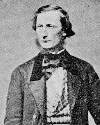
Died 12 Jul 1892 at age 72 (born 30 Nov 1819).
American entrepreneur who promoted the first transatlantic telephone cable. In 1856, he helped establish the Atlantic Telegraph Company. He obtained charters from the British and American governments, and arranged financial backers in New York and London. For technical services he enlisted British engineer Charles Tilston Bright and William Thomson (later Lord Kelvin). Laying the first cable was completed 5 Aug 1858, but shortly failed. Field persisted, and on 27 Jul 1866, an improved cable was laid. Field had built his personal fortune of $250,000 from a paper business (1841-53). Later, he invested in the New York Elevated Railroad Co. (1877-80), and the Wabash Railroad. By late in life, he had lost much of his fortune.«
American entrepreneur who promoted the first transatlantic telephone cable. In 1856, he helped establish the Atlantic Telegraph Company. He obtained charters from the British and American governments, and arranged financial backers in New York and London. For technical services he enlisted British engineer Charles Tilston Bright and William Thomson (later Lord Kelvin). Laying the first cable was completed 5 Aug 1858, but shortly failed. Field persisted, and on 27 Jul 1866, an improved cable was laid. Field had built his personal fortune of $250,000 from a paper business (1841-53). Later, he invested in the New York Elevated Railroad Co. (1877-80), and the Wabash Railroad. By late in life, he had lost much of his fortune.«
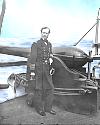
Died 12 Jul 1870 at age 60 (born 13 Nov 1809). quotes
American inventor of the smooth-bore cannon that was, from its shape, familiarly known as the “soda-water bottle.” The shape resulted from a design in which the thickness of metal was varied to match the differences in internal pressure occurring when the cannon was fired. The pressures were determined by boring holes in the walls of the gun and inserting as gauges such objects as pistons or musket balls. He developed the weapons primarily for use on small boats that patrolled the waterways. His iron smoothbores were adopted in 1850 (9-inch gun) and 1851 (11-inch gun). Although designed for use against wooden ships, the iron-clad Monitor class ships carried two of these guns in their turrets, which were replaced by the 15-inch Dahlgrens in 1862.
American inventor of the smooth-bore cannon that was, from its shape, familiarly known as the “soda-water bottle.” The shape resulted from a design in which the thickness of metal was varied to match the differences in internal pressure occurring when the cannon was fired. The pressures were determined by boring holes in the walls of the gun and inserting as gauges such objects as pistons or musket balls. He developed the weapons primarily for use on small boats that patrolled the waterways. His iron smoothbores were adopted in 1850 (9-inch gun) and 1851 (11-inch gun). Although designed for use against wooden ships, the iron-clad Monitor class ships carried two of these guns in their turrets, which were replaced by the 15-inch Dahlgrens in 1862.
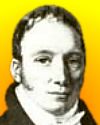
Died 12 Jul 1850 at age 78 (born 8 Jun 1772). quotes
Scottish civil engineer who in 1797 succeeded his stepfather, Thomas Smith, as a member of the Scottish Lighthouse Board. In that capacity until 1843, he designed and built lighthouses (1797-1843). His first and greatest was the lighthouse at Bell Rock. Subsequently he established a civil engineering practice involved at first in canal, road and rail projects, and later maritime, river and bridge work. As chief executive of the Northern Lighthouse Board (1808-43) he was responsible for the construction and design of at least 23 lighthouses on the Scottish Coastline. He invented intermittent and flashing lights as well as the hydrophore (an instrument for obtaining specimens from water). The writer Robert Louis Stevenson was his grandson.
Scottish civil engineer who in 1797 succeeded his stepfather, Thomas Smith, as a member of the Scottish Lighthouse Board. In that capacity until 1843, he designed and built lighthouses (1797-1843). His first and greatest was the lighthouse at Bell Rock. Subsequently he established a civil engineering practice involved at first in canal, road and rail projects, and later maritime, river and bridge work. As chief executive of the Northern Lighthouse Board (1808-43) he was responsible for the construction and design of at least 23 lighthouses on the Scottish Coastline. He invented intermittent and flashing lights as well as the hydrophore (an instrument for obtaining specimens from water). The writer Robert Louis Stevenson was his grandson.
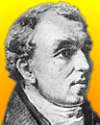
Died 12 Jul 1834 at age 35 (born 25 Jun 1799). quotes
Scottish botanist who was one of the most successful of the great 19th century plant collectors. He established about 240 species of plants in Britain. His first foreign plant-hunting expedition (1824) was made throughout the Pacific Northwest of the U.S. The Douglas fir, which he cultivated from 1827, is named after him. He introduced other conifers including the Sitka spruce, now commercially important to the timber industry, and numerous garden plants and shrubs, including the lupin, California poppy and the flowering currant. At age 35, he died in by accident in Hawaii, when he fell into a pit dug by the islanders to trap wild cattle where he was trapped with a bull that also fell into the pit. He was gored to death by the bull.« more
Scottish botanist who was one of the most successful of the great 19th century plant collectors. He established about 240 species of plants in Britain. His first foreign plant-hunting expedition (1824) was made throughout the Pacific Northwest of the U.S. The Douglas fir, which he cultivated from 1827, is named after him. He introduced other conifers including the Sitka spruce, now commercially important to the timber industry, and numerous garden plants and shrubs, including the lupin, California poppy and the flowering currant. At age 35, he died in by accident in Hawaii, when he fell into a pit dug by the islanders to trap wild cattle where he was trapped with a bull that also fell into the pit. He was gored to death by the bull.« more
Traveler in a Vanished Landscape, The Life & Times of David Douglas, by William Moorwood. - book suggestion.
Died 12 Jul 1807 at age 66 (born 10 Aug 1740).
English archaeologist.
English archaeologist.
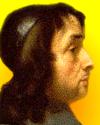
Painting believed to be Jean Picard
French astronomer, cartographer and hydraulic engineer, regarded as the founder of modern astronomy in France. He introduced new methods, improved the old instruments, and added new devices, such as Huygens’ pendulum clock to record times and time intervals. Picard was the first to put the telescope to use for the accurate measurement of small angles, making use of Gascoigne’s micrometer. He devised a movable-wire micrometer to measure the diameters of celestial objects such as the Sun, Moon and planets. For land surveying and leveling, he designed instruments that incorporated the astronomical telescope. Picard was one of the first to apply scientific methods to the making of maps. Among his other skills were hydraulics; he solved the problem of supplying the fountains at Versailles with water. His most important work was the first measurement of the circumference of the earth. He used the method of Eratosthenes, but with greater accuracy. He greatly increased the accuracy of measurements of the Earth, using Snell’s method of triangulation (Mesure de la Terre, 1671). This data was used by Newton in his gravitational theory. The concept behind neon signs began in 1675, when Picard observed a glow in a barometer.
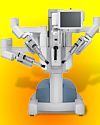
In 2020, a da Vinci surgical robot system was used for surgery just one day after its FDA approval in the U.S. A gallbladder was removed using the $1 million robot for the laparoscopic procedure. Its tiny, precise motions inside the body were performed through small holes in the abdomen by wrist-like devices at the end of robotic arms. Surgeon William E. Kelley controlled the movements seated at a remote computer console nearby. The 35-year-old patient, Kimberley Briggs, was pleased with the results. She gave a news conference within four hours after her surgery at Henrico Doctors Hospital, Richmond, Virginia. She went home in time for her son’s birthday party.«
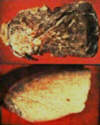
In 1957, U.S. Surgeon General Leroy Burney, who served in the post from 1956 to 1961, issued a report on a connection smoking and lung cancer. Dr. Leroy Burney, US Surgeon General during the Eisenhower Administration was the first government official to publicly acknowledge the connection between smoking and lung cancer. Dr. Burney, himself a smoker, issued the report in 1957, saying, "It is clear that there is an increasing and consistent body of evidence that excessive cigarette smoking is one of the causative factors in lung cancer." This statement and a stronger one two years later in 1959 set the stage for the 1964 Surgeon General Report on smoking and health. Burney died 31 July 1998, at the age of 91.[Image: Top - Smoker's lung, dead at 50. Bottom - Non-smoker's lung alive until 70.]
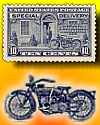
In 1922, the new issue of the blue 10-cent U.S. Special Delivery stamp had for the first time the image of a motor cycle, replacing the 9 Dec 1902 version with a bicycle. Being the first new stamp of the Harding presidency, the revised design demonstrated a growing post-World War I interest in developing technology. This stamp began the year's series of new regular postage stamps, collectively having a patriotic theme, and was issued with much more publicity than any previous regular series. The increased level of attention given by the Post Office Department to this series included giving advance notice, and is regarded as the early roots of the later practice of issuing First Day Covers for stamp collectors.«
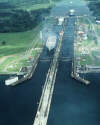
Ganun Locks
In 1920, the Panama Canal was formally dedicated. It had taken more than 30 years to overcome the enormous engineering challenges and complete at a cost of $347 million. The first ship had, in fact, travelled through six years earlier when the Panama Canal opened to shipping on 15 Aug 1914. At that time, the world scarcely noticed the event since German troops were driving across Belgium toward Paris and the newspapers relegated the Panama story to their back pages; the greatest engineering project in the history of the world had been dwarfed by the totality of World War I.
Path Between The Seas: The Creation of the Panama Canal, by David McCullough. - book suggestion.
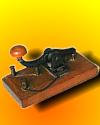
In 1906, the first long-distance wireless telegraphy message across water in the southern hemisphere was transmitted 300-km across Bass Strait from Devonport, Tasmania to Queenscliff, Victoria, Australia, to demonstrate Marconi's equipment. A Morse code message from Governor Gerald Strickland of Tasmania, was sent to Governor General Northcote of Victoria. The town celebrated. Businesses closed for the afternoon. A band played for the crowd of 2000 people at the event. Despite the test's success, the Australian Government postponed purchase or approval for the service and after three months the stations were dismantled. However, by 1912, wireless equipment was required for ships in Australian waters.«
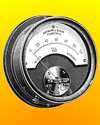
In 1894, eight units for the measurement of electrical magnitudes were adopted in U.S. law when President Grover Cleveland signed an Act of Congress “to define and establish the units of electrical measure” for the ohm, ampere, volt, coulomb, farad, joule, watt and henry. It was specified to be “the duty of the Academy of Sciences to prescribe ... such specifications of details as shall be necessary for the practical application of the definitions.” The Act followed an International Congress held at Chicago in 1893, in connection with the World's Fair. There, a Chamber of Delegates from various nations deliberated on the definitions. The International Congress was largely due to the Institute of Electrical Engineers and to local societies in the city of Chicago.«
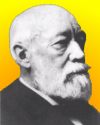
Hyatt
In 1859, the paper bag manufacturing machine was patented by William Goodale, Mass.
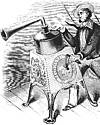
In 1844, Captain J.N. Taylor of the Royal Navy first demonstrated the fog horn. At the time, it was called a telephone - to mean far-signalling, thus an instrument like a fog-horn, used on ships, railway trains, etc., for signalling by loud sounds or notes. The 19 Jul 1844 Times (London) reported, “Yesterday week was a levée day at the Admiralty, and amongst the numerous models..was Captain J. N. Tayler's telephone instrument... The chief object of this powerful wind instrument is to convey signals during foggy weather. Also the Illustrated London News on 24 Aug. 1844 referred to “The Telephone; a Telegraphic Alarum. Amongst the many valuable inventions..that of the ‘Telephone, or Marine Alarum and Signal Trumpet,’ by Captain J. N. Taylor.”
more