TODAY IN SCIENCE HISTORY ®  •  TODAYINSCI ®
Celebrating 26 Years on the Web
Find science on or your birthday

Today in Science History - Quickie Quiz
Who said: “I have no satisfaction in formulas unless I feel their arithmetical magnitude.”
more quiz questions >>
Home > Dictionary of Science Quotations > Scientist Names Index N > John Pringle Nichol Quotes

Thumbnail of John Pringle Nichol (source)
John Pringle Nichol
(13 Jan 1804 - 19 Sep 1859)

Scottish astronomer and author whose practical work was accompanied by his eminent activities as a public lecturer and author popularizing astronomy and other science.


Science Quotes by John Pringle Nichol (5 quotes)
Astronomy is not now in that stage of its history in which only a few men in a century would consent to wear out a long and healthful age in examining the Heavens. Observers of the first capacity and becoming ardour are yearly multiplying; while adequate instruments, through the advance of art, grow more accessible.
— John Pringle Nichol
In 'Conclusion', The Stellar Universe: Views of Its Arrangements, Motions, and Evolutions (1848), 186.
Science quotes on:  |  Accessible (28)  |  Adequate (51)  |  Advance (304)  |  Age (519)  |  Ardor (6)  |  Art (690)  |  Astronomy (258)  |  Become (839)  |  Capacity (108)  |  Century (322)  |  Consent (15)  |  Examine (87)  |  First (1318)  |  Grow (258)  |  Health (213)  |  Heaven (271)  |  History (727)  |  Instrument (164)  |  Long (798)  |  Multiply (41)  |  Observer (50)  |  Stage (153)  |  Wear Out (2)  |  Year (985)

Can we not sympathise, for example, with the sublime and lonely Zoroaster, when, dissolved in an ecstasy of veneration before the magnanimous silence of the Heavens, he rushed out of the wilderness, proclaiming the Divine glory of the Sun and Stars?
— John Pringle Nichol
In 'Conclusion', The Stellar Universe: Views of Its Arrangements, Motions, and Evolutions (1848), 224.
Science quotes on:  |  Dissolve (24)  |  Divine (116)  |  Ecstasy (10)  |  Example (105)  |  Glory (68)  |  Heaven (271)  |  Lonely (28)  |  Magnanimous (3)  |  Proclaim (33)  |  Rush (21)  |  Silence (64)  |  Star (475)  |  Sublime (52)  |  Sun (425)  |  Sympathize (3)  |  Veneration (3)  |  Wilderness (59)

May we not allowably accord all due honour to the partial, but still lofty, philosophical insight under the impulsion of which Cheremon the Egyptian Theogonist, and Pythagoras the Hierophant of the most singular community of sages the world has ever seen, declared the inscrutable essence of fire, of which the hosts of Heaven seemed only the concrete and quasi-divine manifestations, to be the very substance of the One Supreme?
— John Pringle Nichol
In 'Conclusion', The Stellar Universe: Views of Its Arrangements, Motions, and Evolutions (1848), 224-225. [A theogonist is someone who creates or writes accounts of the origins and genealogies of gods. Saint Chaeremon of Nitria was a 4th–5th century Egyptian Christian monk and one of the Desert Fathers. A hierophant is primarily a spiritual teacher or interpreter of sacred mysteries, originally referring to a chief priest in ancient Greece. β€”Webmaster.]
Science quotes on:  |  Accord (43)  |  Allow (52)  |  Community (113)  |  Concrete (56)  |  Declare (50)  |  Divine (116)  |  Due (145)  |  Egyptian (6)  |  Essence (88)  |  Fire (211)  |  Heaven (271)  |  Honor (58)  |  Host (17)  |  Impulse (54)  |  Inscrutable (2)  |  Insight (109)  |  Lofty (17)  |  Manifestation (62)  |  Partial (20)  |  Philosophy (419)  |  Pythagoras (39)  |  Sage (26)  |  Seem (160)  |  Singular (25)  |  Substance (259)  |  Supreme (76)  |  World (1894)

The entire annals of Observation probably do not elsewhere exhibit so extraordinary a verification of any theoretical conjecture adventured on by the human spirit!
[On the mathematical work by Urbain Le Verrier predicting the planet Neptune.]
— John Pringle Nichol
In The Planet Neptune: An Exposition and History (1848), 90. The verification of the existence of the planet Neptune was made when Johan Galle found a star in an evening observation at the position predicted in the letter he received from Le Verrier earlier that same day.
Science quotes on:  |  Adventure (71)  |  Conjecture (53)  |  Do (1905)  |  Exhibition (7)  |  Extraordinary (85)  |  Human (1542)  |  Human Spirit (13)  |  Neptune (13)  |  Observation (602)  |  Planet (429)  |  Spirit (284)  |  Theory (1028)  |  Verification (32)  |  Urbain-Jean-Joseph Le Verrier (4)  |  Work (1429)

We have gazed awhile upon the gorgeous firmaments of space, and descried not a trace, not a hint, of anything like an end to their number, or a boundary to their unrepeated variety of form.
— John Pringle Nichol
In 'Conclusion', The Stellar Universe: Views of Its Arrangements, Motions, and Evolutions (1848), 223. [To descry is to catch sight of (past tense: descried). β€”Webmaster]
Science quotes on:  |  Boundary (58)  |  End (614)  |  Firmament (19)  |  Form (995)  |  Gaze (26)  |  Gorgeous (3)  |  Hint (23)  |  Number (719)  |  Space (545)  |  Trace (110)  |  Variety (139)


See also:
  • 13 Jan - short biography, births, deaths and events on date of Nichol's birth.
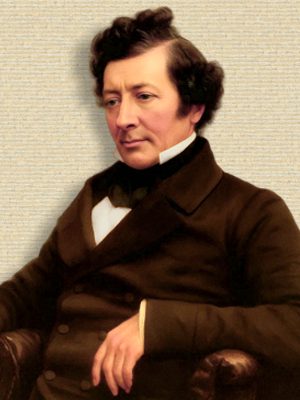
  • Large color picture of John Pringle Nichol - head and shoulders (500 x 700 px).

Carl Sagan Thumbnail In science it often happens that scientists say, 'You know that's a really good argument; my position is mistaken,' and then they would actually change their minds and you never hear that old view from them again. They really do it. It doesn't happen as often as it should, because scientists are human and change is sometimes painful. But it happens every day. I cannot recall the last time something like that happened in politics or religion. (1987) -- Carl Sagan
Quotations by:Albert EinsteinIsaac NewtonLord KelvinCharles DarwinSrinivasa RamanujanCarl SaganFlorence NightingaleThomas EdisonAristotleMarie CurieBenjamin FranklinWinston ChurchillGalileo GalileiSigmund FreudRobert BunsenLouis PasteurTheodore RooseveltAbraham LincolnRonald ReaganLeonardo DaVinciMichio KakuKarl PopperJohann GoetheRobert OppenheimerCharles Kettering  ... (more people)

Quotations about:Atomic  BombBiologyChemistryDeforestationEngineeringAnatomyAstronomyBacteriaBiochemistryBotanyConservationDinosaurEnvironmentFractalGeneticsGeologyHistory of ScienceInventionJupiterKnowledgeLoveMathematicsMeasurementMedicineNatural ResourceOrganic ChemistryPhysicsPhysicianQuantum TheoryResearchScience and ArtTeacherTechnologyUniverseVolcanoVirusWind PowerWomen ScientistsX-RaysYouthZoology  ... (more topics)
Sitewide search within all Today In Science History pages:
Visit our Science and Scientist Quotations index for more Science Quotes from archaeologists, biologists, chemists, geologists, inventors and inventions, mathematicians, physicists, pioneers in medicine, science events and technology.

Names index: | A | B | C | D | E | F | G | H | I | J | K | L | M | N | O | P | Q | R | S | T | U | V | W | X | Y | Z |

Categories index: | 1 | 2 | A | B | C | D | E | F | G | H | I | J | K | L | M | N | O | P | Q | R | S | T | U | V | W | X | Y | Z |
Thank you for sharing.
- 100 -
Sophie Germain
Gertrude Elion
Ernest Rutherford
James Chadwick
Marcel Proust
William Harvey
Johann Goethe
John Keynes
Carl Gauss
Paul Feyerabend
- 90 -
Antoine Lavoisier
Lise Meitner
Charles Babbage
Ibn Khaldun
Euclid
Ralph Emerson
Robert Bunsen
Frederick Banting
Andre Ampere
Winston Churchill
- 80 -
John Locke
Bronislaw Malinowski
Bible
Thomas Huxley
Alessandro Volta
Erwin Schrodinger
Wilhelm Roentgen
Louis Pasteur
Bertrand Russell
Jean Lamarck
- 70 -
Samuel Morse
John Wheeler
Nicolaus Copernicus
Robert Fulton
Pierre Laplace
Humphry Davy
Thomas Edison
Lord Kelvin
Theodore Roosevelt
Carolus Linnaeus
- 60 -
Francis Galton
Linus Pauling
Immanuel Kant
Martin Fischer
Robert Boyle
Karl Popper
Paul Dirac
Avicenna
James Watson
William Shakespeare
- 50 -
Stephen Hawking
Niels Bohr
Nikola Tesla
Rachel Carson
Max Planck
Henry Adams
Richard Dawkins
Werner Heisenberg
Alfred Wegener
John Dalton
- 40 -
Pierre Fermat
Edward Wilson
Johannes Kepler
Gustave Eiffel
Giordano Bruno
JJ Thomson
Thomas Kuhn
Leonardo DaVinci
Archimedes
David Hume
- 30 -
Andreas Vesalius
Rudolf Virchow
Richard Feynman
James Hutton
Alexander Fleming
Emile Durkheim
Benjamin Franklin
Robert Oppenheimer
Robert Hooke
Charles Kettering
- 20 -
Carl Sagan
James Maxwell
Marie Curie
Rene Descartes
Francis Crick
Hippocrates
Michael Faraday
Srinivasa Ramanujan
Francis Bacon
Galileo Galilei
- 10 -
Aristotle
John Watson
Rosalind Franklin
Michio Kaku
Isaac Asimov
Charles Darwin
Sigmund Freud
Albert Einstein
Florence Nightingale
Isaac Newton


by Ian Ellis
who invites your feedback
Thank you for sharing
on Blue Sky.
Today in Science History
Sign up for Newsletter
with quiz, quotes and more.