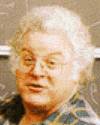
(aource)
Born 1 Nov 1950.
American physicist who shared (with Daniel C. Tsui and Horst Störmer) the Nobel Prize for Physics in 1998 for research on the fractional quantum Hall effect. In a current-carrying conductor, the classic Hall effect is the voltage produced at right angles to a magnetic field, as first discovered in 1879. A century later the German physicist Klaus von Klitzing discovered that in a powerful magnetic field at extremely low temperatures the Hall resistance of a semiconductor is quantized in integral “steps.” Using even stronger magnetic fields and lower temperatures, Störmer and Tsui discovered fractional steps, explained by Laughlin's theory that the electrons can form a new type of quantum fluid with quasiparticles carrying fractions of an electron's charge.
American physicist who shared (with Daniel C. Tsui and Horst Störmer) the Nobel Prize for Physics in 1998 for research on the fractional quantum Hall effect. In a current-carrying conductor, the classic Hall effect is the voltage produced at right angles to a magnetic field, as first discovered in 1879. A century later the German physicist Klaus von Klitzing discovered that in a powerful magnetic field at extremely low temperatures the Hall resistance of a semiconductor is quantized in integral “steps.” Using even stronger magnetic fields and lower temperatures, Störmer and Tsui discovered fractional steps, explained by Laughlin's theory that the electrons can form a new type of quantum fluid with quasiparticles carrying fractions of an electron's charge.
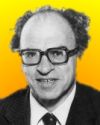
Born 1 Nov 1919; died 10 Sep 2005 at age 85. quotes
Austrian-British mathematician and cosmologist who, working with Fred Hoyle and Thomas Gold, conceived the steady-state theory of the universe (1948). This explained the paradox: how can the stars continually recede, yet without disappearing? They audaciously proposed an unproven hypothesis: that the universe has an eternal existence, with no beginning and without an end. Further, the universe is continuously expanding, maintaining a constant density by continually creating new matter from energy. Their model was rendered obsolete, when in 1965, Arno Penzias and Robert Wilson detected a background microwave radiation from all directions in space, as predicted by the “Big Bang” theory of creation that is now accepted.«
Austrian-British mathematician and cosmologist who, working with Fred Hoyle and Thomas Gold, conceived the steady-state theory of the universe (1948). This explained the paradox: how can the stars continually recede, yet without disappearing? They audaciously proposed an unproven hypothesis: that the universe has an eternal existence, with no beginning and without an end. Further, the universe is continuously expanding, maintaining a constant density by continually creating new matter from energy. Their model was rendered obsolete, when in 1965, Arno Penzias and Robert Wilson detected a background microwave radiation from all directions in space, as predicted by the “Big Bang” theory of creation that is now accepted.«
Science, Churchill and Me: The Autobiography of Hermann Bondi, by Hermann Bondi. - book suggestion.
Born 1 Nov 1911; died 20 Mar 2002 at age 90. quotes
Australian geologist who contributed a model of an expanding earth in support of Alfred Wegener's concept of moving continents. Carey's ideas were a prelude to, and replaced by, the present theory of plate tectonics.
Australian geologist who contributed a model of an expanding earth in support of Alfred Wegener's concept of moving continents. Carey's ideas were a prelude to, and replaced by, the present theory of plate tectonics.
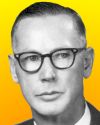
Born 1 Nov 1911; died 19 Aug 1992 at age 80.
American physicist who invented the betatron (1940), the first device to accelerate electrons (“beta particles”) to speeds high enough to have sufficient momentum to produce nuclear transformations in atoms. The electrons are accelerated by electromagnetic induction in a doughnut-shaped (toroidal) ring from which the air has been removed. This type of particle accelerator can produce high-energy electrons up to 340 MeV for research purposes, including the production of high-energy X-rays. For such high velocities, the magnetic field is increased to match the relativistic increase in mass of the particles. During WW II, Kerst worked at Los Alamos on tue atomic bomb project. He completed the largest betatron in 1950, at the University of Illinois.
American physicist who invented the betatron (1940), the first device to accelerate electrons (“beta particles”) to speeds high enough to have sufficient momentum to produce nuclear transformations in atoms. The electrons are accelerated by electromagnetic induction in a doughnut-shaped (toroidal) ring from which the air has been removed. This type of particle accelerator can produce high-energy electrons up to 340 MeV for research purposes, including the production of high-energy X-rays. For such high velocities, the magnetic field is increased to match the relativistic increase in mass of the particles. During WW II, Kerst worked at Los Alamos on tue atomic bomb project. He completed the largest betatron in 1950, at the University of Illinois.
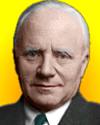
Born 1 Nov 1899; died 21 Jun 1972 at age 72. quotes
Sir Gavin Rylands de Beer was an English zoologist and morphologist who contributed to experimental embryology, anatomy, and evolution. He refuted the germ-layer theory and developed the concept of paedomorphism (the retention of juvenile characteristics of ancestors in mature adults). From examination of the fossil Archaeopteryx, De Beer proposed mosaic evolution with piecemeal evolutionary changes to explain the combination of bird and reptile features. He was director of the British Museum's Natural History section (1950-60). Applying knowledge of biology (plant pollen) and geology (glaciology) to his study of original documents, he proposed the route taken by Hannibal across the Alps for his attack on ancient Rome.
Sir Gavin Rylands de Beer was an English zoologist and morphologist who contributed to experimental embryology, anatomy, and evolution. He refuted the germ-layer theory and developed the concept of paedomorphism (the retention of juvenile characteristics of ancestors in mature adults). From examination of the fossil Archaeopteryx, De Beer proposed mosaic evolution with piecemeal evolutionary changes to explain the combination of bird and reptile features. He was director of the British Museum's Natural History section (1950-60). Applying knowledge of biology (plant pollen) and geology (glaciology) to his study of original documents, he proposed the route taken by Hannibal across the Alps for his attack on ancient Rome.
Charles Darwin: Evolution by Natural Selection (British Men of Science), by Gavin Rylands De Beer. - book suggestion.
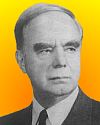
Born 1 Nov 1885; died 29 Dec 1961 at age 76.
German inventor who produced a practical helicopter for the German navy (1940). He also developed a device that allowed airplane pilots to raise or lower a plane's nose for better control. It evolved into a mechanism called the Flettner trim-tab control which is still used on all airplanes. He designed a rotor ship (1924) on which he replaced sails with unique propulsion - two 50-ft cylinders, electrically rotated, mounted vertically on the deck. A transatlantic voyage was accomplished using the aerodynamic power of the Magnus Effect which builds pressure behind a rotating cylinder. After WW II, he went to the U.S., and conducted helicopter research for the U.S. Army. He also invented a windmill and the Flettner marine rudder.«
German inventor who produced a practical helicopter for the German navy (1940). He also developed a device that allowed airplane pilots to raise or lower a plane's nose for better control. It evolved into a mechanism called the Flettner trim-tab control which is still used on all airplanes. He designed a rotor ship (1924) on which he replaced sails with unique propulsion - two 50-ft cylinders, electrically rotated, mounted vertically on the deck. A transatlantic voyage was accomplished using the aerodynamic power of the Magnus Effect which builds pressure behind a rotating cylinder. After WW II, he went to the U.S., and conducted helicopter research for the U.S. Army. He also invented a windmill and the Flettner marine rudder.«
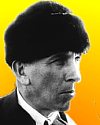
Born 1 Nov 1880; died c. Nov 1930. quotes
Alfred Lothar Wegener was a German meteorologist and geophysicist who first gave a well-developed hypothesis of continental drift. He suggested (1912) that about 250 million yrs ago all the present-day continents came from a single primitive land mass, the supercontinent Pangaea, which eventually broke up and gradually drifted apart. (A similar idea was proposed earlier by F.B. Taylor in 1910.) Others saw the fit of coastlines of South America and Africa, but Wegener added more geologic and paleontologic evidence that these two continents were once joined. From 1906, interested in paleoclimatology, he went on several expeditions to Greenland to study polar air circulation. He died during his fourth expedition.
Alfred Lothar Wegener was a German meteorologist and geophysicist who first gave a well-developed hypothesis of continental drift. He suggested (1912) that about 250 million yrs ago all the present-day continents came from a single primitive land mass, the supercontinent Pangaea, which eventually broke up and gradually drifted apart. (A similar idea was proposed earlier by F.B. Taylor in 1910.) Others saw the fit of coastlines of South America and Africa, but Wegener added more geologic and paleontologic evidence that these two continents were once joined. From 1906, interested in paleoclimatology, he went on several expeditions to Greenland to study polar air circulation. He died during his fourth expedition.
Origin of Continents and Oceans, by Alfred Wegener. - book suggestion.
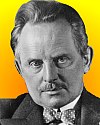
Born 1 Nov 1879; died 16 Jan 1936 at age 56.
German engineer who designed the first miniature camera (1913), the Leica I. Its commercial introduction, delayed by WW I, was made in 1924 by the Ernst Leitz optical firm at Wetzlar, Germany where he was employed. Barnack was an enthusiastic photographer from when only heavy plate cameras were available. As early 1905, he conceived using a reduced format negative, to be enlarged after exposure. He adapted his idea from equipment he made to take still exposures on samples of cine film to test their sensitivity and consistency before movie use. For this camera, Barnack established the standard 35-mm film picture size by doubling the standard 18x24mm cine frame. His invention had only 1/250 of the weight of a plate camera.
German engineer who designed the first miniature camera (1913), the Leica I. Its commercial introduction, delayed by WW I, was made in 1924 by the Ernst Leitz optical firm at Wetzlar, Germany where he was employed. Barnack was an enthusiastic photographer from when only heavy plate cameras were available. As early 1905, he conceived using a reduced format negative, to be enlarged after exposure. He adapted his idea from equipment he made to take still exposures on samples of cine film to test their sensitivity and consistency before movie use. For this camera, Barnack established the standard 35-mm film picture size by doubling the standard 18x24mm cine frame. His invention had only 1/250 of the weight of a plate camera.
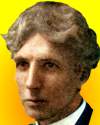
Born 1 Nov 1868; died 18 Feb 1914 at age 45. quotes
Canadian industrial chemist, teacher and populariser of science who advocated partnering scientific research and industry to create new and better consumer products. He also was a preeminent writer interpreting science, in articles and books including The New Knowledge, The Chemistry of Commerce and Some Chemical Problems of To-day, with the highest scientific accuracy yet with an engaging style. Brothers Andrew W. and Richard B. Mellon founded the Mellon Institute for Industrial Research in 1913, who were aware of Duncan's writings and were enthusiastic about his concept of the industrial fellowship. He became its first director. It was an outgrowth from the success of the department of industrial research the Mellons established in 1911 at University of Pittsburgh, where Duncan taught from 1910 until his death in 1914. Major companies such as Dow Corning and Union Carbide can trace their histories to discoveries at the institute.« more
Canadian industrial chemist, teacher and populariser of science who advocated partnering scientific research and industry to create new and better consumer products. He also was a preeminent writer interpreting science, in articles and books including The New Knowledge, The Chemistry of Commerce and Some Chemical Problems of To-day, with the highest scientific accuracy yet with an engaging style. Brothers Andrew W. and Richard B. Mellon founded the Mellon Institute for Industrial Research in 1913, who were aware of Duncan's writings and were enthusiastic about his concept of the industrial fellowship. He became its first director. It was an outgrowth from the success of the department of industrial research the Mellons established in 1911 at University of Pittsburgh, where Duncan taught from 1910 until his death in 1914. Major companies such as Dow Corning and Union Carbide can trace their histories to discoveries at the institute.« more
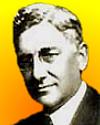
Born 1 Nov 1863; died 19 Jul 1937 at age 73.
George Safford Parker was an American inventor who perfected the fountain pen and founded the Parker Pen Company to manufacture it. He began in a teaching career which introduced him to the unreliability of existing fountain pens used by his students. Through selling and repairing them, he learned of their construction. He ceased teaching in 1888 to experiment with his own design. By 8 Mar 1892, he incorporated Parker Pen Company. He subsequently patented many improvements, and was particularly successful in creating a reliable ink-flow system. During WW I, his Trench Pen utilized a tablet of pigment to be inserted into the pen and turned to fluid ink by filling the barrel with water.
George Safford Parker was an American inventor who perfected the fountain pen and founded the Parker Pen Company to manufacture it. He began in a teaching career which introduced him to the unreliability of existing fountain pens used by his students. Through selling and repairing them, he learned of their construction. He ceased teaching in 1888 to experiment with his own design. By 8 Mar 1892, he incorporated Parker Pen Company. He subsequently patented many improvements, and was particularly successful in creating a reliable ink-flow system. During WW I, his Trench Pen utilized a tablet of pigment to be inserted into the pen and turned to fluid ink by filling the barrel with water.
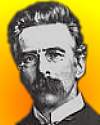
Born 1 Nov 1857; died 8 Dec 1933 at age 76. quotes
Irish geologist and physicist whose interests spanned several fields. Using Edmond Halley's method of measuring the degree of salinity of the oceans, and then by examining radioactive decay in rocks, he estimated Earth's age at 80-90 million years (1898). Later, he revised this figure to 100 million years. He published Radioactivity and Geology (1909) in which he demonstrated that the rate of radioactive decay has been more or less constant through time. He also developed a method for extracting radium (1914) and pioneered its use for cancer treatment, and invented a constant- volume gas thermometer, a photometer, and a differential steam calorimeter for measuring the specific heat capacity of gases at constant volume.
Irish geologist and physicist whose interests spanned several fields. Using Edmond Halley's method of measuring the degree of salinity of the oceans, and then by examining radioactive decay in rocks, he estimated Earth's age at 80-90 million years (1898). Later, he revised this figure to 100 million years. He published Radioactivity and Geology (1909) in which he demonstrated that the rate of radioactive decay has been more or less constant through time. He also developed a method for extracting radium (1914) and pioneered its use for cancer treatment, and invented a constant- volume gas thermometer, a photometer, and a differential steam calorimeter for measuring the specific heat capacity of gases at constant volume.
Radioactivity and Geology: ...Terrestrial History, by John Joly. - book suggestion.
Born 1 Nov 1840; died 19 Sep 1913 at age 72.
Italian naturalist and explorer who conducted important research in systematic zoology. Pursuing his work, he made expeditions to Persia (1862), Borneo (1865-66) and Tunisia (1879). In 1867, he founded the civic museum of natural history in Genoa. The collection he donated became the nucleus of the museum, which he directed for more than 40 years. He was also director of Societa Geografica Italiana (1891-1900). The museum he founded now contains important zoolological, paleontological, botanical, and mineralogical collections from all over the world. These collections are continually growing, now estimated to be more than 3.5 million exhibits.
Italian naturalist and explorer who conducted important research in systematic zoology. Pursuing his work, he made expeditions to Persia (1862), Borneo (1865-66) and Tunisia (1879). In 1867, he founded the civic museum of natural history in Genoa. The collection he donated became the nucleus of the museum, which he directed for more than 40 years. He was also director of Societa Geografica Italiana (1891-1900). The museum he founded now contains important zoolological, paleontological, botanical, and mineralogical collections from all over the world. These collections are continually growing, now estimated to be more than 3.5 million exhibits.
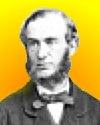
Born 1 Nov 1828; died 19 Dec 1887 at age 59. quotes
Scottish meteorologist and geophysicist who studied terrestrial magnetism and radiant heat. His researches on radiant heat contributed to foundation of spectrum analysis. He was the first to discover that bodies radiate and absorb energy of the same wavelength. In meteorology, he pioneered in ionospheric science, making a special study of terrestrial magnetism. He proposed (1882) that the daily variation in the Earth's magnetic field could be due to air currents in the upper atmosphere, which act as conductors and generate electrical currents as they pass through the Earth's magnetic field. He also investigated sunspots. In 1887, he suffered a stroke while crossing to spend Christmas at his estate in Ireland and died soon after at the age of 59.«
Scottish meteorologist and geophysicist who studied terrestrial magnetism and radiant heat. His researches on radiant heat contributed to foundation of spectrum analysis. He was the first to discover that bodies radiate and absorb energy of the same wavelength. In meteorology, he pioneered in ionospheric science, making a special study of terrestrial magnetism. He proposed (1882) that the daily variation in the Earth's magnetic field could be due to air currents in the upper atmosphere, which act as conductors and generate electrical currents as they pass through the Earth's magnetic field. He also investigated sunspots. In 1887, he suffered a stroke while crossing to spend Christmas at his estate in Ireland and died soon after at the age of 59.«
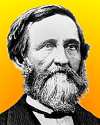
Born 1 Nov 1815; died 16 Jun 1878 at age 62.
Crawford Williamson Long was an American physician who was the first in the U.S. to use ether as anesthetic in surgery. On 30 Mar 1842, practicing in rural Georgia, he first used ether anesthetic while he removed a tumour from a patient's neck. Although he operated more times with ether before 1846, he was apparently unaware of its full significance and did not publish a description of his procedure until 1849. By that time, W.T.G. Morton of Boston had filed a patent for discovery of ether in 1846 and Long would never get much credit or gain from claim to priority. In 1850, he moved to Athens, Georgia, acquiring a large practice and an apothecary shop. There he used ether in obstetrical cases and did much charitable work for the poor.
Crawford Williamson Long was an American physician who was the first in the U.S. to use ether as anesthetic in surgery. On 30 Mar 1842, practicing in rural Georgia, he first used ether anesthetic while he removed a tumour from a patient's neck. Although he operated more times with ether before 1846, he was apparently unaware of its full significance and did not publish a description of his procedure until 1849. By that time, W.T.G. Morton of Boston had filed a patent for discovery of ether in 1846 and Long would never get much credit or gain from claim to priority. In 1850, he moved to Athens, Georgia, acquiring a large practice and an apothecary shop. There he used ether in obstetrical cases and did much charitable work for the poor.

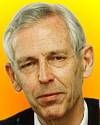
Died 1 Nov 2008 at age 86 (born 28 Jul 1922).
Jacques-Ernest-Jean Piccard was a Swiss oceanic engineer, economist and physicist who assisted his father, Auguste Piccard, design bathyscaphes for deep-sea exploration, including the Trieste, in which he dived with his father, in 1953, to 10,168-ft (3,099-m) depth, off the Italian island of Ponza. Jacques (with U.S. Navy Lt. Don Walsh) took the Trieste on an ocean dive in the Marianas Trench on 23 Jan 1960, setting the world depth record at 35,810-ft (10,916-m). From the early 1960s, he also designed four mesoscaphes for exploration at middle depths. The first of these, the Auguste Piccard, was a 40-passenger tourist vessel operating during the 1964 Swiss National Exhibition in Lausanne, at mostly modest depths (300-ft, 90-m) in Lake Geneva. It was capable of 2,000-ft (600-m) dives. In 1969, he travelled with the Gulf Stream flow in the mesoscaphe Ben Franklin.«
Jacques-Ernest-Jean Piccard was a Swiss oceanic engineer, economist and physicist who assisted his father, Auguste Piccard, design bathyscaphes for deep-sea exploration, including the Trieste, in which he dived with his father, in 1953, to 10,168-ft (3,099-m) depth, off the Italian island of Ponza. Jacques (with U.S. Navy Lt. Don Walsh) took the Trieste on an ocean dive in the Marianas Trench on 23 Jan 1960, setting the world depth record at 35,810-ft (10,916-m). From the early 1960s, he also designed four mesoscaphes for exploration at middle depths. The first of these, the Auguste Piccard, was a 40-passenger tourist vessel operating during the 1964 Swiss National Exhibition in Lausanne, at mostly modest depths (300-ft, 90-m) in Lake Geneva. It was capable of 2,000-ft (600-m) dives. In 1969, he travelled with the Gulf Stream flow in the mesoscaphe Ben Franklin.«
Exploring the Sky and Sea: Auguste & Jacques Piccard, by Alida Malkus. - book suggestion.
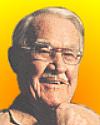
Died 1 Nov 1997 at age 100 (born 28 Mar 1897).
American chemical engineer who invented Pampers disposable diapers. He joined Proctor& Gamble company in 1926, and soon after developed a continuous process to superheat the liquid soap and spray it in concentrated form through an extruder producing bars of Ivory soap. That cut the production time from seven days to just a couple of hours. He improved Duncan Hines cake mixes by passing ingredients through large milling drums designed to polish aluminum foil but made the finished cake less lumpy. He developed a process for preventing the oil from separating in Jif peanut butter. His invention of disposable diapers as a product was created to utilize the clean, absorbent paper available from a pulp mill acquired by the company.
American chemical engineer who invented Pampers disposable diapers. He joined Proctor& Gamble company in 1926, and soon after developed a continuous process to superheat the liquid soap and spray it in concentrated form through an extruder producing bars of Ivory soap. That cut the production time from seven days to just a couple of hours. He improved Duncan Hines cake mixes by passing ingredients through large milling drums designed to polish aluminum foil but made the finished cake less lumpy. He developed a process for preventing the oil from separating in Jif peanut butter. His invention of disposable diapers as a product was created to utilize the clean, absorbent paper available from a pulp mill acquired by the company.
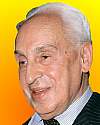
Died 1 Nov 1993 at age 88 (born 24 Sep 1905).
Spanish-American biochemist and molecular biologist who shared the 1959 Nobel Prize for Physiology or Medicine with Arthur Kornberg for “for their discovery of the mechanisms in the biological synthesis of ribonucleic acid and deoxyribonucleic acid” Ochoa discovered an enzyme in bacteria that enabled him to synthesize ribonucleic acid (RNA), a substance of central importance to the synthesis of proteins by the cell. Ochoa's enzyme produces ribonucleic acids from ribonucleotides having twice the ratio of phosphoric acid residues as that contained in ribonucleic acid. The RNA is formed by splitting out half of the phosphoric acid residues, and linking the nucleotides together to form large molecules.
Spanish-American biochemist and molecular biologist who shared the 1959 Nobel Prize for Physiology or Medicine with Arthur Kornberg for “for their discovery of the mechanisms in the biological synthesis of ribonucleic acid and deoxyribonucleic acid” Ochoa discovered an enzyme in bacteria that enabled him to synthesize ribonucleic acid (RNA), a substance of central importance to the synthesis of proteins by the cell. Ochoa's enzyme produces ribonucleic acids from ribonucleotides having twice the ratio of phosphoric acid residues as that contained in ribonucleic acid. The RNA is formed by splitting out half of the phosphoric acid residues, and linking the nucleotides together to form large molecules.
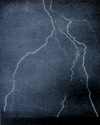
1893
Died 1 Nov 1943 at age 80 (born 4 Aug 1863).
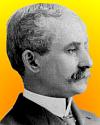
American meteorologist who was a pioneer in employing kites in the exploration of high altitude air conditions. As a college graduate, McAdie in Jan 1882 joined the Army Signal Service, which preceded the civilian U.S. Weather Bureau. He invented and patented devices to protect fruit from frost. He examined the influence of smoke pollution on the atmosphere, McAdie studied the relation between atmospheric electricity and auroral phenomena, and wrote about lightning as a hazard both in the air and on the ground. He believed that the units used in meteorology should be standardized by adoption of the metric system. McAdie was a founder of the Seismological Society of America. Mt. McAdie (13,799 ft.) in the Sierra Nevada was named for him.[Image: Cloud and Multiple Flash from Pop. Sci. Monthly, 1893] more
American meteorologist who was a pioneer in employing kites in the exploration of high altitude air conditions. As a college graduate, McAdie in Jan 1882 joined the Army Signal Service, which preceded the civilian U.S. Weather Bureau. He invented and patented devices to protect fruit from frost. He examined the influence of smoke pollution on the atmosphere, McAdie studied the relation between atmospheric electricity and auroral phenomena, and wrote about lightning as a hazard both in the air and on the ground. He believed that the units used in meteorology should be standardized by adoption of the metric system. McAdie was a founder of the Seismological Society of America. Mt. McAdie (13,799 ft.) in the Sierra Nevada was named for him.[Image: Cloud and Multiple Flash from Pop. Sci. Monthly, 1893] more
Making the Weather, by Alexander G. McAdie. - book suggestion.
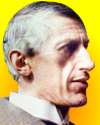
Died 1 Nov 1942 at age 83 (born 10 Sep 1859). quotes
John Norman Collie was a British chemist whose career progressed at University College London from research assistant to William Ramsay, to eventually become Dean of Chemistry (1913-28). In collaboration with Ramsay at UCL, Collie worked on the inert gases argon and helium. He used the inert gas, neon, to develop the first neon lamp, leading to illuminated neon signs. The first medical X-ray photograph in the UK was taken at his instigation. To investigate naturally-occurring compounds available in only small quantities, he devised his semi-micro mrthod of organic analysis long before Fritz Pregl. Collie was also an avid mountain climber and his expeditions included Canada and the Himalayas.«
John Norman Collie was a British chemist whose career progressed at University College London from research assistant to William Ramsay, to eventually become Dean of Chemistry (1913-28). In collaboration with Ramsay at UCL, Collie worked on the inert gases argon and helium. He used the inert gas, neon, to develop the first neon lamp, leading to illuminated neon signs. The first medical X-ray photograph in the UK was taken at his instigation. To investigate naturally-occurring compounds available in only small quantities, he devised his semi-micro mrthod of organic analysis long before Fritz Pregl. Collie was also an avid mountain climber and his expeditions included Canada and the Himalayas.«
Died 1 Nov 1940 at age 63 (born 2 Apr 1877).
Carl Lucas Alsberg was an American agricultural chemist who was influential in his field, and an authority on the biochemistry of foods. He was a chemical biologist with the Bureau of Plant Industry in the U. S. Department of Agriculture (1908-12) then the second chief of the Bureau of Chemistry (1912-21). He then joined the faculty of Stanford University and directed the Food Institute until 1937. He did work on on seafood, poisonous plants and mold toxicology. He also did research on metabolism, protein and enzyme chemistry and studied commodity regulation, food supply and population . He was the first editor of the Journal of the Association of Official Agricultural Chemists. The Bureau of Chemistry in Jul 1927 became known as the Food, Drug, and Insecticide Administration, and from Jul 1927, the Food and Drug Administration.«
Carl Lucas Alsberg was an American agricultural chemist who was influential in his field, and an authority on the biochemistry of foods. He was a chemical biologist with the Bureau of Plant Industry in the U. S. Department of Agriculture (1908-12) then the second chief of the Bureau of Chemistry (1912-21). He then joined the faculty of Stanford University and directed the Food Institute until 1937. He did work on on seafood, poisonous plants and mold toxicology. He also did research on metabolism, protein and enzyme chemistry and studied commodity regulation, food supply and population . He was the first editor of the Journal of the Association of Official Agricultural Chemists. The Bureau of Chemistry in Jul 1927 became known as the Food, Drug, and Insecticide Administration, and from Jul 1927, the Food and Drug Administration.«
Carl Alsberg, Scientist at Large, by Joseph S. Davis. - book suggestion.
Died 1 Nov 1888 at age 49 (born 12 Apr 1839).
Russian explorer.
Russian explorer.
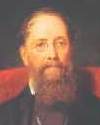
Died 1 Nov 1865 at age 66 (born 5 Feb 1799).
British botanist whose attempts to formulate a natural system of plant classification greatly aided the transition from the artificial (considering the characters of single parts) to the natural system (considering all characters of a plant). He made the first definitive orchid classification in 1830.
British botanist whose attempts to formulate a natural system of plant classification greatly aided the transition from the artificial (considering the characters of single parts) to the natural system (considering all characters of a plant). He made the first definitive orchid classification in 1830.
In 1977, Chiron, the farthest known asteroid was discovered by Charles Kowal, on a photographic plate taken on 18 Oct 1977. It has a highly elliptical orbit with a period of 50.7 years. Chiron has a diameter estimated between 148 to 208 km, a mass between 2 x 10¹⁸ to 1019 kg, and it spins with a rotational period of about 5.9 hrs. Having been recognized as a minor planet, it was also found on earlier photographic plates dating back to 1895. It is also unusual due to a detectable coma, indicating it is also a cometary type body. However, it is more than 50,000 times the size of a typical comet, hence it can be referred to as an asteroid. Chiron is named after the wisest of the Centaurs of Greek mythology. Three similar comet/asteroid bodies have since been discovered, collectively designated Centaurs.«
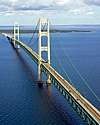
2010
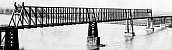
In 1957, the world’s longest suspension bridge to date, the Mackinac Bridge, was opened to traffic, a 8 km (5 miles) link between Michigan’s upper and lower peninsulas, reducing travel time from 2 hours to 10 minutes. Total length with approaches is 8038 m (26,372 ft), across 34 bridge support foundations. The suspension bridge portion is 2626 m (8614 ft) long, including anchorages and a main span between towers of 1,158 m (3,800 ft). The dedication ceremony was held a few months later, on 28 Jun 1958. Construction had begun with a ceremonial groundbreaking at the St. Ignace end, on 7 May 1954, with caissons and superstructures already being assembled as far away as Indiana, Pennsylvania and Ohio.«
Miracle Bridge at Mackinac, by David B. Steinman. - book suggestion.

Mike
In 1952, in the first United States test of a thermonuclear device, a hydrogen bomb dubbed “Mike,” was exploded at Eniwetok Atholl in the Pacific, 3,000 miles west of Hawaii. It exploded with a blinding white fireball more than three miles across, completely obliterating Elugelab, leaving an underwater crater a 6240-ft wide and 164-ft deep in the atoll where an island had once been. Eighty million tons of soil were lifted into the air by the blast. The yield was several million tons of TNT. It was a thousand times more powerful than the bomb dropped on Hiroshima, a blast greater than all the explosives used during WW II. The mushroom cloud rose to top out in 5 mins at 135,000 ft (the top of the stratosphere) and eventually spread to 1000 miles wide. Within nine months, Russia tested their own H-bomb.
Dark Sun: The Making of the Hydrogen Bomb, by Richard Rhodes. - book suggestion.
In 1939, a rabbit conceived by artificial impregnation, was the first such animal in the U.S. to be displayed. The event was the 12th Annual Graduate Fortnight at the New York Academy of Medicine. Dr. Gregory Pincus, an American biologist, had removed an egg from the ovary of a female rabbit and fertilized it with a salt solution. The egg was then transferred to the uterus of a second rabbit, which functioned an "incubator." The young rabbit was born in Oct 1939. Dr. Pincus, of Clark University conducted his experiments at Harvard University, Cambridge, Mass. In the same year, Pincus and colleagues were the first to show how oocytes of various animals would undergo maturation if released from their follicle and cultured in vitro.
In 1932, the year he received his bachelor’s degree in mechanical engineering, Wernher von Braun was named head of the German liquid-fuel rocket program. He signed a contract with the Reichswehr to conduct research leading to the development of rockets as military weapons. By 1934, he was building rockets along with artillery captain Walter Dornberger and a team of 80 engineers. In Dec 1934, he had his first successes with an A2 rocket powered by ethanol and liquid oxygen. When the research team outgrew their facility outside Berlin, a larger one was built at Peenemunde, a remote island off the Baltic coast.«
In 1923, Goodyear bought the rights to manufacture Zeppelin dirigibles. An article in the New York Times (2 Nov 1923) announced that Goodyear secured the right of manufacture all parts of Zeppelin dirigibles. Earlier, during WW I, manufacturers including Goodyear, had conferenced (12 Feb 1917) with a Navy Rear Admiral to consider U.S. capabilities to reproduce Zeppelins. In 1922, the Goodyear Tire and Rubber Company at Akron, Ohio, was already building a 300-ft semi-rigid airship for the Army Air Service. In Lakehurst, N.J., a rigid airship ZR-1 was being completed and the ZR-3 was being built for the Navy at the Zeppelin plant in Germany as part of the indeminity award after WW I. Under the peace treaty, German plants were to be razed after completing the ZR-3. The Goodyear-Zeppelin Corp was dissolved in WW II (Dec 1940).«
When Giants Roamed the Sky: Karl Arnstein ... Airships from Zeppelin to Goodyear, by Dale Topping. - book suggestion.
In 1922, the radio licence fee (initially ten shillings) was introduced in Britain.*
In 1901, Dr. J.E. Gillman announced an X-ray treatment for breast cancer.
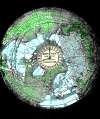
In 1884, Greenwich Mean Time (GMT) was adopted universally at a meeting of the International Meridian Conference in Washington, DC, USA. From then the International Date Line was drawn up and 24 time zones created.
Seize the Daylight: The Curious and Contentious Story of Daylight Savings Time, by David Prerau. - book suggestion.
Landmarks on the Iron Road: Two Centuries ... Railroad Engineering, by William D. Middleton. - book suggestion.
In 1879, Edison signed the patent application for his electric lamp (issued 27 Jan 1880 as U.S. Patent 223,898). In the next few weeks, he also filed for patents in Britain, Belgium, Italy and France, as referred to in a Correction dated 18 Dec 1883, in which Edison requested that the U.S. patent be limited so as to expire at the same time with whichever of the foreign patents had the shortest time to run.
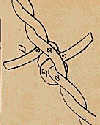
In 1873, Joseph F. Glidden began manufacturing his new invention of barbed wire, having filed for a patent a few days before, on 27 Oct 1873 which was issued on 24 Nov 1874. The barbs were cut from sheet metal and were inserted between two wires which were twisted considerably more than with today's common design. This product would transform the West. Before this innovation, settlers on the treeless plains had no easy way to fence livestock away from cropland, and ranchers had no way to prevent their herds from roaming far and wide. Glidden's barbed wire opened the plains to large-scale farming, and closed the open range, bringing the era of the cowboy and the round-up to an end.[Image: detail from patent application diagram.]
Barbs, Prongs, Points, Prickers, and Stickers; ... Catalogue of Antique Barbed Wire, by Robert T. Clifton. - book suggestion.
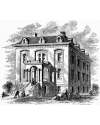
In 1848, the Boston Female Medical School, first medical school in the world exclusively for women opened its doors to 12 students. Founded by Samuel Gregory,  who disapproved of male doctors attending childbirth, its early curriculum focused on midwifery. In 1850, renamed the New England Female Medical College, this was expanded to include a full medical curriculum, and the college began to grant medical degrees to women. By 1873, the college had graduated 98 women doctors, including Rebecca Lee, MD, the first African-American female physician. Shortly after Geregory's death, it merged with Boston University School of Medicine, becoming one of the first coed medical colleges in the world.[Image: from title page of of the Thirteenth Annual Announcement of the New England Female Medical College, 1860.]
who disapproved of male doctors attending childbirth, its early curriculum focused on midwifery. In 1850, renamed the New England Female Medical College, this was expanded to include a full medical curriculum, and the college began to grant medical degrees to women. By 1873, the college had graduated 98 women doctors, including Rebecca Lee, MD, the first African-American female physician. Shortly after Geregory's death, it merged with Boston University School of Medicine, becoming one of the first coed medical colleges in the world.[Image: from title page of of the Thirteenth Annual Announcement of the New England Female Medical College, 1860.]
In 1796, the first permanent typefoundry in the U.S. was established by Archibald Binny and James Ronaldson. in Philadelphia, Pennsylvania. They were immigrants from Edinburgh, Scotland. Ronaldson, a baker, contributed the greater part of the financing. Binny was already trained in the production aspects and provided his typecasting materials. Earlier U.S. typefounders existed in the short term. But the Binny & Ronaldson business grew, and with mergers became American Typefounders Co (1892). The earliest practitioner in America was Abel Buell, who first produced type on 1 Apr 1769 in Killingsworth, Connecticut. (By legend, he was brought the statue of King George III from New York City to be melted down and turned in to type.) With their own craftmen, America was more independent.«
In 1781, the first state medical society, the Massachusetts Medical Society, was incorporated in Boston. It was chartered by the state, with a document signed by Samuel Adams as the president of the state Senate, and by John Hancock, the governor. The organization's membership was limited to 70 Fellows. Although an earlier medical society was founded in Boston prior to 1735, it was local in nature, somewhat ineffective, and short-lived as it ceased in 1741. It was not until 5 May 1847 that a permanent national medical society was formed with the organization of the American Medical Association.«
History of the Massachusetts Medical Society...1781-1922, by Walter L. Burrage. - book suggestion.
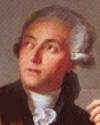
In 1772, Antoine Lavoisier reported in a note to the Secretary of the French Academy of Sciences that in the previous week he had discovered that sulphur and phosphorus when burned increased in weight because they absorbed “air,” while the metallic lead formed when litharge was heated with charcoal weighed less than the original litharge because it had lost “air.” The exact nature of the airs concerned in the processes he could not yet explain, and he proceeded to study the question extensively. Lavoisier's investigation of the role of air in combustion would change the way chemists viewed combustion.eb
Lavoisier: Chemist, Biologist, Economist, by Jean-Pierre Poirier, Rebecca Balinski. - book suggestion.