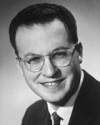
 (source)
|
Donald A. Glaser
(21 Sep 1926 - 28 Feb 2013)
American physicist who received the 1960 Nobel Prize for Physics for his invention of the bubble chamber in which the behaviour of subatomic particles can be observed by the tracks they leave.
|
Science Quotes by Donald A. Glaser (3 quotes)

Many of the biologists thought that Nature was so beautiful, all we can do is describe it and many people believed that we couldn’t even hope to understand it, like we understood the orbits of planets.
— Donald A. Glaser
From interview (2004) with author Magdolna Hargittai in Candid Science VI (2006), 522.
Physics is a wrong tool to describe living systems.
— Donald A. Glaser
From interview (2004) with author Magdolna Hargittai in Candid Science VI (2006), 522. [Note: Physics can still explain beyond what biology can do. For example, in photosynthesis plants use quantum coherence, where energy follows multiple paths simultaneously, to transfer light energy with near-perfect efficiency. —Webmaster]
The early days of molecular biology attracted many … people who had been trained and had earned their Ph.D. in physics. … [O]ne of the commonly quoted reasons is that physicists have been so successful in their science generally that they have an arrogance to believe that they could solve any problem. I would call it confidence rather than arrogance because they deserved their confidence and it continued to work. The question is whether you could be that rigorous and tough in insisting on truth and rigor and quantitative predictability in biology that we were used to in physics.
— Donald A. Glaser
From interview (2004) with author Magdolna Hargittai in Candid Science VI (2006), 522.
See also:
- 21 Sep - short biography, births, deaths and events on date of Glaser's birth.
 In science it often happens that scientists say, 'You know that's a really good argument; my position is mistaken,' and then they would actually change their minds and you never hear that old view from them again. They really do it. It doesn't happen as often as it should, because scientists are human and change is sometimes painful. But it happens every day. I cannot recall the last time something like that happened in politics or religion.
(1987) --
In science it often happens that scientists say, 'You know that's a really good argument; my position is mistaken,' and then they would actually change their minds and you never hear that old view from them again. They really do it. It doesn't happen as often as it should, because scientists are human and change is sometimes painful. But it happens every day. I cannot recall the last time something like that happened in politics or religion.
(1987) --