 (source)
|
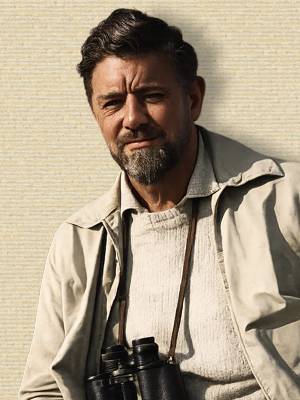
Robert Porter Allen
(24 Apr 1905 - 28 Jun 1963)
American author and conservationist , whose research reshaped modern bird conservation. He is credited with preventing the extinction of the whooping crane, when he discovered (1955) the nesting ground of the last known flock near the Arctic Circle.
|
Science Quotes by Robert Porter Allen (5 quotes)
As the human population curve goes up, the Whooping Crane curve goes down. This is a bird that cannot compromise or adjust its way of life to ours. Could not by its very nature; could not even if we had allowed it the opportunity, which we did not. For the whooping crane there is no freedom but that of unbounded wilderness, no life except its own. Without meekness, without a sign of humility, it has refused to accept our idea of what the world should be like.
— Robert Porter Allen
In 'Part 1. Distribution', The Whooping Crane: Research Report No. 3 of the National Audubon Society (1952), 14.
For many years there had been a great deal of talk about the unfortunate status of the Whooping Crane, but very little was done about it.
— Robert Porter Allen
First sentence of 'Preface', The Whooping Crane: Research Report No. 3 of the National Audubon Society (1952), iii.
Homer, who sang of many wondrous things, found beauty and majesty in the flight of cranes.
As when the cranes,
Flying the wintry storms, send forth on high
Their dissonant clamors, while o’er the ocean stream
They steer their course…
As when the cranes,
Flying the wintry storms, send forth on high
Their dissonant clamors, while o’er the ocean stream
They steer their course…
— Robert Porter Allen
In 'Introduction', The Whooping Crane: Research Report No. 3 of the National Audubon Society (1952), xix.
In England of the 14th century, Chaucer turned an appreciative ear to the sky and wrote of “the crane the giant, with his trompes soune.” But the wealthy barons, who seem to get blamed for a lot of
things, are said to have cared more for the taste of Grus grus grus when cooked in its own spiced gravy.
— Robert Porter Allen
In 'Introduction', The Whooping Crane: Research Report No. 3 of the National Audubon Society (1952), xix.
When you sit crouched in a blind and watch an adult Whooper stride close by you, his head high and proud, his bearing arrogant and imposing, you feel the presence of a strength and of a stubborn will to survive that is one of the vital intangibles of this entire situation.
— Robert Porter Allen
In 'Preface', The Whooping Crane: Research Report No. 3 of the National Audubon Society (1952), iv.
See also:
- 24 Apr - short biography, births, deaths and events on date of Allen's birth.
- The Man Who Saved the Whooping Crane: The Robert Porter Allen Story, by Kathleen Kaska. - book suggestion.
 In science it often happens that scientists say, 'You know that's a really good argument; my position is mistaken,' and then they would actually change their minds and you never hear that old view from them again. They really do it. It doesn't happen as often as it should, because scientists are human and change is sometimes painful. But it happens every day. I cannot recall the last time something like that happened in politics or religion.
(1987) --
In science it often happens that scientists say, 'You know that's a really good argument; my position is mistaken,' and then they would actually change their minds and you never hear that old view from them again. They really do it. It doesn't happen as often as it should, because scientists are human and change is sometimes painful. But it happens every day. I cannot recall the last time something like that happened in politics or religion.
(1987) --