|
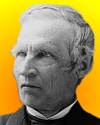
Noah Porter
(14 Dec 1811 - 4 Mar 1892)
American clergyman and educator who was President of Yale (1871-86), editted Webster’s dictionaries, and authored books including The Sciences of Nature versus the Science of Man (1871).
|
Science Quotes by Noah Porter (2 quotes)
As I strayed into the study of an eminent physicist, I observed hanging against the wall, framed like a choice engraving, several dingy, ribbon-like strips of, I knew not what... My curiosity was at once aroused. What were they? ... They might be shreds of mummy-wraps or bits of friable bark-cloth from the Pacific, ... [or] remnants from a grandmother’s wedding dress... They were none of these... He explained that they were carefully-prepared photographs of portions of the Solar Spectrum. I stood and mused, absorbed in the varying yet significant intensities of light and shade, bordered by mystic letters and symbolic numbers. As I mused, the pale legend began to glow with life. Every line became luminous with meaning. Every shadow was suffused with light shining from behind, suggesting some mighty achievement of knowledge; of knowledge growing more daring in proportion to the remoteness of the object known; of knowledge becoming more positive in its answers, as the questions which were asked seemed unanswerable. No Runic legend, no Babylonish arrowhead, no Egyptian hieroglyph, no Moabite stone, could present a history like this, or suggest thoughts of such weighty import or so stimulate and exalt the imagination.
— Noah Porter
The Sciences of Nature Versus the Science of Man: A Plea for the Science of Man (1871), 7-9.
Science has penetrated the constitution of nature, and unrolled the mysterious pages of its history, and started again many, as yet, unanswered questions in respect to the mutual relations of matter and spirit, of nature and of God.
— Noah Porter
Fifteen Years in the Chapel of Yale College (1887), 241.
 In science it often happens that scientists say, 'You know that's a really good argument; my position is mistaken,' and then they would actually change their minds and you never hear that old view from them again. They really do it. It doesn't happen as often as it should, because scientists are human and change is sometimes painful. But it happens every day. I cannot recall the last time something like that happened in politics or religion.
(1987) --
In science it often happens that scientists say, 'You know that's a really good argument; my position is mistaken,' and then they would actually change their minds and you never hear that old view from them again. They really do it. It doesn't happen as often as it should, because scientists are human and change is sometimes painful. But it happens every day. I cannot recall the last time something like that happened in politics or religion.
(1987) --