 (source)
|
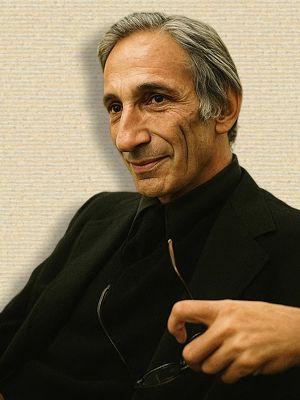
Ivan Illich
(4 Sep 1926 - 2 Dec 2002)
Austrian philosopher, theologian and social critic who wrote an influential book criticizing the nature of compulsory mass education, Deschooling Society (1971). Illich also questioned the modern approach to health and medicine in Medical Nemesis(1975).
|
Science Quotes by Ivan Illich (8 quotes)
Everywhere the hidden curriculum of schooling initiates the citizens to the myth that bureaucracies guided by scientific knowledge are efficient and benevolent. Everywhere this same curriculum instills in the pupil the myth that increased production will provide a better life.
— Ivan Illich
In 'Learning Webs', Section 'An Objection:
Who Can Be Served by Bridges to Nowhere?', in Deschooling Society (1970, 1971), 106.
Many students…intuitively know what the schools do for them. They school them to confuse process and substance. Once these become blurred, a new logic is assumed: the more treatment there is, the better are the results; or, escalation leads to success. The pupil is thereby “schooled” to confuse teaching with learning, grade advancement with education, a diploma with competence, and fluency with the ability to say something new.
— Ivan Illich
From 'Why We Must Disestablish School', in Deschooling Society (1971), 1.
Most learning is not the result of instruction. It is rather the result of unhampered participation in a meaningful setting. Most people learn best by being “with it,” yet school makes them identify their personal, cognitive growth with elaborate planning and manipulation.
— Ivan Illich
From 'Ritualization of Progress', Section 'The Myth of Institutionalized Values', in Deschooling Society (1970, 1971), 56.
School has become the world religion of a modernized proletariat.
— Ivan Illich
From 'Why We Must Disestablish School', in Deschooling Society (1971), 15.
School is an institution built on the axiom that learning is the result of teaching. And institutional wisdom continues to accept this axiom, despite overwhelming evidence to the contrary.
— Ivan Illich
In 'Phenomenology of School', Section 2, 'Teachers and Pupil', In Deschooling Society (1970, 1971), 42.
The current search for new educational funnels must be reversed into the search for their institutional inverse: educational webs which heighten the opportunity for each one to transform each moment of his living into one of learning, sharing, and caring.
— Ivan Illich
From 'Introduction', in Deschooling Society (1971), v.
To the primitive the world was governed by fate, fact, and necessity. By stealing fire from the gods, Prometheus turned facts into problems, called necessity into question, and defied fate. Classical man framed a civilized context for human perspective. He was aware that he could defy fate-nature-environment, but only at his own risk. Contemporary man goes further; he attempts to create the world in his image, to build a totally man-made environment, and then discovers that he can do so only on the condition of constantly remaking himself to fit it.
— Ivan Illich
From 'Rebirth of Epimethean Man', in Deschooling Society (1970, 1971), 154-155.
Universal education through schooling is not feasible. It would be no more feasible if it were attempted by means of alternative institutions built on the style of present schools. Neither new attitudes of teachers toward their pupils nor the proliferation of educational hardware or software (in classroom or bedroom), nor finally the attempt to expand the pedagogue’s responsibility until it engulfs his pupils’ lifetimes will deliver universal education.
— Ivan Illich
From 'Introduction', in Deschooling Society (1971), iv-v.
 In science it often happens that scientists say, 'You know that's a really good argument; my position is mistaken,' and then they would actually change their minds and you never hear that old view from them again. They really do it. It doesn't happen as often as it should, because scientists are human and change is sometimes painful. But it happens every day. I cannot recall the last time something like that happened in politics or religion.
(1987) --
In science it often happens that scientists say, 'You know that's a really good argument; my position is mistaken,' and then they would actually change their minds and you never hear that old view from them again. They really do it. It doesn't happen as often as it should, because scientists are human and change is sometimes painful. But it happens every day. I cannot recall the last time something like that happened in politics or religion.
(1987) --